 MineArchive
Shaft
| Category | Mine Workings & Access |
|---|
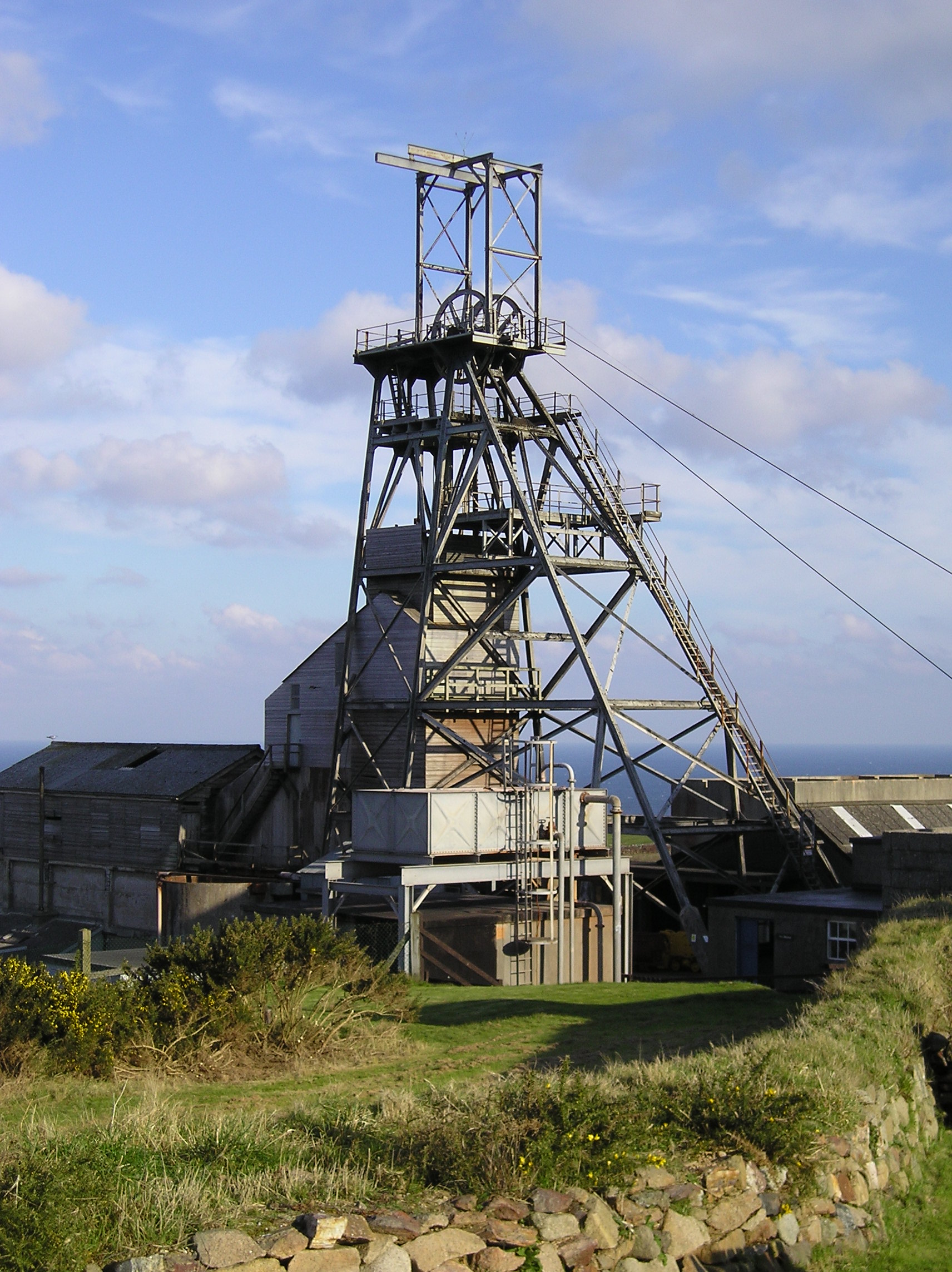
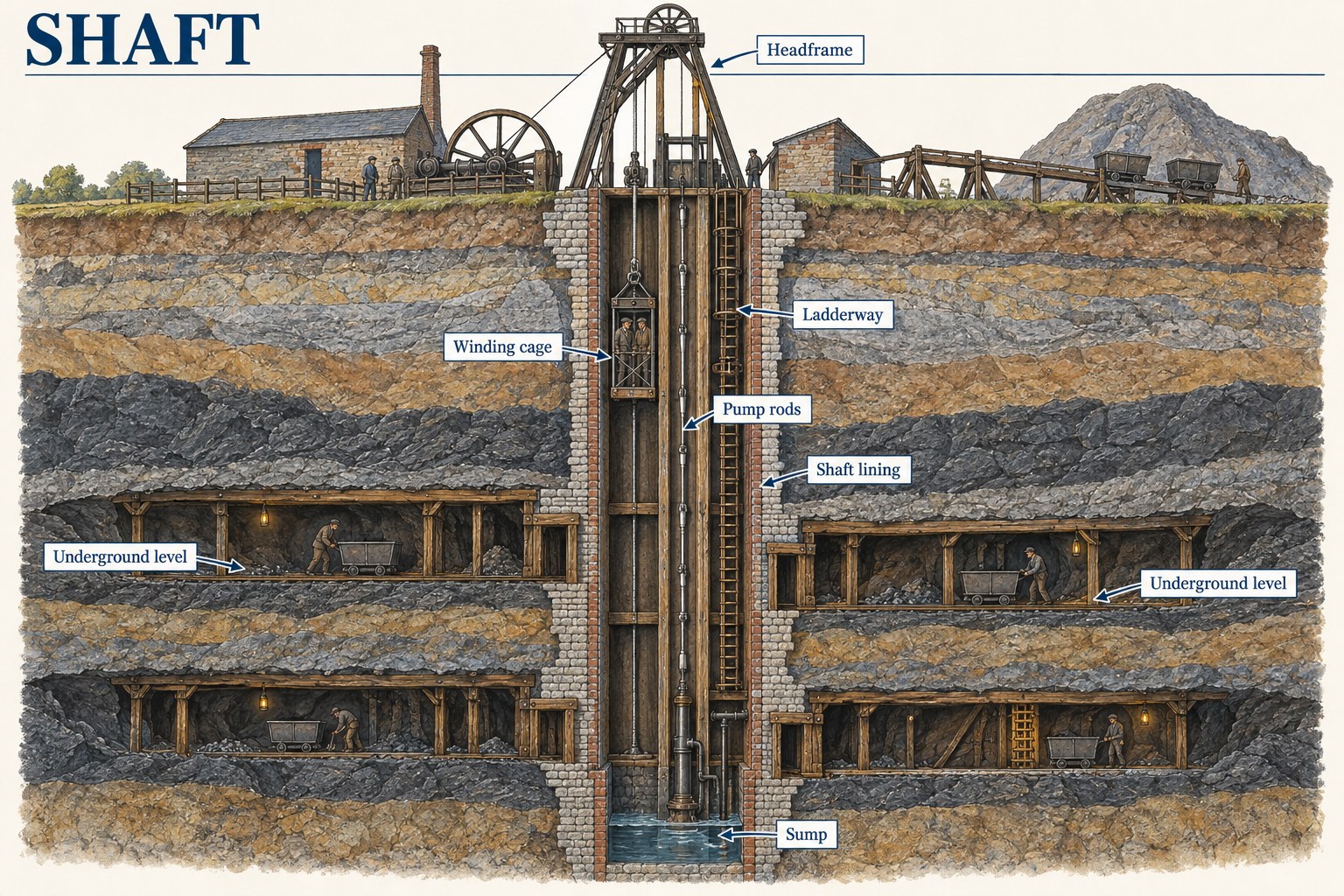
A vertical or steeply inclined excavation sunk from the surface — the primary means of reaching underground workings for access, hoisting ore and waste, pumping water and ventilation, and the one piece of infrastructure no underground mine could do without.
Historical usage
Britain's earliest proven deep-shaft mining is Neolithic: Canon William Greenwell's 1868-70 excavations at Grime's Graves first demonstrated that prehistoric miners sank genuine shafts, not just surface pits, to reach flint. Roman-era shaft sinking is evidenced at Charterhouse, and small hand-sunk shafts, some barely wide enough for one miner, were still being dug by individual flint-workers at Brandon centuries later. The industrial era turned shaft-sinking into a genuine engineering race for depth: Wearmouth Colliery's 1,578-foot shaft made it the deepest mine in the world when it began producing coal in 1835, a record later eclipsed underground by Dolcoath's New Sump Shaft in Cornwall, which eventually reached 3,300 feet — the deepest mine in Cornwall and, for a period, the world's deepest tin mine.
How it worked
Early shafts were sunk by hand with pick, shovel and, later, gunpowder, with spoil and ore raised in a kibble on a hand windlass, horse whim or water-balance; steam, and later electric, winding engines allowed much greater depths from the 19th century onward. Larger shafts were commonly divided into separate compartments for winding, pumping rods (flat rods) and a fixed ladder way, and needed timbering, brick or masonry lining wherever the surrounding ground was too weak to stand unsupported.
Why it was used
A shaft was the one unavoidable capital investment of underground mining: every tonne of ore, every gallon of water pumped out, and every miner going to and from work had to pass through it, and its size, strength and winding capacity effectively set the practical limits on how deep, and therefore how long-lived, a mine could ever become.
Risks & limitations
Sinking and maintaining a shaft was slow, expensive and dangerous work in its own right, and shaft accidents — falls down the opening, broken winding chains or ropes, fires breaking out in the shaft itself — rank among the most serious hazards in mining history; a mine's maximum depth was as often limited by pumping and winding capacity as by how far the ore itself actually continued.
Regional variation
Universal to underground mining everywhere in Britain; what varied regionally was depth and engineering ambition, with Cornwall's tin and copper mines and the North East's coal pits competing for record-breaking depths through the 19th century.
Related terminology
Abandonment Plan, Bell Pit, Care and Maintenance, Downcast Shaft and Upcast Shaft, Gin Circle, Mine Dry, Return Airway, Shaft Capping, Shaft Sinking, Submarine Mining
Mines associated with this term
5 examples chosen from 572 linked records — the term page is not an index.
- Addiewell Oil Works — West Lothian (well documented example)
Named in this record’s geology: “…coal-measures sequence, and were worked much as coal was — by shaft and mine — but retorted rather than burned directly, since…” - Bank Hall Colliery — Lancashire (well documented example)
Named 6 times in this record, first in the summary: “…between 1865 and 1869 and worked for more than a century. Its fourth shaft, at 1,500 feet, was the deepest in the Burnley coalfield. It closed…” - Beauport Park Roman Iron Mine — East Sussex (well documented example)
Named in this record’s workings: “…direct reduction of local Wadhurst Clay ironstone in a small shaft furnace fired with charcoal, at temperatures below iron's melting…” - Bedford Colliery — Greater Manchester (well documented example)
Named 5 times in this record, first in the history: “…Bankfield and Broadoak collieries in Westleigh — began sinking two shafts on Wood End Farm land, south of the London and North Western…” - Bickershaw Colliery — Greater Manchester (well documented example)
Named 3 times in this record, first in the history: “Turner and Ackers sank Bickershaw's first shaft around 1830; the colliery was substantially redeveloped from 1872…”
Disasters associated with this term
5 examples chosen from 193 linked records, most direct relationship first.
- Abercarn colliery (Prince of Wales) explosion, 1878 (contextual relationship)
Named twice in this record, first in the rescue and recovery: “A rescue party descended about an hour after the blast; the main shaft's winding gear could only reach 295 yards down owing to damage. John…” - Abercynon Colliery Shaft Accident, 1895 (contextual relationship)
Named 5 times in this record, first in the summary: “…1895 when the bowk they were riding struck a projection in the shaft and they were precipitated to the bottom.” - Abercynon Colliery Sinking Accident, 1893 (contextual relationship)
Named twice in this record, first in the cause: “A fall in the shaft during sinking operations.” - Agecroft Colliery shaft accident, 1859 (contextual relationship)
Named 4 times in this record, first in the summary: “…men and boys were drawn against the winding pulley and fell down the shaft at Agecroft Colliery on 4 January 1859, after a shaft-position…” - Alderley Edge West Mine deaths (contextual relationship)
Named 4 times in this record, first in the narrative: “…and in 1946 a man fell sixty-five feet to his death down Plank Shaft, again in West Mine. The mine was not filled in and fully sealed…”
Sources
- (secondary) Mining - Vertical openings: shafts — Encyclopaedia Britannica
- (secondary) Shaft sinking — Wikipedia
Record created: 22 August 2026 · Last researched: 22 August 2026