 MineArchive
Beauport Park Roman Iron Mine
| Location | Beauport Park, near Battle, East Sussex — 50.9028, 0.5394 (exact) |
|---|---|
| Commodity | Iron |
| Type | Iron |
| Worked | 1st century AD–3rd century AD |
Overview
A large Romano-British bloomery ironworks near Battle, worked from the 1st to 3rd centuries AD and identified by its huge slag heap as probably the third-largest ironworks in the entire Roman Empire. A remarkably well-preserved Roman bath house, built for the ironworking workforce and linked to the Classis Britannica, the Roman fleet in Britain, was excavated here in 1967-71 and revisited by Channel 4's Time Team in 1998. The site is a Scheduled Monument with no public access, now largely beneath and beside a golf course.
History
The site's significance came to light in 1862, when the Rector of Hollington Church discovered a huge slag heap here, evidence of what is now thought to have been probably the third-largest ironworks in the whole Roman Empire. Serious investigation began in 1967, when Gerald Brodribb and Dr Henry Cleere, an expert on ancient ironworking, uncovered an impressively preserved bath house during golf-course development; full excavation followed in 1971 under Cleere's direction, with John Manwaring Baines, curator of Hastings Museum, also involved. Five roof and box-flue tiles stamped 'CB', for Classis Britannica, were found among the site's material, tying the works to the Roman fleet in Britain. The definitive scholarly account is A. G. Brodribb and H. F. Cleere's 1988 paper in the journal Britannia. Further excavations in 1980 revealed post-holes suggesting pre-Roman roundhouse structures on the site, and the Beauport Park Archaeological Trust was established in 1996.
In June 1998 Channel 4's Time Team filmed an episode at Beauport Park, broadcast in February 1999, in which members of the Wealden Iron Research Group operated a replica bloomery furnace on site and the team attempted to locate further buildings. The bath house, designated a Scheduled Monument, has no public access; as of 2013 it was recorded on Historic England's Heritage at Risk register, with 'extensive significant problems' and in need of management. Around five acres including the Roman baths were offered for sale in 2007 for roughly £300,000, but no buyer was found.
Geology
Iron from the Wadhurst Clay ironstone of the Weald, reduced directly in small charcoal-fired shaft furnaces by the bloomery process.
Workings
Ironworking at Beauport Park, as across the Weald generally in the Roman period, used the bloomery process: direct reduction of local Wadhurst Clay ironstone in a small shaft furnace fired with charcoal, at temperatures below iron's melting point, producing a solid, spongy 'bloom' of iron that was then hammered to consolidate it and drive out slag. This predates blast-furnace technology, which did not reach England until the medieval and early modern period. The slag heap discovered in 1862 is reported at over 100,000 tons, the physical evidence underlying the site's ranking as probably the third-largest ironworks in the Roman Empire.
The associated bath house comprises a caldarium (hot room) and tepidarium (warm room), with hypocaust underfloor warming and box-flue wall ducts, and part of a surviving barrel vault — an exceptionally well-preserved example that served at least part of the industrial workforce at what was evidently a large-scale operation.
Closure
Unknown.
What remains
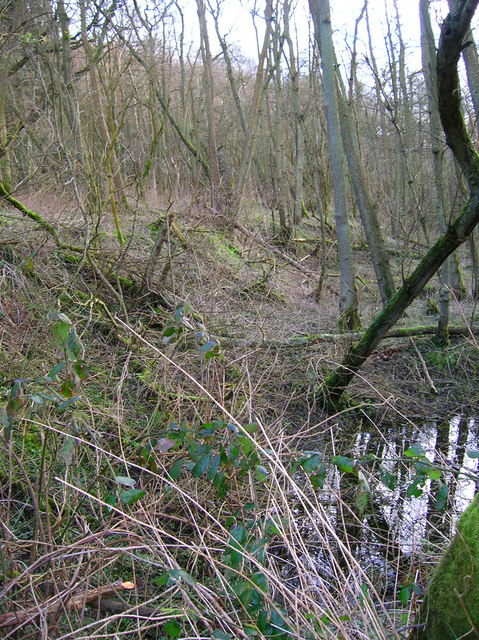
The bath house is a Scheduled Monument with no public access, lying beneath and beside the 13th fairway of the modern Beauport Park golf course. The wider Beauport Park estate today comprises a hotel and health club, the golf course, woodland, a riding school and a holiday chalet park; the Roman baths were offered for sale in 2007 but found no buyer, and the site was recorded as at risk in 2013.
Nearby mines
- Robertsbridge Furnace — 6.2 miles (10.0 km) NW
- Ashburnham Furnace — 6.5 miles (10.4 km) W
- Brightling and Mountfield Gypsum Mines — 7.9 miles (12.8 km) NW
Straight-line distance, within 9 miles (15 km). Show on the map.
Recorded claims
Individual factual claims, each attached to the source(s) that support it below. Where sources disagree, both are kept.
- The Rector of Hollington Church discovered a huge slag heap at the site in 1862, evidence of what is now thought to have been probably the third-largest ironworks in the whole Roman Empire. 1
- A well-preserved Roman bath house was uncovered from 1967 by Gerald Brodribb and Dr Henry Cleere and fully excavated in 1971 under Cleere's direction; tiles stamped 'CB' tie the works to the Classis Britannica, the Roman fleet in Britain. 2
- Channel 4's Time Team filmed an episode at Beauport Park in June 1998, broadcast February 1999, in which Wealden Iron Research Group members operated a replica bloomery furnace on site. 2,3
- The bath house is a Scheduled Monument (Historic England list entry 1002250) with no public access, lying beneath and beside the modern golf course. 4,1
- Around five acres including the Roman baths were offered for sale in 2007 for roughly £300,000, but no buyer was found. 1,3
Sources
- (secondary) Beauport Park — Wikipedia
- (secondary) Photo Archive: Beauport Park bath house excavation 1971 — Wealden Iron Research Group
- (observational) Beauport Park monument suffering from neglect — Hastings Online Times
- (primary) Romano-British iron working site in Beauport Park, Battle (List Entry 1002250) — Historic England
Record created: 26 August 2026 · Last researched: 26 August 2026