 MineArchive
Ashburnham Furnace
| Also known as | Ashburnham Ironworks |
|---|---|
| Location | Ashburnham, near Battle, East Sussex — 50.9286, 0.3970 (exact) |
| Commodity | Iron |
| Type | Ironstone |
| Worked | Working by the 16th century–Early 1813 |
| Operators | Crowley & Co (1736–1800) |
Overview
The last furnace standing when the Weald's centuries-old iron industry finally died — dug not from any deep mine but from ore lifted straight out of the surrounding woods, smelted with charcoal from those same woods, and cast into everything from cannon shot to fire-backs almost within sight of where the medieval and Tudor iron trade had begun.
History
Ashburnham Furnace worked the iron ore of the Sussex Weald from at least the 16th century, through leases held in turn by substantial ironmaking concerns, including the Forest Partnership (which also worked furnaces in the Forest of Dean) and, from 1736, Crowley & Co. An upper furnace added in 1766 specialised in boring and testing cannon, reflecting the ordnance demand that kept much of the Wealden iron trade alive through the 18th century. As furnace after furnace elsewhere in the Weald fell idle in the face of cheaper coke-smelted iron from the Midlands, Ashburnham kept going, finally being 'blown out' for the last time in early 1813 — the last furnace anywhere in the Weald still casting iron, bringing several centuries of the region's ironmaking history to a quiet close. The site is scheduled as an ancient monument, the protection covering the upper and lower furnaces, both wheel pits, the heaps of gun-mould debris left from casting cannon and the ponds, dams and leat that drove the works.
Geology
Wealden iron ore occurs as nodules and bands within the district's characteristic sands and clays, exposed along stream banks and shallow cuttings rather than requiring deep mining; the same geology also supplied the clay and sandstone used to build the furnaces themselves.
Workings
Ore was dug from the neighbouring woods by simple surface working rather than shaft mining, and smelted using charcoal burned from Wealden timber, with the many small streams and valleys of the district providing the water power that drove the bellows and hammers of the furnaces and forges. Ashburnham's own site is more complex than most Wealden furnaces, with an elaborate water-management system including two wheelpits, a dramatic spillway with slots for a control board, and about 4.5 kilometres of leat carrying water to the works. Molten iron was usually cast as pig iron for later working elsewhere, though the furnace also cast finished goods directly, including fire-backs, brand irons and, at times, cannon and shot of various sizes.
Closure
Ashburnham outlasted every other furnace in the Weald before finally closing in early 1813, defeated by the same competition from cheaper Midlands coke-smelted iron that had already ended ironmaking everywhere else in the region.
What remains
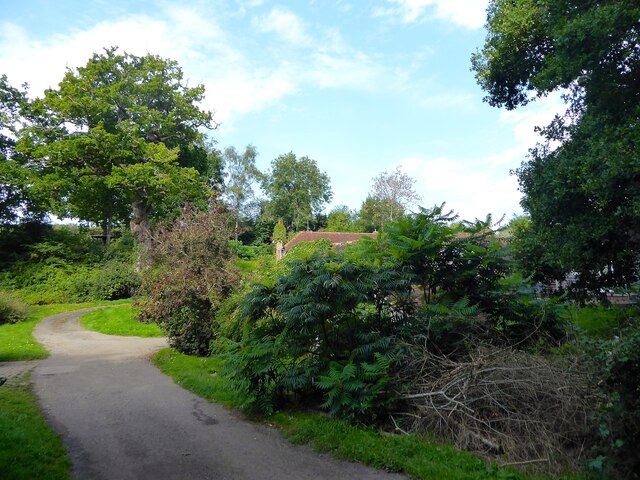
Substantial physical evidence survives on the ground: the two wheelpits, sections of the leat and its spillway and culverts, furnace cottages dating from the 16th to 18th centuries, and charcoal-stained soil near the site of the lower furnace, though the furnace structure itself is long gone.
Two wheelpits, leat and spillway remains, culverts, furnace cottages, and charcoal-stained ground marking the former furnace site.
Redevelopment
None — the site remains rural land within the wider Ashburnham estate.
Related mines
- Robertsbridge Furnace — Iron from Ashburnham was carried overland via the packhorse route 'Sow Lane' to supply Robertsbridge.
Nearby mines
- Brightling and Mountfield Gypsum Mines — 2.9 miles (4.6 km) N
- Robertsbridge Furnace — 4.8 miles (7.7 km) NE
- Beauport Park Roman Iron Mine — 6.5 miles (10.4 km) E
Straight-line distance, within 9 miles (15 km). Show on the map.
Recorded claims
Individual factual claims, each attached to the source(s) that support it below. Where sources disagree, both are kept.
- Ashburnham Furnace was working by the 16th century, leased in turn by substantial concerns including the Forest Partnership and, from 1736, Crowley & Co. 1
- Ore was dug from the surrounding woods and smelted with locally-burned charcoal, using water power from the district's streams; the site's elaborate water management included two wheelpits and about 4.5 km of leat. 1,2
- An upper furnace added in 1766 specialised in boring and testing cannon; the furnace generally cast pig iron but also finished goods including fire-backs, brand irons, and cannon and shot. 1
- Ashburnham was 'blown out' for the last time in early 1813, the last furnace anywhere in the Weald still casting iron. 1
- Two wheelpits, leat and spillway remains, culverts, and furnace cottages from the 16th-18th centuries survive on the site. 1
- The furnace site is a scheduled monument (National Heritage List entry 1002219), taking in the sites of the upper and lower blast furnaces, two wheel pits, heaps of gun-mould debris and the water system of ponds, dams and leat. 3
Photographs & further reading
The scheduled monument entry for the furnace, its wheel pits, gun-mould heaps and water system.
View sourceThe research group's gazetteer entry for the furnace, its leases, the 1766 upper furnace and the 1813 blowing-out.
View sourceSources
- (primary) Ashburnham Furnace — Wealden Iron Research Group
- (secondary) The Wealden Iron Industry — Wealden Iron Research Group — Wealden Iron Research Group
- (secondary) Ashburnham iron furnace site, Ashburnham: scheduled monument 1002219 (via ancientmonuments.uk) — ancientmonuments.uk (Historic England scheduling text)
Record created: 25 August 2026 · Last researched: 24 September 2026