 MineArchive
Wheelpit
| Also known as | Wheel pit, Wheel-pit |
|---|---|
| Category | Structures & Machinery |
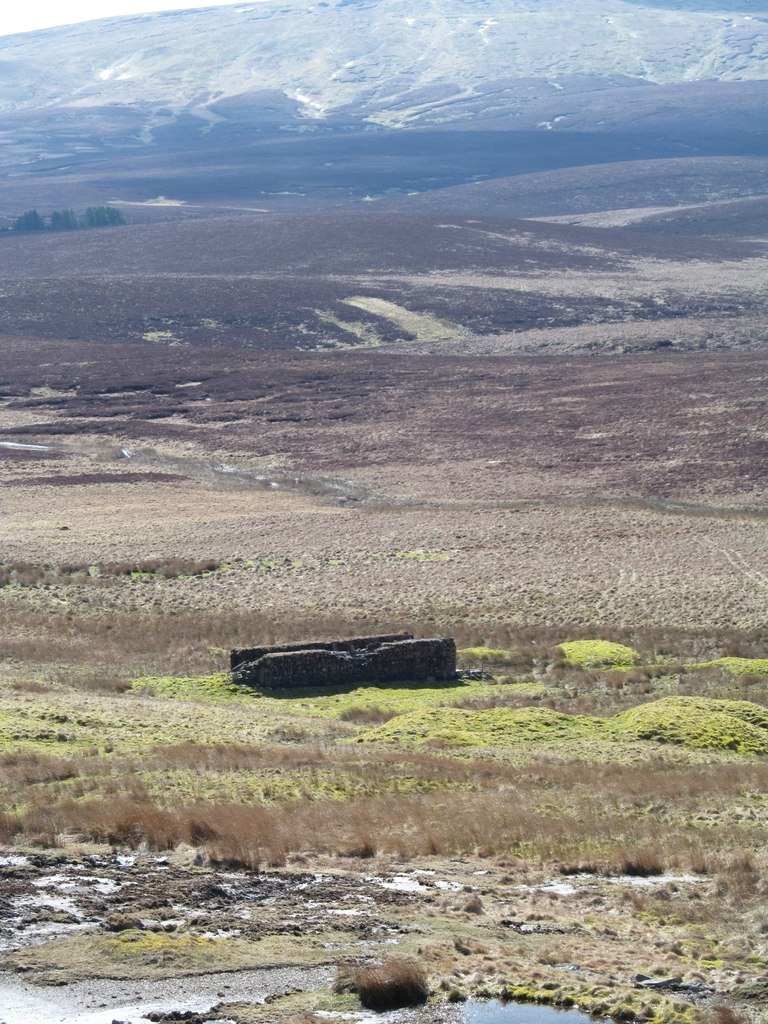
The stone-lined pit or free-standing masonry structure built to hold a waterwheel, deep enough for the wheel to turn clear of the ground and often the only trace of water power left on a mine.
Historical usage
Waterwheels drove pumps, winding gear, crushers and stamps at British mines from the medieval period until well into the 20th century, and the pit that carried the wheel outlasts the wheel almost every time. At Green Hurth in upper Teesdale a stone and concrete wheelpit about 12 m by 4 m held a large pitch-back wheel whose flat rods ran 530 m uphill to the mine's drawing shaft, with the mountings for the balance bobs still in place at either end; a 19th-century photograph shows the wheel in it. Such pits, with their leats and rod lines, are now scheduled as nationally rare survivals of mine water power.
How it worked
The pit was excavated and lined in stone, or built up as a free-standing structure where the ground allowed, with bearings for the axle set in the side walls at the right height for the wheel's diameter. Water came in along a leat or launder at the top of an overshot or pitch-back wheel, or at axle height for a breast wheel, and ran out through a tail-race at the bottom. The axle carried the crank, gear or drum that took the power off to the pump rods, the flat rods or the machinery.
Why it was used
A wheel needed a pit as surely as an engine needed a house: the wheel had to hang free, the water had to be led onto it and away, and the axle bearings had to be held rigid against the load. Pits built into a hillside also let a large wheel be fed from a leat at the top without a tall timber trestle.
Risks & limitations
A wheelpit fixes the wheel's diameter, so a bigger wheel meant a new pit. Pits fill with silt and collapse once the wheel is out, and they flood; a deep pit beside a shaft was itself a hazard on a working mine.
Regional variation
Written wheel pit, wheel-pit or wheelpit; the Cornish glossary defines it as a structure to house a water-wheel, often excavated and stone-lined but sometimes free-standing. The same feature survives on lead mines from Derbyshire to the north Pennines and on Welsh slate and metal mines.
Related terminology
Balance Bob, Flat Rods, Leat, Waterwheel
Mines associated with this term
5 examples chosen from 44 linked records — the term page is not an index.
- Slitt Mine — County Durham (well documented example)
Named twice in this record, first in the summary: “…Level into the Three Yard Limestone. Its surface remains — shafts, wheel pits, a bouse team and the reservoir that fed its waterwheel — are…” - Abercwmeiddaw Slate Quarry — Gwynedd (well documented example)
Named twice in this record, first in the current condition: “…binocular tunnels, the original tramroad formation, a mill wheel pit, sections of the incline plane system, some former quarry buildings…” - Aberdaunant Mine — Powys (well documented example)
Named 3 times in this record, first in the workings: “…workings include several adits, an engine shaft, an ore slide and a wheel pit.” - Ashburnham Furnace — East Sussex (well documented example)
Named 3 times in this record, first in the workings: “…furnaces, with an elaborate water-management system including two wheelpits, a dramatic spillway with slots for a control board, and about 4.5…” - Bagtor Mine — Devon (well documented example)
Named twice in this record, first in the current condition: “…recorded surviving earthworks including adits, shaft heads and a wheel pit that may have housed a separate 30-foot wheel for pumping.”
Sources
- (primary) Green Hurth lead mine and ore works, Forest and Frith (List entry 1015836) — Historic England
- (secondary) A Cornish mining glossary — Cornish Mining World Heritage Site (UNESCO)
Record created: 22 September 2026 · Last researched: 22 September 2026