 MineArchive
Waterwheel
| Also known as | Water wheel (the two-word spelling, which the matcher treats as a separate phrase) |
|---|---|
| Category | Structures & Machinery |
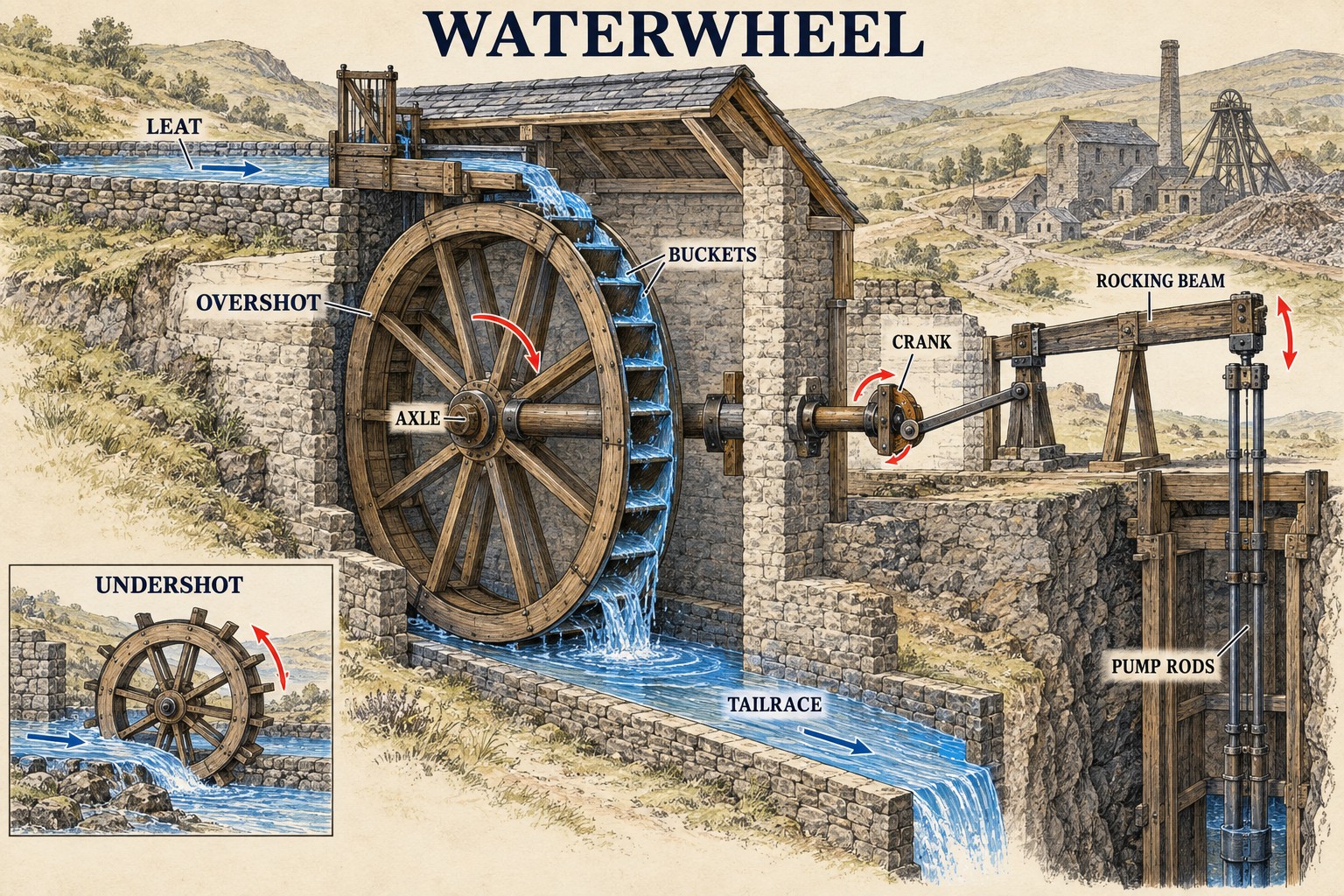
A wheel turned by flowing or falling water, whose rotating shaft drove a mine's pumps, crushing rollers or stamps. A wheel fed from above is overshot, one fed from below undershot.
Historical usage
The standard source of mechanical power at British mines before steam, used for pumping and ore crushing wherever a mine could bring water to it, usually by a leat if no natural stream ran close enough.
How it worked
Water directed onto or under the wheel turned it, and the wheel's rotating shaft was then connected to whatever machinery needed driving. For pumping, the rotation drove a large rod connected to a rocking beam at the top of the shaft, converting the wheel's rotary motion into the vertical stroke needed to work pump rods deep underground; for ore crushing, the shaft drove crushing rollers or a set of stamps instead. A wheel fed from below was called 'undershot', one fed from above 'overshot' — the two basic designs used across British mining.
Why it was used
Water power gave a mine a continuous, reliable source of mechanical energy without burning fuel, important both where coal was expensive to bring in and simply as the standard technology available before steam power became widespread and affordable.
Risks & limitations
A waterwheel's power depended entirely on a reliable water supply — a dry summer or a poorly engineered leat could leave a mine's pumps or crushing plant starved of power exactly when it was needed most.
Regional variation
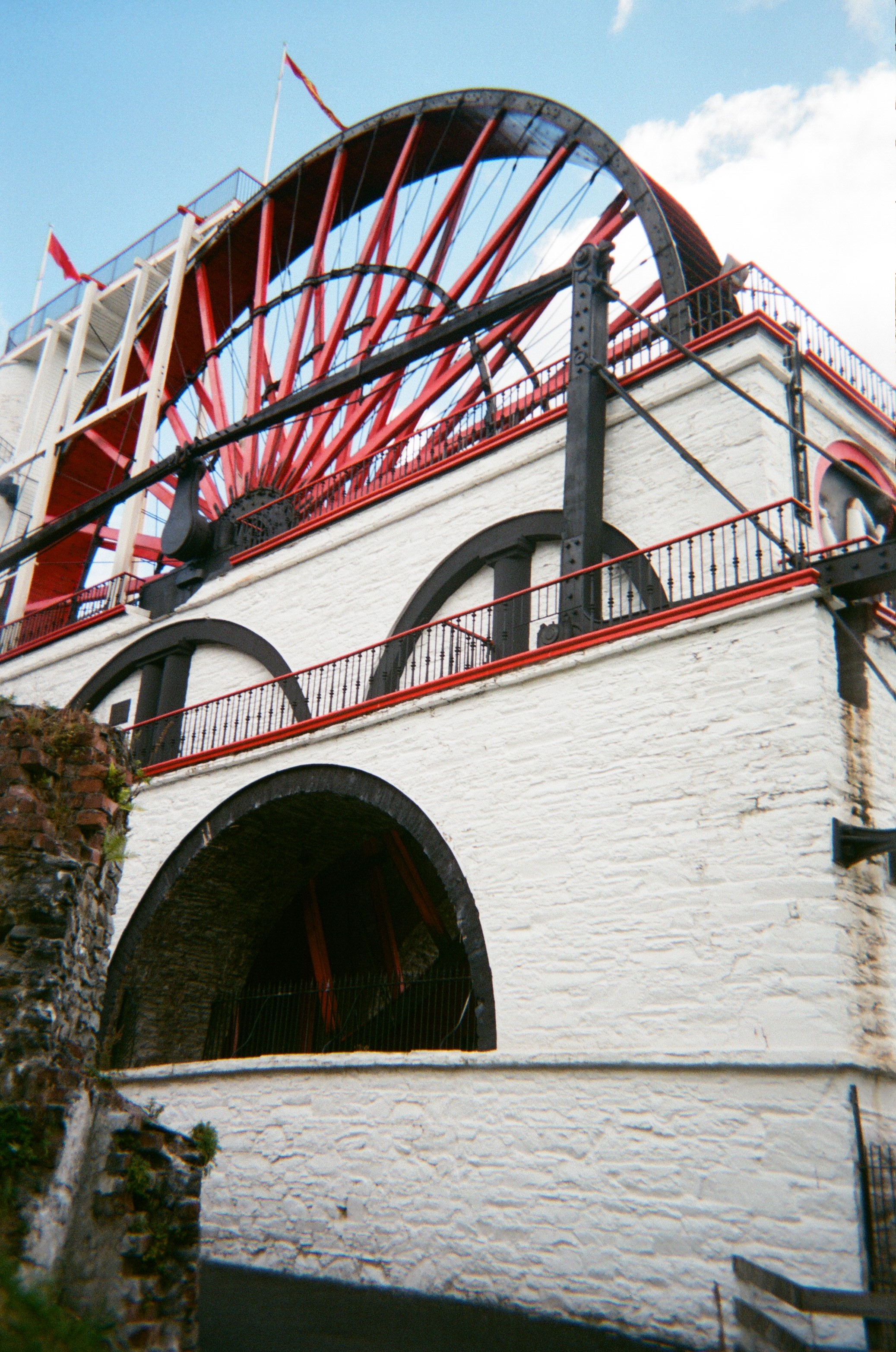
Waterwheels of every scale survive or are recorded across British metal-mining districts; the largest working example anywhere in the British Isles, the 22-metre Lady Isabella at Great Laxey on the Isle of Man, was built in 1854 specifically to keep the mine's shafts pumped dry.
Related terminology
Cornish Rolls, Flat Rods, Leat, Millwright, Pelton Wheel, Wheelpit
Mines associated with this term
5 examples chosen from 75 linked records — the term page is not an index.
- Bonawe Iron Furnace — Argyll and Bute (well documented example)
Named twice in this record, first in the history: “…pig iron out, with the River Awe supplying enough water to drive a waterwheel. Long 110-year leases for coppice-cutting rights were secured from…” - Fee Donald Mine — Highland (well documented example)
Named 3 times in this record, first in the history: “…including masonry buildings and a large ore-processing area with a water-wheel pit, crushing and dressing floors, spoil heaps and washing floors.…” - Graig Ddu Quarry — Gwynedd (well documented example)
Named in this record’s history: “…it was across the district: what there was came from an underground waterwheel fed by an iron-lined leat, most of it pumped up from Llyn y Manod by…” - Lead Mines Clough — Lancashire (well documented example)
Named 4 times in this record, first in the workings: “…240ft deep alongside the remains of a smelting mill, a smithy and a waterwheel that once powered the site; a water-wheel shaft and an ore-dressing…” - Meliden Lead Mines — Denbighshire (well documented example)
Named twice in this record, first in the history: “…went on to run the mine using this and later engines, powering three waterwheels from a leat built in the 1750s; the engine was still working when it…”
Disasters associated with this term
Included only where MineArchive's own research gives a reasonable evidential basis, with the nature of the relationship stated — not every disaster where this term might plausibly apply.
- Team Colliery explosion, 1757 (contextual relationship)
Named in this record’s narrative: “…originally drawn from the workings by buckets, powered in stages by water wheels at the surface — a contemporary account described Liddell's…”
Sources
- (secondary) The History of the Great Laxey Wheel — Visit Isle of Man
- (secondary) Waterwheel — Encyclopaedia Britannica
Record created: 22 August 2026 · Last researched: 22 August 2026