 MineArchive
Leat
| Category | Mine Workings & Access |
|---|
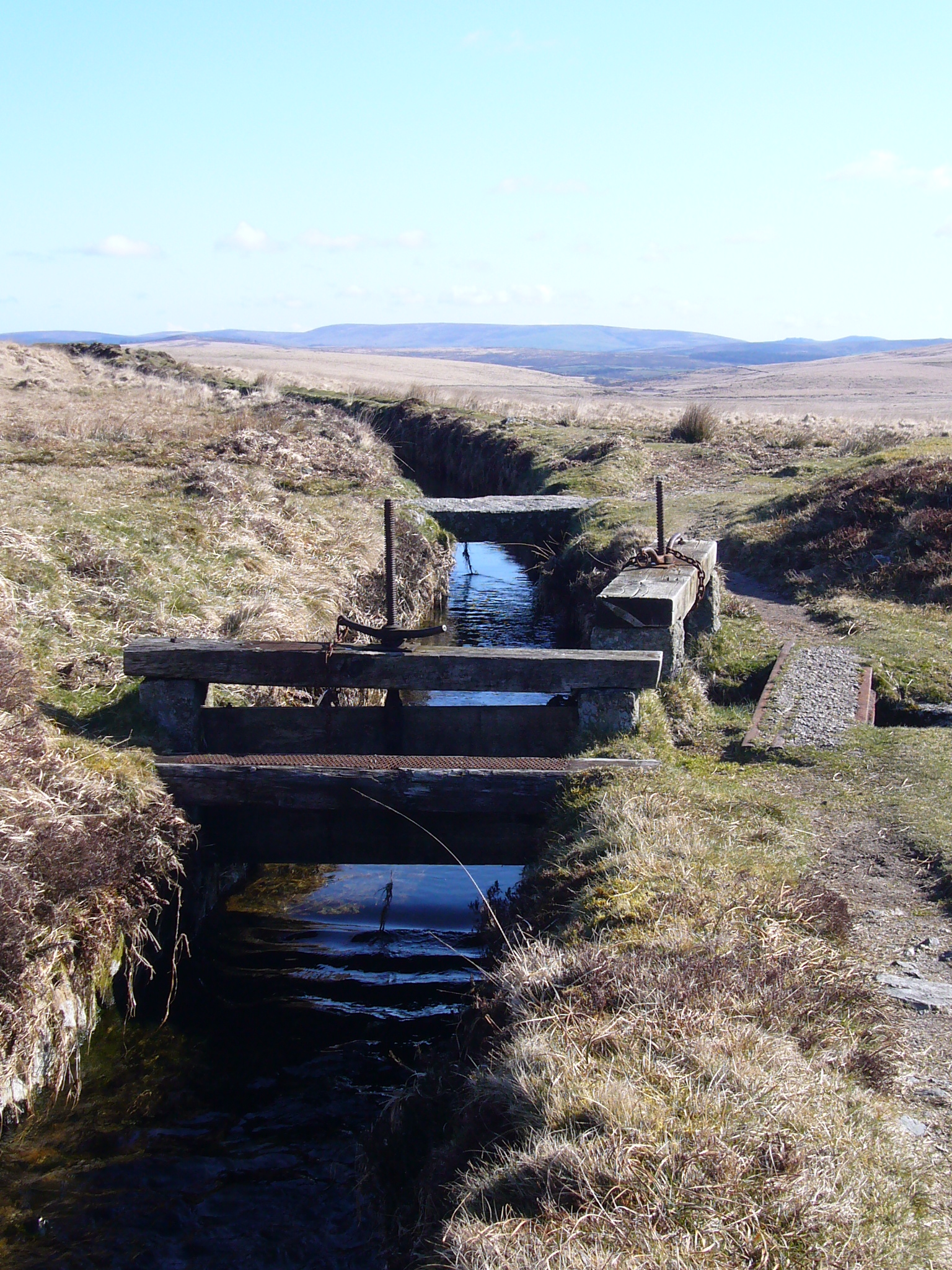
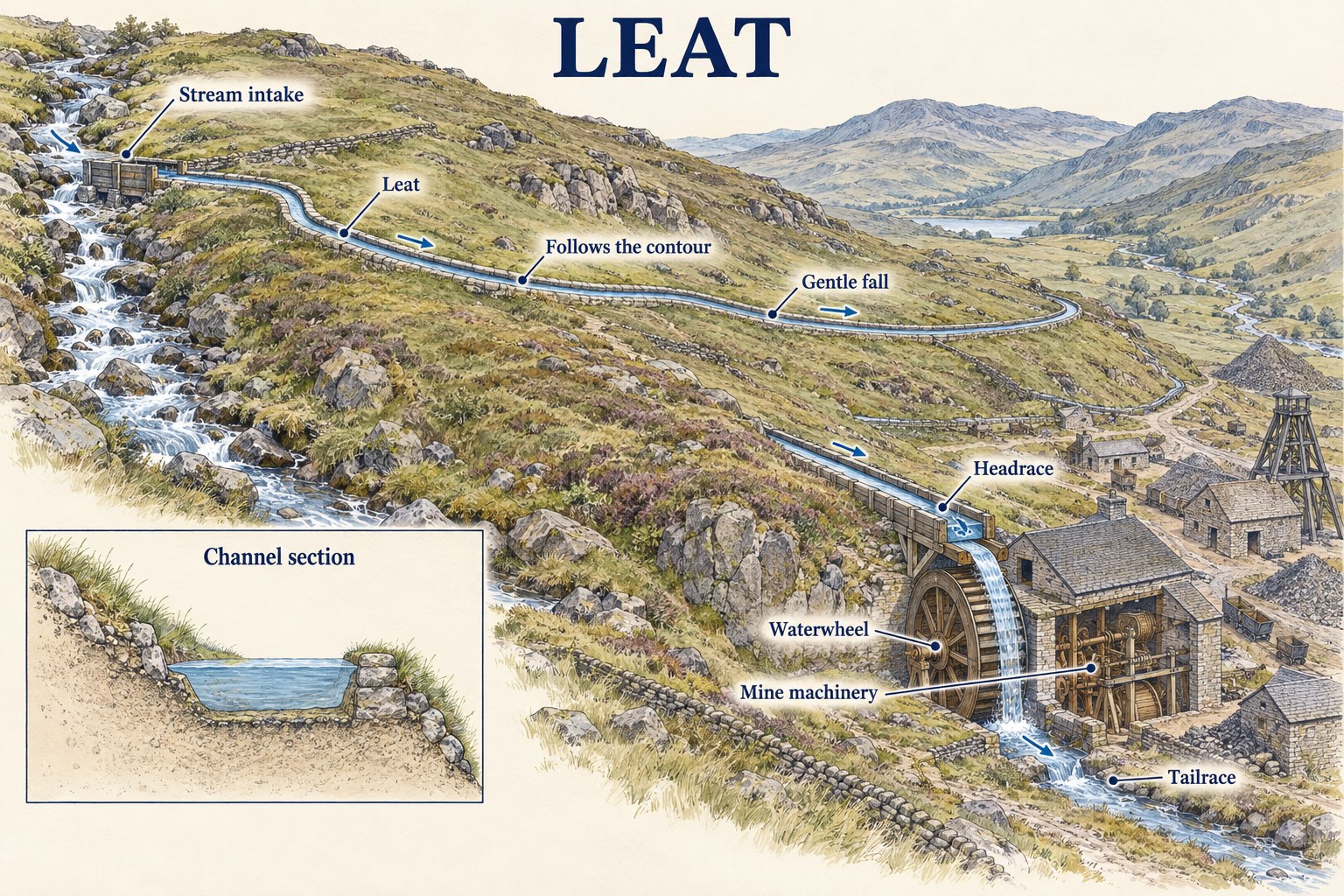
An artificial watercourse dug to carry water from a river or stream to a mine, mill or waterwheel, sometimes running for miles to reach a site with no water power of its own.
Historical usage
Leats have been used to supply mining operations since Roman times, when aqueducts fed water for hushing — sluicing away soil to expose bedrock veins. From the 17th century onward, leats became essential infrastructure across the lead, tin and silver mining districts of Cornwall, Devon, Wales, the Pennines and the Leadhills-Wanlockhead area of southern Scotland.
How it worked
A leat was cut as a shallow, gently graded channel following the contour of the land, carrying water by gravity alone from an intake on a river or stream to the mine, sometimes over considerable distances — Cornwall's Fowey Consols mine drew on a four-mile leat delivering up to 25,000 gallons a minute in winter, enough to power thirteen separate waterwheels.
Why it was used
Many mines had no river or stream close enough to power their pumping and crushing machinery directly; a leat let them bring water from wherever it was available to drive waterwheels for pumping, ore crushing (see Stamps) and hushing, without which an inland mine could not use water power at all.
Risks & limitations
Building and maintaining a leat, especially a long one, was a substantial engineering undertaking in its own right, adding real cost before a mine could even begin exploiting water power — smaller or poorer operations often made do with much shorter leats and correspondingly less powerful waterwheels.
Regional variation
Leats appear across every British mining district that used water power, from short site leats a few hundred yards long to exceptional cases like Dartmoor's Devonport Leat, over 34km long and still partly in use today.
Related terminology
Mines associated with this term
5 examples chosen from 55 linked records — the term page is not an index.
- Bere Alston Silver-Lead Mines — Devon (well documented example)
The mines' most remarkable surviving engineering work is a leat, built to serve royal silver mines that supplied fifteen per cent of the London mint's silver in 1296-97. - Cann Quarry — Devon (well documented example)
Named in this record’s history: “…to the quarry itself; its channel lived on afterward as a mill leat for the corn mill at Marsh Mills, which continued grinding until…” - Glyn Pits, Pontypool — Torfaen (well documented example)
Named twice in this record, first in the workings: “…A boiler-water reservoir lay behind the site, fed by a mile-long leat from the Blaen-Bran ponds.” - Graig Ddu Quarry — Gwynedd (well documented example)
Named in this record’s history: “…there was came from an underground waterwheel fed by an iron-lined leat, most of it pumped up from Llyn y Manod by a second wheel, with a 16…” - Pandora Mine — Conwy (well documented example)
Named twice in this record, first in the history: “…built to the east and north-east of the workings, fed through leats to at least three successive waterwheels. The mine's most ambitious…”
Sources
- (secondary) Cornish Mining WHS - Early Mining Methods — Cornish Mining World Heritage Site
- (secondary) Leat — Wikipedia
Record created: 22 August 2026 · Last researched: 22 August 2026