 MineArchive
Cann Quarry
| Location | Plym Bridge Woods, near Plympton, Devon — 50.4176, -4.0790 (exact) |
|---|---|
| Commodity | Slate |
| Type | Slate |
| Worked | 1671–1915 |
| Operators | Edward Gullett (1896–1915) |
Overview
A Devon slate quarry recorded from 1671 to 1915 whose stone paved the streets of Piccadilly and tiled the roofs of Kensington, hauled out first by a canal surveyed by John Smeaton and later by a tramway connecting to a railway on which Isambard Kingdom Brunel himself took over as engineer.
History
The earliest documented reference to Cann Quarry, in the Plym valley near Plympton, appears in October 1671, in the repair accounts of Plympton Free School, which paid the quarry's first known tenant, John Lyde, eight shillings for 2,000 slates — implying the quarry was already an established working concern by that date. George Parker and Nicholas Edwards the Younger were running it by 1683. Cann slate, though reckoned markedly inferior to the Welsh product, found a ready market close to home and much further afield: it was used across Plympton and Plymouth and, more remarkably, paved streets in London's Piccadilly and tiled houses in Kensington.
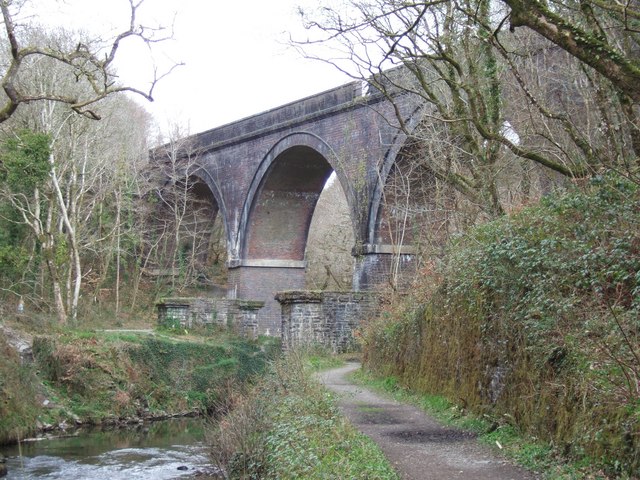
In 1778 the quarry's owner, John Parker, commissioned the celebrated civil engineer John Smeaton — designer of the Eddystone Lighthouse — to survey a canal route down to the River Plym. Smeaton calculated the canal would need to run 2.25 miles with a 30ft fall requiring several locks, judged it unlikely to be economic, and recommended a tramway instead at roughly half the cost. Despite that advice, John Parker's son, also John Parker and by then Earl of Morley, built his own tub-boat canal after a dispute over the newly authorised Plymouth and Dartmoor Railway — a canal roughly six feet wide, running just under two miles from the quarry to the River Plym at Marsh Mills, opened on 20 November 1829 and linked to the wider rail network by a short private tramway to Crabtree Junction. The canal proved short-lived as a working navigation, abandoned within about a decade once Earl Morley's tramway was extended directly up the valley to the quarry itself; its channel lived on afterward as a mill leat for the corn mill at Marsh Mills, which continued grinding until 1927. The tramway in turn connected to the South Devon and Tavistock Railway, whose chief engineer, Augustus Bampton, died only months into construction — bringing in Isambard Kingdom Brunel to take over the works, which opened to passengers on 22 June 1859 and included the original viaduct across the Plym at Cann Quarry, later rebuilt in 1907.
Ownership of the quarry itself changed hands repeatedly through the 19th century — Thomas Pearson from 1839, Charles Pike from 1851, the London-registered Plym River Slab and Slate Company Ltd from 1863 (working Cann alongside the neighbouring Rumple quarry to produce roofing tiles, cisterns and furnace linings), James Soper and James Gullett jointly from 1874. By 1839 the quarry was also raising porphyritic elvan stone alongside slate, and by the time Edward Gullett took the lease in 1896, employing just four to six men, the slate itself was worked out and only elvan was being quarried. Gullett's retirement brought production to an end in 1915; his son Albert continued briefly before emigrating to Australia.
Geology
Cann Quarry worked both roofing slate and porphyritic elvan — a hard, fine-grained igneous dyke rock characteristic of the Dartmoor granite's margins — from a single large working roughly 40m high, 135m wide and 145m long cut into the valley side east of the River Plym.
Workings
An open quarry worked in stages as slate gave way in its later years to elvan extraction alone; stone was hauled out first by the short-lived Cann Quarry Canal from 1829, and after the canal's abandonment by a tramway extended directly to the quarry, connecting onward to the South Devon and Tavistock Railway.
Closure
Slate had already given out by the 1890s, leaving only elvan stone worked under Edward Gullett's tenancy from 1896; his retirement brought all production to an end in 1915.
What remains
The quarry lies within Plymbridge Woods, a National Trust property, and is now managed chiefly for wildlife — a pair of peregrine falcons nests on the old quarry face, watched from a public viewpoint on the former railway viaduct, now part of the Plym Valley cycle trail.
The quarry face itself, the 1907 railway viaduct (now carrying the Plym Valley cycle trail), and traces of the former canal and tramway routes survive within Plymbridge Woods.
Nearby mines
- Hemerdon Mine — 3.1 miles (5.0 km) E
- Lee Moor China Clay Works — 3.2 miles (5.1 km) E
- Headon Quarry — 4.1 miles (6.5 km) SE
- South Hooe Mine — 6.9 miles (11.2 km) NW
- Eylesbarrow Mine — 7.0 miles (11.3 km) NE
Straight-line distance, within 9 miles (15 km). Show on the map.
The old quarry face is a protected peregrine falcon nesting site and the ground is unstable — this entry describes history and general location only, not an access guide.
Recorded claims
Individual factual claims, each attached to the source(s) that support it below. Where sources disagree, both are kept.
- The earliest documented reference to Cann Quarry is from October 1671, when Plympton Free School paid its first known tenant, John Lyde, for 2,000 slates. 1
- The quarry passed through a documented sequence of operators including George Parker and Nicholas Edwards (from 1683), Thomas Pearson (1839-51), Charles Pike (1851-61), the Plym River Slab and Slate Company Ltd (1863-68), James Soper and James Gullett jointly, and finally Edward Gullett (1896-1915). 1
- In 1778 quarry owner John Parker commissioned engineer John Smeaton to survey a canal route; Smeaton judged a 2.25-mile canal with multiple locks uneconomic and recommended a tramway instead, though a canal was eventually built regardless in 1829. 2
- Earl Morley's Cann Quarry Canal, just under two miles long, opened on 20 November 1829, connecting to the wider rail network by tramway; it ceased operating as a navigation within about a decade and its channel became a mill leat for the corn mill at Marsh Mills, which operated until 1927. 2
Sources
- (primary) Cann Quarry, Plym Bridge Woods, Plym — National Trust Heritage Records
- (secondary) Cann Quarry Canal — Wikipedia
Record created: 26 August 2026 · Last researched: 26 August 2026