 MineArchive
Hemerdon Mine
| Also known as | Drakelands Mine |
|---|---|
| Location | Sparkwell, Devon — 50.4100, -4.0100 (exact) |
| Commodities | Tungsten, Tin |
| Type | Metal |
| Worked | 1867 (discovery)–1944 (early workings) |
| Maximum depth | Not applicable: worked as an open pit rather than underground. |
| Operators | Wolf Minerals (UK) Ltd (2007–2018), Tungsten West plc (2019–?) |
Overview
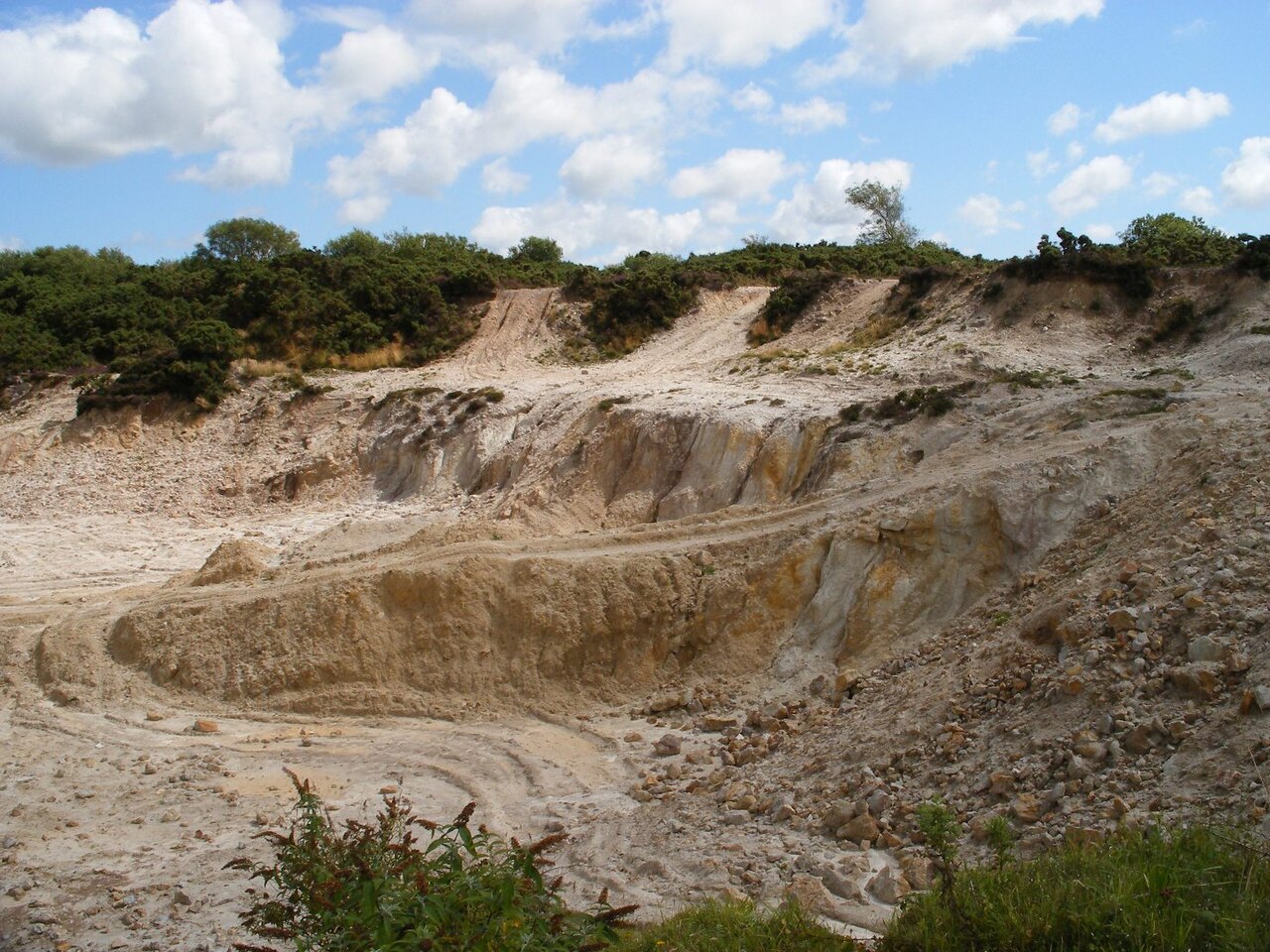
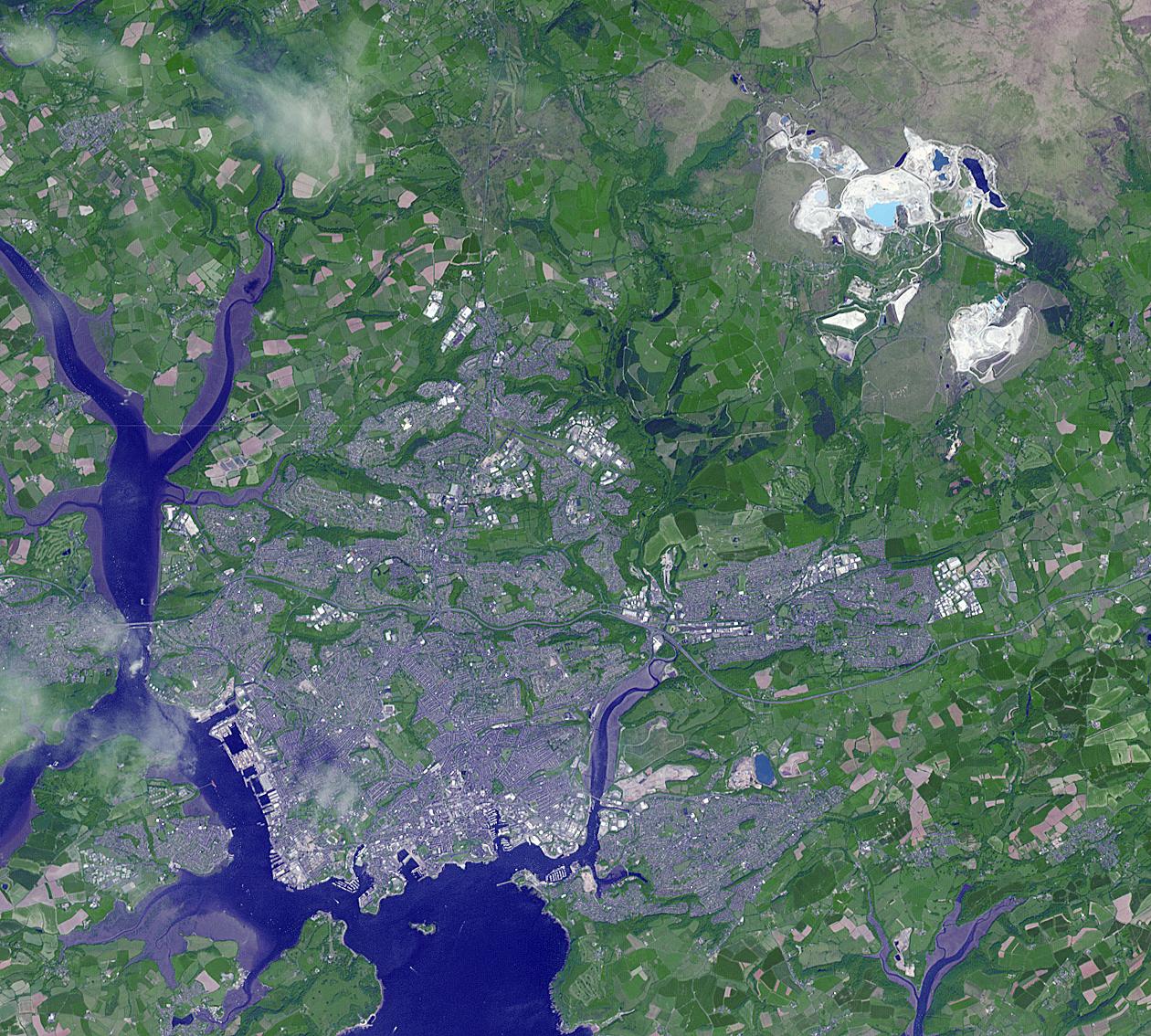
Hemerdon, on the edge of Dartmoor near Plympton, sits on one of the largest tungsten deposits in the world — rated by the British Geological Survey as the fourth-largest known. Worked only in short bursts during the 20th century when tungsten was scarce, it was developed as a major open-pit mine from 2015, closed again after just three years when its operator went into administration, and is now, as of 2026, being brought back into production by a new owner.
History
Tungsten was first discovered at Hemerdon in 1867, but the deposit was only worked when foreign supply was disrupted: briefly in 1919-1920, then more substantially between 1934 and 1944 during the build-up to and through the Second World War, after which the mine closed again once normal tungsten imports resumed. The Australian company Wolf Minerals acquired the rights in 2007 and, after a positive 2011 feasibility study, built a roughly £130 million open-pit mine, restarting production in August 2015 — the first tungsten concentrate to leave Hemerdon in 45 years. The mine operated for just over three years before Wolf Minerals (UK) Ltd went into voluntary administration and production stopped on 10 October 2018.
Tungsten West plc bought the site in December 2019 and has worked since towards a restart, with a redesigned process plant and a revised feasibility study. Trial production at the refinery was completed in the last quarter of 2025, and the company raised £44.3 million of equity early in 2026 and a $25 million bridge facility to carry it to initial production. In August 2026 the UK government's National Wealth Fund announced an investment of up to £71 million — £36 million of equity for about 7.4 per cent of the enlarged company and a £25 million debt facility — in return for an exclusive period in which the government may negotiate to buy up to half of Hemerdon's annual output. Tungsten is a critical mineral for defence, aerospace and next-generation energy, and the investment is framed as securing a domestic supply of it.
Geology
The deposit is a large, low-grade but very extensive tungsten-tin skarn/greisen body associated with the Dartmoor granite, worked as an open pit rather than underground.
Geological setting: Greisen and Pegmatite Deposits (well documented example)
Workings
Ore is worked from a large open pit and processed on site to produce tungsten and tin concentrate; the scale of the resource is what makes an otherwise low-grade deposit worth mining.
Closure
Wolf Minerals (UK) Ltd's administration in 2018 halted production after just over three years; the site was not abandoned, but mothballed under new ownership pending a restart.
What remains
An active site being brought back into production. Capital improvement works are under way through 2026, with the fine gravity circuit targeted for the third quarter and the coarse circuit for the fourth; the company's published timeline puts the start of full commissioning at nameplate capacity in the first quarter of 2027 and steady-state production in the second half of that year. The project is expected to support around 350 direct jobs once fully operational.
Not applicable: this is a working site, not an abandoned one. Over US$300 million of plant put in by the previous operator — crushing circuits, site offices, power supply and access roads — remains in place and is the basis of the restart.
Redevelopment
None: the site is being returned to its original use rather than redeveloped, under a fully funded restoration bond.
Nearby mines
- Headon Quarry — 1.3 miles (2.1 km) SE
- Lee Moor China Clay Works — 1.7 miles (2.8 km) N
- Cann Quarry — 3.1 miles (5.0 km) W
- Eylesbarrow Mine — 6.2 miles (9.9 km) N
- Whiteworks Mine — 8.9 miles (14.3 km) N
Straight-line distance, within 9 miles (15 km). Show on the map.
What's uncertain
Points where sources disagree or the record could not be settled; both accounts are kept. All open questions in the archive.
- The BGS mine-plans catalogue holds a Mining Remediation Authority abandonment plan titled 'Hemerdon' (catalogue OM15351, Tin, undated in the catalogue); the catalogue gives no location and the plan's details do not clearly tie it to this working, so it may belong to another of the same name. (uncertain) 5
Recorded claims
Individual factual claims, each attached to the source(s) that support it below. Where sources disagree, both are kept.
- The British Geological Survey rates the Hemerdon deposit as the world's fourth-largest known tungsten deposit. 1,2
- Tungsten was first discovered at Hemerdon in 1867; the deposit was worked only briefly, in 1919-1920 and 1934-1944, before Wolf Minerals restarted production in August 2015. 1
- Wolf Minerals (UK) Ltd went into voluntary administration and production stopped on 10 October 2018, after just over three years. 1,3
- Tungsten West plc, which bought the site in 2019, produced first trial concentrate and is targeting full commissioning in early 2027. 2
- On 25 August 2026 the National Wealth Fund announced an investment of up to £71 million in Tungsten West to support the restart of Hemerdon, comprising £36 million of equity for about 7.4 per cent of the enlarged company and a £25 million debt facility, and giving the UK government an exclusive period to negotiate to procure up to half of the mine's annual production. 4
- Tungsten West's published timeline has refinery trial production completed in the fourth quarter of 2025, capital improvement works through 2026 with the fine gravity circuit targeted for the third quarter and the coarse circuit for the fourth, full commissioning of nameplate capacity commencing in the first quarter of 2027 and steady-state production in the second half of 2027. 2
- The Hemerdon ore body holds 39.7 million metric tonne units of contained tungsten across 327 million tonnes of JORC-compliant ore, with a primary processing life of around seventeen years and a total life extending to forty years or more with stockpile reprocessing. 2
- The BGS mine-plans catalogue holds a Mining Remediation Authority abandonment plan titled 'Hemerdon' (catalogue OM15351, Tin, undated in the catalogue); the catalogue gives no location and the plan's details do not clearly tie it to this working, so it may belong to another of the same name. (uncertain) 5
- Located at about 50.410 N, 4.010 W. 1
Photographs & further reading
The UK government fund's own announcement of 25 August 2026 setting out the £71 million investment, its equity and debt split, and the offtake negotiation for up to half of Hemerdon's output.
View sourceSources
- (secondary) Hemerdon Mine — Wikipedia
- (secondary) Hemerdon Mine – World's Largest Non-Chinese Tungsten — Tungsten West
- (secondary) Wolf Minerals — Wikipedia
- (primary) National Wealth Fund backs Tungsten West to unlock critical UK tungsten supply, 25 August 2026 — National Wealth Fund
- (primary) BGS / Mining Remediation Authority mine plans: HEMERDON — British Geological Survey / Mining Remediation Authority
- (secondary) Hemerdon Tungsten Mine (Drakelands Mine) — Mindat.org
Record created: 20 August 2026 · Last researched: 9 September 2026