 MineArchive
Redlake China Clay Works
| Also known as | Red Lake Clay Works, Redlake Clay Works |
|---|---|
| Location | Redlake, southern Dartmoor, between the Erme and the Avon; drying works at Cantrell, Bittaford, Devon — 50.4000, -3.8900 (approximate, low confidence) |
| Commodity | China Clay |
| Type | Clay |
| Worked | 1911–1932 |
| Maximum depth | 130 ft (40 m), pumping shaft |
| Operators | China Clay Corporation Limited (1911–1932) |
Overview
A china clay works in the heart of southern Dartmoor, opened by the China Clay Corporation in 1911 with an eight-mile narrow-gauge tramway and an eight-mile pipeline that carried liquid clay to drying works at Bittaford; it closed in 1932.
History
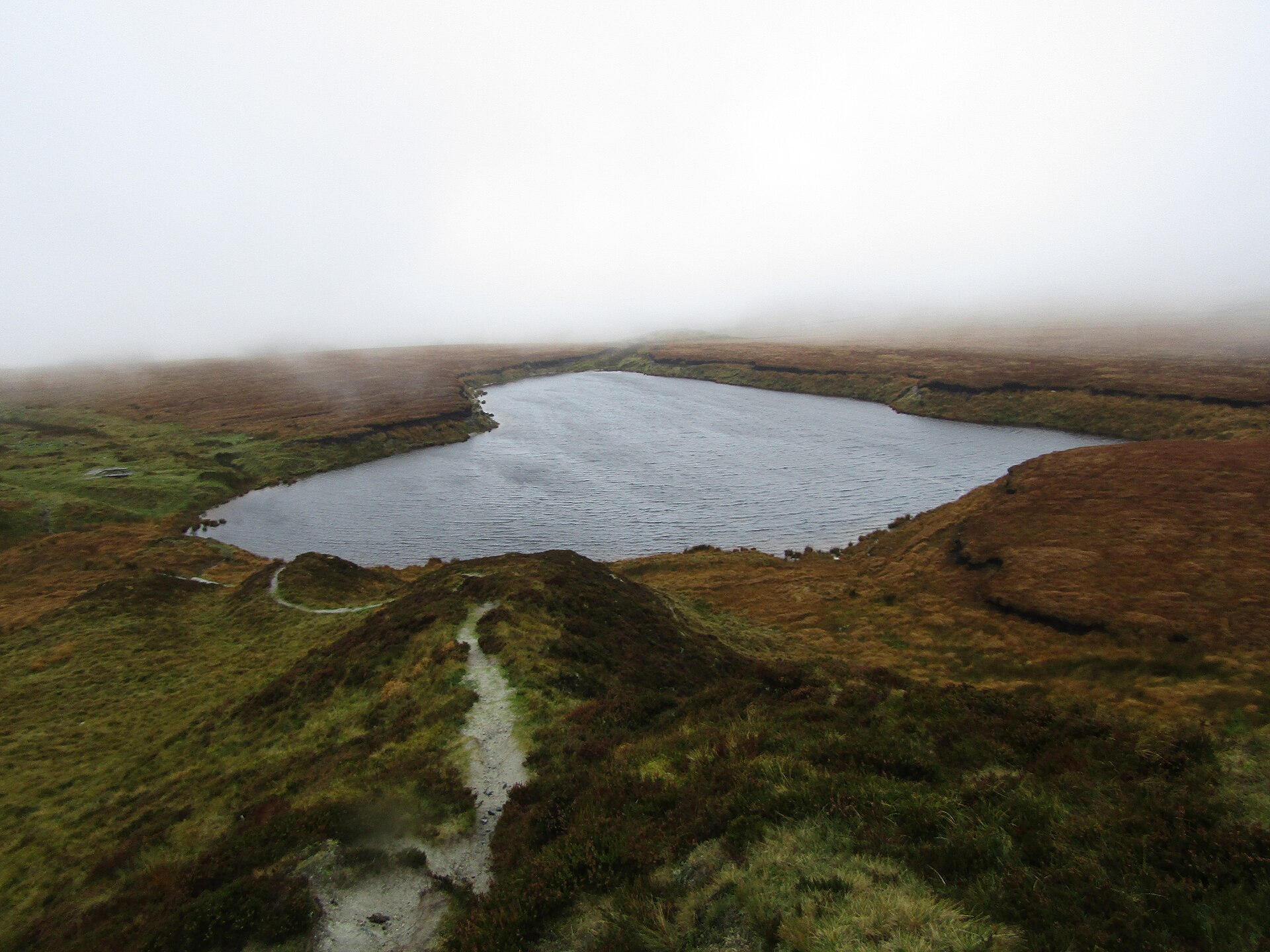
Redlake lies near the centre of southern Dartmoor, in the boggy basin between the Erme and the Plym below White Barrows. The China Clay Corporation leased a large area from the Duchy of Cornwall and in 1911 opened a 3-foot gauge tramway, designed by its engineer R. Hansford Worth, running about eight miles from Bittaford on the Great Western main line to the works, with a cable-worked incline down to the sidings; its locomotives were C. A. Hanson, named after the company's chairman, Dartmoor and the vertical-boilered Lady Mallaby-Deeley. Clay at Redlake lay under about 11 feet of peat and subsoil; it was pumped from a shaft 130 feet deep up a 15-inch steel main to micas and concentrating pits on the hill, then ran by gravity through a double line of 9-inch stoneware pipes nearly eight miles to the settling tanks and drying kiln at Cantrell, Bittaford.
The line opened on 11 September 1911, though it was not fully completed until months later, and the pipeline needed its joints remade after surface water leaked in. Clay was dried in coal-fired pan kilns beside the main line and loaded from the linhays. Clay from the neighbouring Leftlake pit was also processed at Cantrell. The tramway closed in 1932, when its last two locomotives were scrapped. The flooded Redlake pit, its conical spoil heap and the ruins of the pumphouse remain on the moor, and the trackbed is a walking route.
Geology
China clay (kaolin) from decomposed Dartmoor granite beneath about 5 ft of peat and 6 ft of subsoil.
Workings
A clay pit and 130 ft pumping shaft, micas and concentrating pits, an eight-mile pipeline to settling tanks and pan kilns at Cantrell, and an eight-mile 3 ft gauge tramway with a cable incline.
Closure
The works and tramway closed in 1932.
What remains
The flooded pit, a large conical spoil heap and the pumphouse ruins remain at Redlake; the trackbed and Cantrell buildings survive.
The flooded pit, spoil heap, pumphouse ruins, pipeline inspection points, tramway trackbed and the Cantrell processing buildings.
Redevelopment
The tramway trackbed is a walking route; a Cantrell building was later used as a pig sty.
Nearby mines
- Headon Quarry — 4.6 miles (7.4 km) W
- Hemerdon Mine — 5.3 miles (8.6 km) W
- Lee Moor China Clay Works — 5.9 miles (9.5 km) NW
- Eylesbarrow Mine — 7.7 miles (12.4 km) NW
- Ringleshutes Mine — 7.9 miles (12.7 km) N
Straight-line distance, within 9 miles (15 km). Show on the map.
Recorded claims
Individual factual claims, each attached to the source(s) that support it below. Where sources disagree, both are kept.
- The Redlake Tramway was built in 1911 to 3 ft gauge, running 8.3 miles between Bittaford and the clay workings. 1,2
- Clay in solution was conducted through a double line of 9-inch pipes nearly eight miles from the concentrating pits to the tanks and kilns at Bittaford. 2,3
- The Redlake shaft was 10 ft 6 in by 7 ft 6 in and 130 ft deep. 2
- The line opened on 11 September 1911, although it was not fully completed until months later. 3
- Both remaining locomotives were scrapped on the line's closure in 1932. 1
- Redlake and Leftlake are abandoned, flooded pits; the ruins of a pumphouse remain at Redlake. 1
Sources
- (secondary) Redlake Tramway — Wikipedia
- (secondary) Redlake Tramway — Legendary Dartmoor
- (secondary) Red Lake clay workings: Cantrell processing plant, incline, pipeline and locomotive sheds — Dartmoor Explorations
Record created: 17 October 2026 · Last researched: 17 October 2026