 MineArchive
Eylesbarrow Mine
| Also known as | Ailsborough, Ellisborough, Wheal Ruth, Dartmoor Consolidated Tin Mines |
|---|---|
| Location | Eylesbarrow, Dartmoor, Devon — 50.4967, -3.9780 (exact) |
| Commodity | Tin |
| Type | Metal |
| Worked | 1814-15–1856 |
Overview
Dartmoor's largest documented tin mine, worked through the first half of the 19th century and notable for having built the moor's only working smelting house, letting it process ore brought in from other Dartmoor mines rather than shipping it off the moor for smelting.
History
Shares in a mine called 'Ailsborough' were first offered for sale in 1804, and a formal sett — the 'Ellisborough Tin Set' — was granted in 1814, with extraction beginning in February 1815. The mine grew quickly into one of Dartmoor's largest and most prosperous tin workings, alongside Whiteworks and the Birch Tor and Vitifer mines. By 1820 it was sending black tin to Cornwall for smelting, but in 1822 the mine took the unusual step, for Dartmoor, of building its own smelting house — the only one operating on the moor at the time — allowing it to process not only its own ore but black tin brought in from other Dartmoor mines during its nine-year working life. The mine's most productive year was 1825, when around 1,220 hundredweight of tin was coined (officially assayed and taxed) at Tavistock; across 1822-1831 the mine coined roughly 276 tons of white tin, worth close to £30,000. By 1831 the mine employed over sixty men, but that same year the smelter closed as tin prices fell.
The venture struggled on through the 1830s and 1840s under a series of reorganisations and new names — reopening in 1835-36 and passing to the Dartmoor Consolidated Tin Mines company around 1836, with limited smelting continuing until 1841. A full reorganisation in 1847 brought a new nine-headed stamping mill, and the mine was renamed Wheal Ruth in 1851 shortly before final closure in 1852; an equipment auction on 25 September 1852 offered, among other plant, a 50-foot diameter waterwheel built as recently as 1848. Wheal Katherine, a separate part of the wider sett, continued working independently until October 1856.
Geology
Tin of the Dartmoor granite; the lodes worked are not named on the record.
Workings
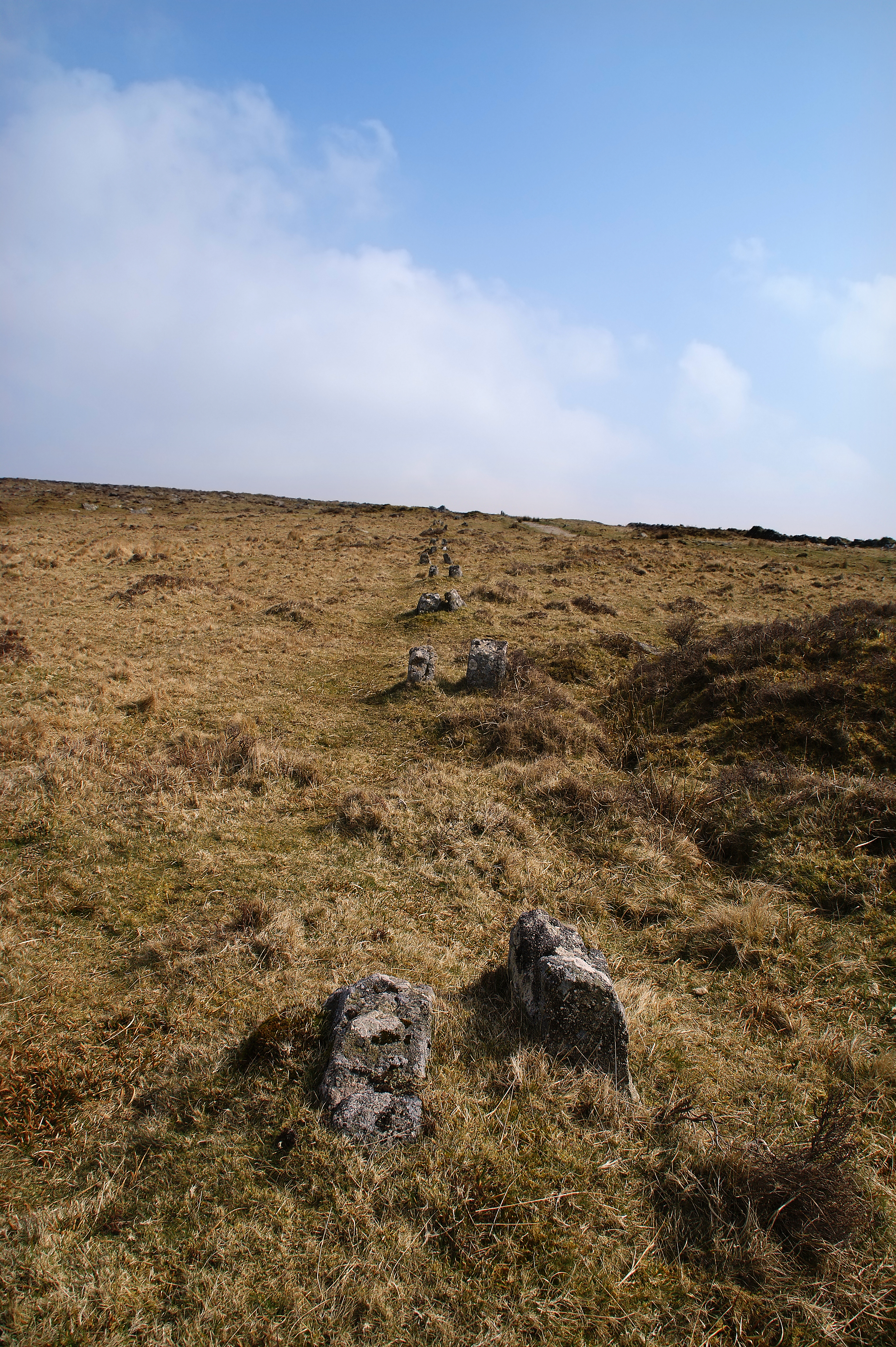
The sett extended across roughly 2km east-west, including Wheal Katherine, and 1km north-south, with over 25 shafts, four adits and seven stamping mills. Waterwheels — the original 1814-15 wheel and a larger 50-foot diameter wheel installed by 1849 — drove pumping and stamping machinery, their power carried up hillsides to distant shafts by flatrod systems running between paired granite pillars, in places over a kilometre long.
Closure
The smelter closed in 1831 as tin prices fell; the mine was reorganised in 1847, renamed Wheal Ruth in 1851 and closed shortly afterwards.
What remains
One of Dartmoor's most extensive and best-preserved mining landscapes, with 25 shaftheads, leats, a reservoir, wheelpits, flatrod pillar lines, stamping mills, dressing floors and the ruins of the mine captain's house all still visible. The smelting house, unique on Dartmoor, was extensively surveyed by English Heritage in 1999.
Nearby mines
- Whiteworks Mine — 2.9 miles (4.6 km) N
- Hexworthy Mine — 4.0 miles (6.5 km) NE
- Lee Moor China Clay Works — 4.5 miles (7.3 km) S
- Hooten Wheals — 5.3 miles (8.6 km) NE
- Merrivale Quarry — 5.4 miles (8.6 km) NW
Straight-line distance, within 9 miles (15 km). Show on the map.
Recorded claims
Individual factual claims, each attached to the source(s) that support it below. Where sources disagree, both are kept.
- Shares in the mine were first offered in 1804; a formal sett was granted in 1814 and extraction began in February 1815. 1,2
- In 1822 the mine built the only smelting house operating on Dartmoor at the time, processing both its own ore and black tin brought from other Dartmoor mines during its nine-year working life to 1831. 1
- The mine's most productive year was 1825, coining around 1,220 hundredweight of tin at Tavistock; across 1822-1831 the mine coined roughly 276 tons of white tin worth close to £30,000. 1
- The mine reopened in 1835-36 under Dartmoor Consolidated Tin Mines, saw limited smelting continue until 1841, and was reorganised again in 1847 with a new nine-headed stamping mill. 2
- Renamed Wheal Ruth in 1851, the mine closed for good in 1852, with an equipment auction on 25 September 1852; the separate Wheal Katherine section continued working until October 1856. 1,2
- Located at about 50.497 N, 3.978 W. 1
Sources
- (secondary) Eylesbarrow mine — Wikipedia
- (secondary) Eylesbarrow (Ailsborough) Tin Mine — Dartmoor Explorations
Record created: 26 August 2026 · Last researched: 26 August 2026