 MineArchive
Hexworthy Mine
| Location | O Brook valley, Dartmoor, Devon — 50.5243, -3.8968 (approximate) |
|---|---|
| Commodity | Tin |
| Type | Metal |
| Worked | At least 1240–1919 |
Overview
A Dartmoor tin mine, also known as Henroost, in the O Brook valley -- one of Dartmoor's last working tin mines, closing in 1919 after tin working had been recorded there since at least 1240.
History
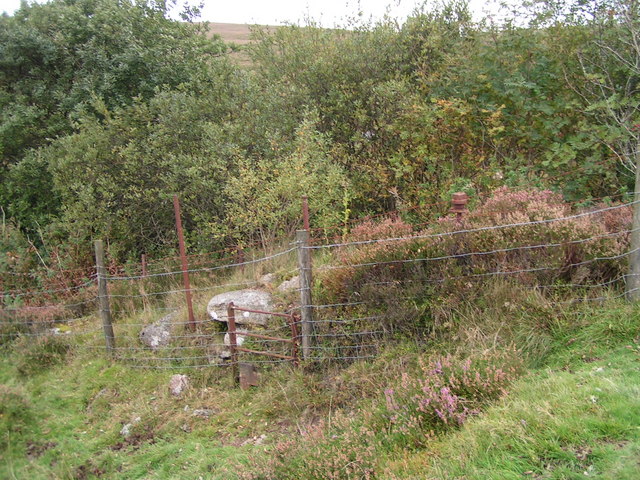
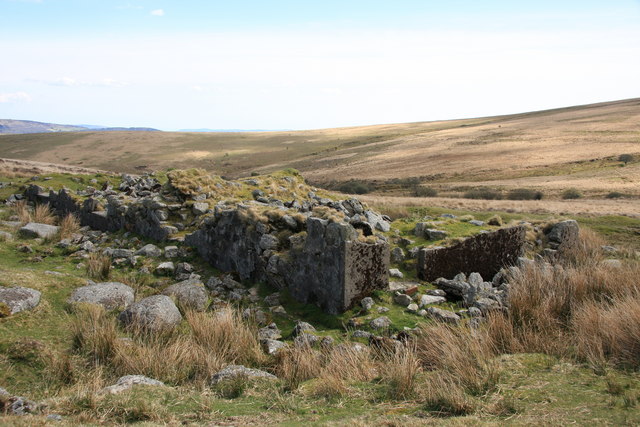
Tin working in the O Brook valley was first recorded in 1240, among the earliest documented tin workings on Dartmoor. In its later years the mine, generally known as Hexworthy, absorbed the smaller neighbouring Hensroost mine and the Skir Gut tin-streaming works; ore was carried from the workings to Hensroost for processing by aerial ropeway, and in the mine's final phase processing moved back to Hooten. Surviving stone rows in the area mark the routes of flatrod systems, which transmitted power from waterwheels uphill to work pumps at the underground workings. The mine finally closed in 1919, one of the last tin operations working on Dartmoor before the industry's final closures either side of the Second World War. An abandonment plan for the tin-ore workings of 'Hexworthy or Hensroost' was deposited for 1 October 1903, so the working that ran on to 1919 was a resumption after that stoppage.
Geology
Tin of the Dartmoor granite; the lodes worked are not named on the record.
Workings
Unknown.
Closure
Closed 1919.
What remains
The wooden waterwheel that powered the site was removed in the early 20th century; its wheelpit survives as one of the most visible remaining features.
Nearby mines
- Hooten Wheals — 2.4 miles (3.9 km) N
- Eylesbarrow Mine — 4.0 miles (6.5 km) SW
- Whiteworks Mine — 4.1 miles (6.6 km) W
- Brimpts Tin Mine — 4.5 miles (7.2 km) N
- Vitifer Mine (Birch Tor and Vitifer) — 5.1 miles (8.3 km) N
Straight-line distance, within 9 miles (15 km). Show on the map.
Recorded claims
Individual factual claims, each attached to the source(s) that support it below. Where sources disagree, both are kept.
- Tin working in the O Brook valley, where Hexworthy Mine lies, was first recorded in 1240. 1
- In its later years the mine absorbed the neighbouring Hensroost mine and Skir Gut tin-streaming works, with ore carried to Hensroost for processing by aerial ropeway; the mine finally closed in 1919. 1
- Stone rows still visible at Hexworthy mark the routes of flatrod systems, which transmitted power from surface waterwheels uphill to work pumps at underground Dartmoor tin workings. 2
- The Mining Remediation Authority holds abandonment plan OM4853 for Hexworthy or Hensroost, its tin-ore workings recorded as abandoned on 1 October 1903. 3
Photographs & further reading
The catalogue entry for the 1903 abandonment plan of the Hexworthy or Hensroost tin workings, held by the Mining Remediation Authority.
View sourceSources
- (secondary) Hexworthy — Wikipedia
- (secondary) Dartmoor tin mining — Wikipedia
- (primary) HEXWORTHY OR HENSROOST (Mine Remediation Authority abandonment plan OM4853, BGS mine plans catalogue) — British Geological Survey / Mining Remediation Authority
Record created: 29 August 2026 · Last researched: 24 September 2026