 MineArchive
Headon Quarry
| Location | Sparkwell, Devon — 50.3944, -3.9944 (approximate) |
|---|---|
| Commodity | China Clay |
| Type | Clay |
| Worked | c. 1860–Still active |
| Maximum depth | Unknown. An open surface pit rather than a shaft mine. |
| Operators | Sibelco |
Overview
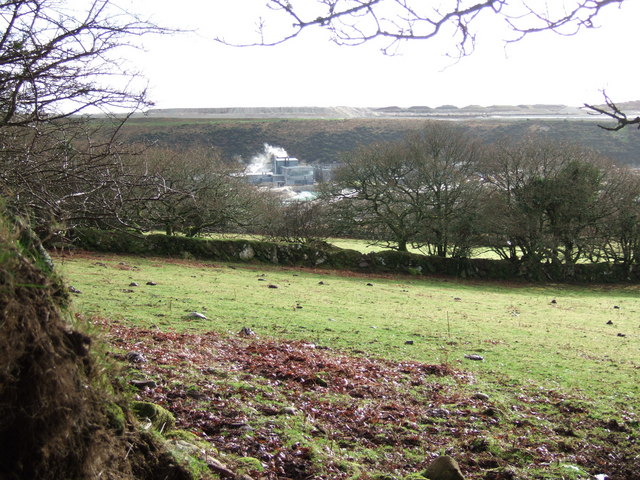
A china clay quarry at Sparkwell, on the south-western edge of Dartmoor, worked as part of the wider Hemerdon china clay works since around 1860 and still worked today by the international minerals group Sibelco alongside the larger Lee Moor pit and the former Hemerdon tungsten mine.
History
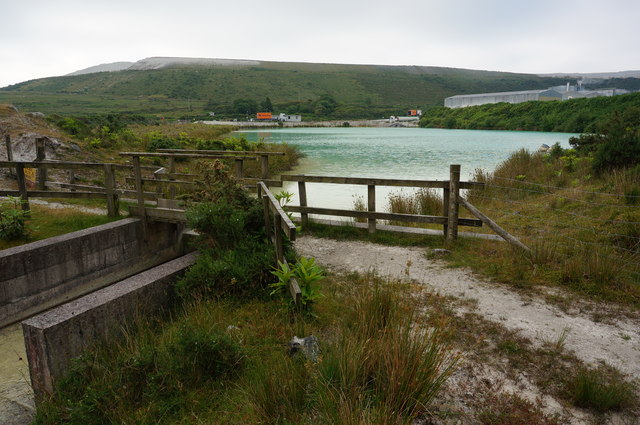
Headon Quarry forms part of the Hemerdon china clay works on the south-western edge of Dartmoor, close to the Hemerdon tungsten and tin mine and the much larger Lee Moor china clay pit, where kaolin has been worked for well over a century. An engine house built around 1907 survives at Headon (West) Quarry, along with two large masonry bases, a rocker beam, and a group of mica drags and settling tanks from the same period -- part of the infrastructure used to wash and separate the china clay from the surrounding waste granite ('stent'). The wider china clay industry on this edge of Dartmoor grew rapidly through the late 19th and early 20th centuries; by 1913 some 400 people were employed at Lee Moor alone. Headon and the neighbouring Hemerdon workings are today operated by Sibelco, an international minerals group, which also runs the larger Lee Moor pit nearby. The Hemerdon china clay works of which Headon formed part were active from around 1860.
Geology
China clay (kaolin) forms here through the deep weathering of the Dartmoor granite; Headon sits on the same granite outcrop, alongside deposits of mica and feldspar, as the neighbouring Hemerdon tungsten-tin deposit.
Workings
An open surface pit; ore-processing infrastructure surviving from around 1907 includes an engine house, masonry bases, a rocker beam, mica drags and settling tanks used to wash and separate the clay.
Closure
Still worked: the quarry remains in production under Sibelco.
What remains
Still an active quarry, operated by Sibelco; the surviving early-20th-century processing structures stand alongside continuing modern workings.
An engine house of around 1907, masonry bases, a rocker beam, and mica drags and settling tanks from the same period.
Nearby mines
- Hemerdon Mine — 1.3 miles (2.1 km) NW
- Lee Moor China Clay Works — 2.9 miles (4.7 km) N
- Cann Quarry — 4.1 miles (6.5 km) NW
- Eylesbarrow Mine — 7.1 miles (11.4 km) N
Straight-line distance, within 9 miles (15 km). Show on the map.
Recorded claims
Individual factual claims, each attached to the source(s) that support it below. Where sources disagree, both are kept.
- An engine house of around 1907 survives at Headon (West) Quarry, together with two large masonry bases, a rocker beam, and a group of mica drags and settling tanks from the same period. 1
- Headon Quarry is operated today by Sibelco, an international minerals group which also runs the larger Lee Moor china clay pit and the former Hemerdon tungsten mine nearby. 1
- Two circular clay settling tanks, each about 12 metres across, stand on a hillock outside the south-western edge of the works, with a series of filter beds immediately to their north. 2
Photographs & further reading
Martin Dyer, Paul Stamper and Andrew Josephs' survey of the works, commissioned ahead of the Headon West extension; paywalled.
View sourceSources
- (secondary) Kaolin (China Clay) from Headon Quarry, Sparkwell — Mindat
- (observational) Disused settling tank near Headon Clay Works (Geograph, Derek Harper, 2007) — Geograph Britain and Ireland
- (observational) Headon China Clay Works — Geograph Britain and Ireland (Derek Harper)
Record created: 30 August 2026 · Last researched: 24 September 2026