 MineArchive
Pandora Mine
| Also known as | Willoughby Lead Mine, Welsh Foxdale Lead Mine, New Pandora Lead Mine |
|---|---|
| Location | Gwydir Forest, near Trefriw, Conwy — 53.1235, -3.8440 (exact) |
| Commodities | Lead, Zinc |
| Type | Metal |
| Worked | From around 1868–1931 |
| Operators | Welsh Crown Spelter Company (1899–1905) |
Overview
A lead-zinc mine in the Gwydir Forest worked on and off from around 1868 to 1931 under a changing succession of names and owners, whose purpose-built processing mill at Klondyke — linked to the mine by a two-mile tramway along Llyn Geirionydd — became the stage for one of Welsh mining's most brazen investment frauds in the 1920s.
History
Lead has been worked at this site in the Gwydir Forest, above Trefriw, since at least around 1868, quite possibly on a smaller scale before that, and continued intermittently under a succession of different mining companies until 1931. The mine changed its own name more than once as ownership changed: Ordnance Survey maps recorded it successively as Willoughby Lead Mine in 1889, Welsh Foxdale Lead Mine in 1900, and New Pandora Lead Mine by 1913. Water for dressing the ore was drawn from three reservoirs built to the east and north-east of the workings, fed through leats to at least three successive waterwheels.
The mine's most ambitious phase began in 1899, when the newly formed Welsh Crown Spelter Company — a subsidiary of an English zinc-smelting concern — set out to process the mine's lead and some zinc ore at a purpose-built mill two miles away, connected by a 2.8km tramway that ran along the eastern shore of Llyn Geirionydd on 22½-inch gauge track, worked at first by a Kerr Stuart petrol locomotive and, over its final drop to the mill, by an aerial ropeway. Completed in 1900 and equipped with stone-breakers, Cornish rolls, trommels, jigs and Wilfley tables, and powered by a hydroelectric turbine fed from Llyn Geirionydd, the mill was a genuinely modern plant for its date — but the mine behind it was never profitable, and the Welsh Crown Spelter Company went into voluntary liquidation in January 1905, the same year Pandora itself stopped working. A brief 1906 revival by the North Western Spelter Syndicate produced barely ten tons of lead ore and fifty tons of blende before folding; the New Pandora Mining Syndicate Ltd employed around fifty men between 1908 and 1912 before it too collapsed, and though Hafna Mines Ltd bought the mine itself in 1912, it never acquired the mill. The mill — by then known as the New Pandora Lead Works, or simply Geirionydd Mill — finally closed for good in 1911.
The site's strangest chapter came afterward. In the 1920s the fraudster Joseph Aspinall, an undischarged bankrupt who had already served time for fraud, used the derelict mill to run one of the era's more theatrical investment scams: he claimed to have found a lode worth 70oz of silver a ton, coached hired 'workers' to perform for visiting shareholders, glued some twenty tons of lead concentrate to the mill's walls to fake a rich discovery, and kept the ore-dressing tables shaking to give an impression of real production. The scheme raised roughly £166,000 from investors before Scotland Yard intervened; Aspinall himself was sentenced to 22 months, later served five years in France for a strikingly similar scam, and a further four for an unrelated oilfield fraud in 1927. It is this episode that gave the mill its lasting name, Klondyke, after the gold-rush conjured up in the promotional literature.
Geology
Pandora worked lead-zinc-bearing hydrothermal veins typical of the wider Gwydir Forest orefield, part of the same north Wales mineralised belt exploited by the district's many other 19th-century lead mines, the ore here yielding galena alongside a workable proportion of zinc blende.
Workings
Ore was raised at the mine itself and, after 1900, hauled the two miles to the Klondyke mill by tramway for crushing and dressing rather than processed on site; earlier phases of working relied on waterwheels fed from a system of purpose-built reservoirs and leats above the mine.
Closure
Pandora itself last worked in 1931; the Klondyke processing mill, on which its most ambitious phase of working depended, had already closed in 1911 after a rapid succession of unsuccessful owners.
What remains
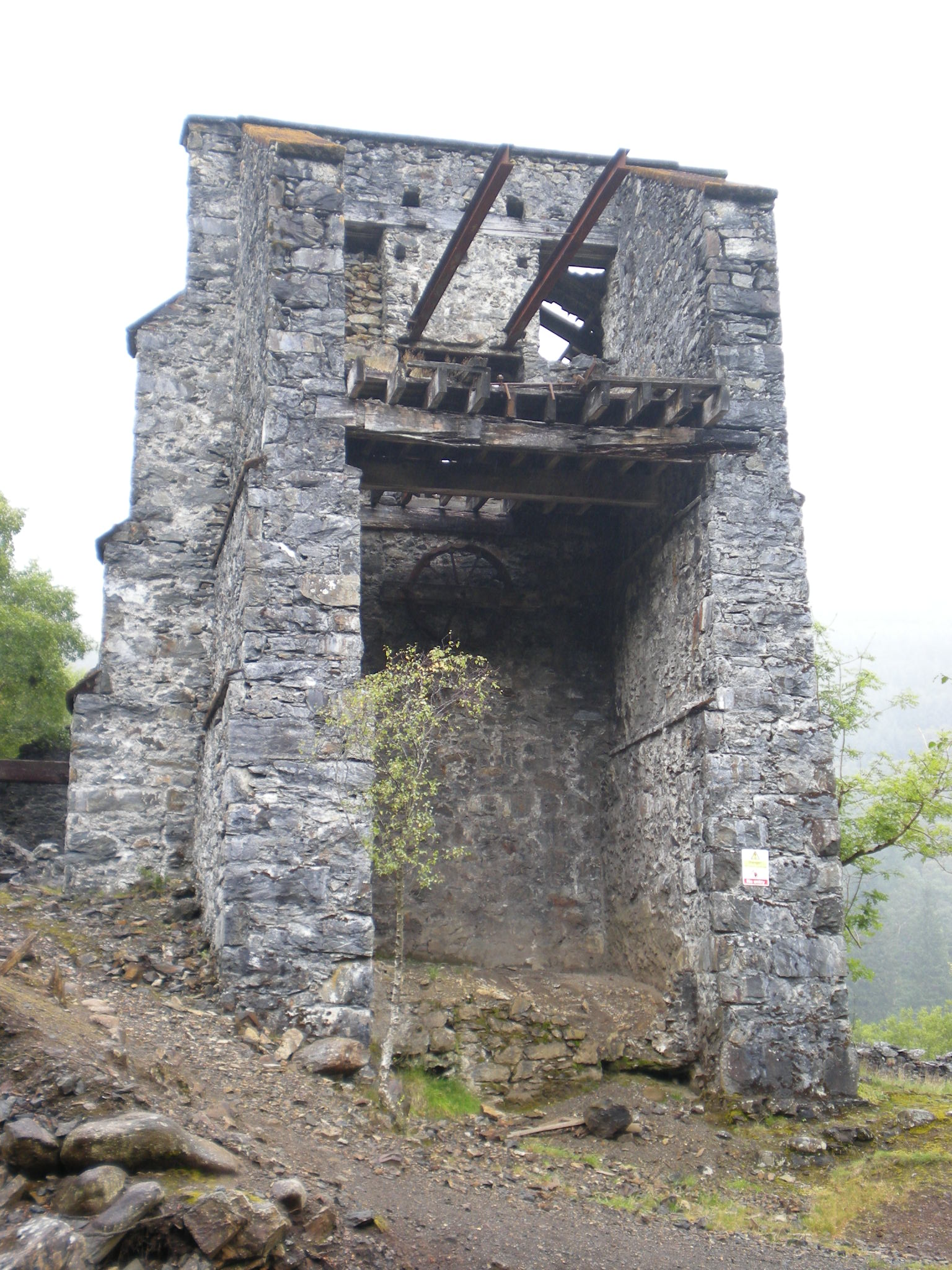
The ruined Klondyke mill — its roof collapsed but the buttressed north and south walls still standing — is a registered ancient monument under the guardianship of Cadw, the only mine structure so designated anywhere in the Gwydir Forest, and is considered the largest surviving building associated with lead mining in north Wales; its waste slag heaps remain heavily lead-contaminated and largely bare of vegetation over a century on. The wider Gwydir Forest's scattered disused lead and zinc mine spoil, of which Pandora's own workings form part, is separately protected as the Gwydyr Forest Mines Special Area of Conservation for the specialised 'calaminarian grassland' plant community that colonises metal-rich mine waste — including the near-endemic moss Ditrichum plumbicola, found almost nowhere else.
The Klondyke mill ruin, sections of the old tramway trackbed (now a public right of way along Llyn Geirionydd towards Trefriw), and spoil heaps at both the mine and mill sites survive; the tramway's iron rails were themselves lifted and salvaged during the First World War.
Related mines
- Hafna Mine — The two mines' workings met underground.
Nearby mines
- Hafna Mine — 0.8 miles (1.3 km) E
- Parc Mine — 1.2 miles (2.0 km) E
- Cae Coch Sulphur Mine — 3.6 miles (5.8 km) N
- Cedryn Quarry — 3.7 miles (5.9 km) NW
- Cwm Eigiau Quarry — 4.6 miles (7.4 km) NW, Gwynedd
Straight-line distance, within 9 miles (15 km). Show on the map.
The Klondyke mill ruin is structurally unstable and its spoil heaps remain heavily lead-contaminated — this entry describes history and general location only, not an access guide.
Recorded claims
Individual factual claims, each attached to the source(s) that support it below. Where sources disagree, both are kept.
- The Welsh Crown Spelter Company built the Klondyke processing mill in 1900 to treat Pandora's ore, connected to the mine by a 2.8km tramway along the eastern shore of Llyn Geirionydd worked by a Kerr Stuart petrol locomotive and, on its final descent, an aerial ropeway. 1
- The Welsh Crown Spelter Company went into liquidation in January 1905, the same year Pandora ceased working; the North Western Spelter Syndicate briefly revived operations in 1906, the New Pandora Mining Syndicate Ltd employed around 50 men from 1908 to 1912, and Hafna Mines Ltd bought the mine (but not the mill) in 1912. 1
- In the 1920s Joseph Aspinall ran an investment fraud at the derelict mill, fabricating a rich silver discovery and staging fake production for visiting shareholders; the scheme raised around £166,000 before Scotland Yard intervened and Aspinall was sentenced to 22 months. 1
- The ruined Klondyke mill is a registered ancient monument under Cadw guardianship, the only mine structure in the Gwydir Forest so designated, and is considered the largest surviving building associated with lead mining in north Wales. 1
- The Gwydyr Forest Mines Special Area of Conservation protects calaminarian grassland colonising the forest's scattered disused lead and zinc mine spoil, including the near-endemic moss Ditrichum plumbicola. 2
Sources
- (secondary) Klondyke mill — Wikipedia
- (primary) Gwydyr Forest Mines Special Area of Conservation — Joint Nature Conservation Committee
Record created: 26 August 2026 · Last researched: 26 August 2026