 MineArchive
Zinc
| Category | Commodities |
|---|---|
| Commodity page | Zinc → |
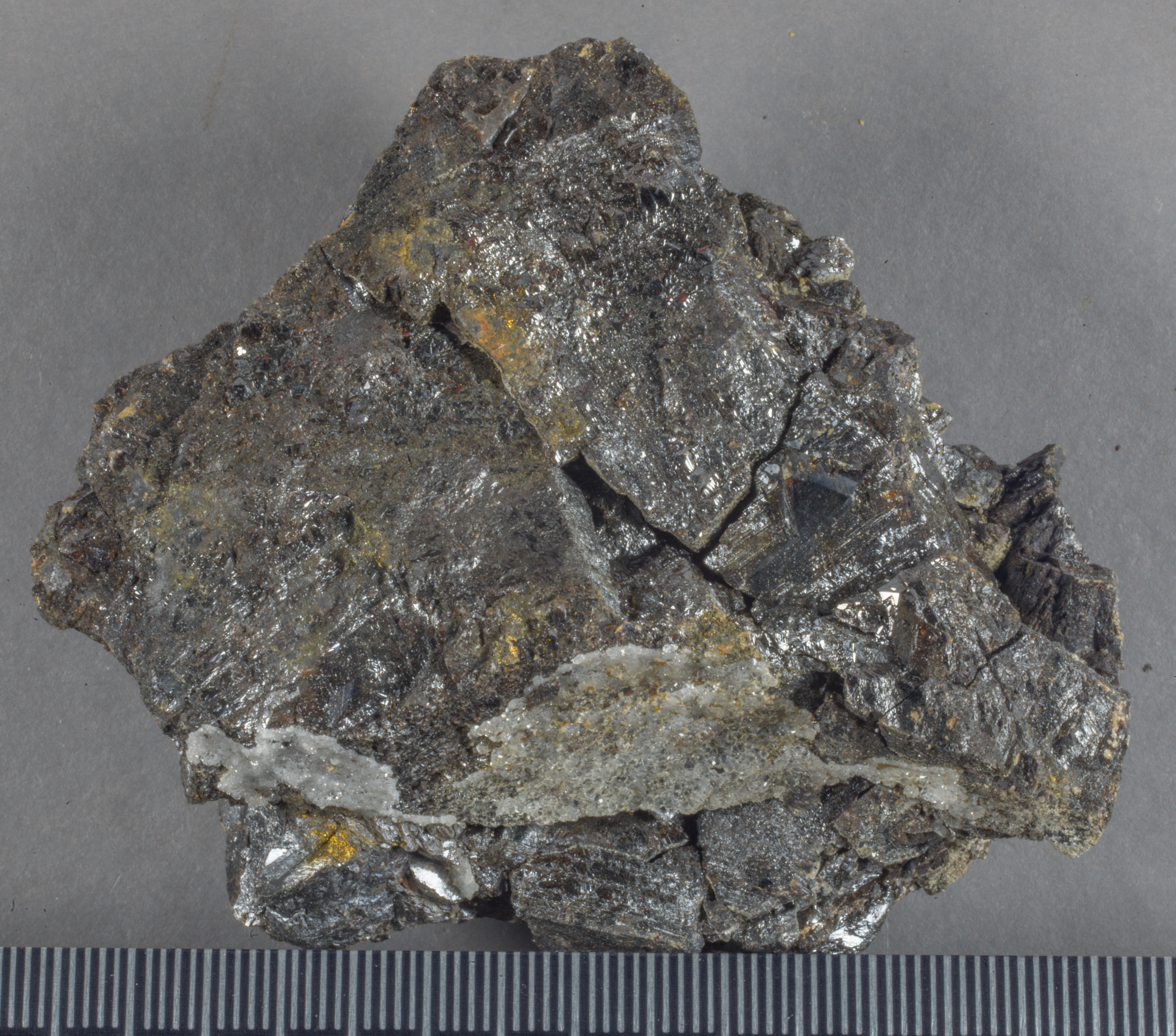
A bluish-white metal (Zn) worked chiefly from sphalerite ("zinc blende") ore, long treated as a troublesome waste mineral in British lead mines before galvanising and brass-making turned it into a valuable target in its own right.
Historical usage
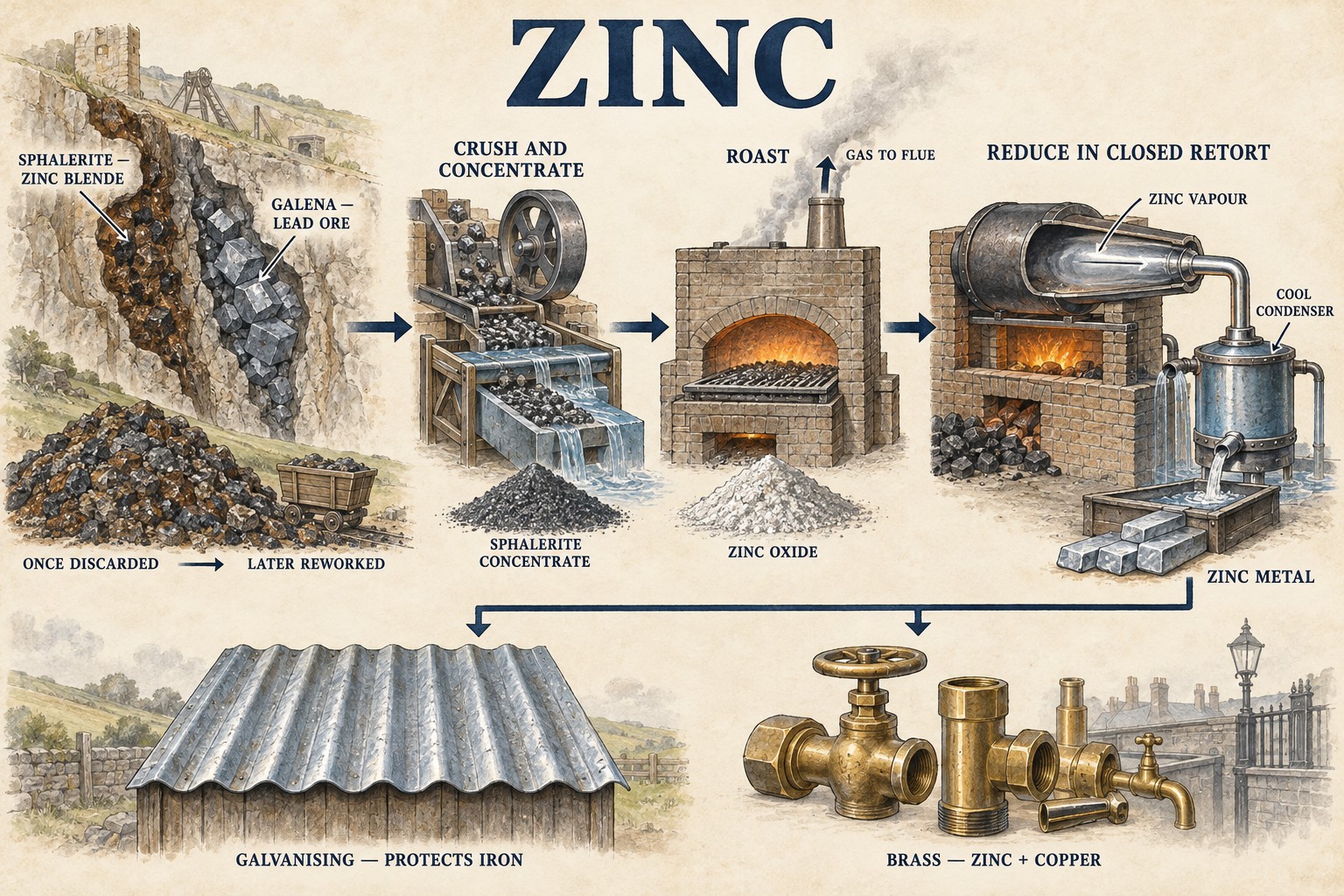
Metallic zinc was smelted commercially in Europe for the first time at Bristol from the 1730s, when William Champion patented a process for distilling it from calamine (zinc carbonate) using charcoal — before this, Britain had imported zinc at great expense from India and China. Bristol became Europe's leading brass producer as a result, combining Champion's zinc with Cornish copper for Birmingham's manufacturers. Deliberate zinc-ore mining developed more slowly, since sphalerite was long discarded as waste alongside lead ore; the growth of galvanising from the mid-19th century — protecting iron and steel from rust by coating it in zinc — transformed demand, and by 1850 the British galvanising industry alone was consuming 10,000 tonnes of zinc a year. Mines including Force Crag, Nenthead, Millclose, Parc, Cwmystwyth and Wanlockhead all reworked old lead ground specifically for the zinc blende their original operators had left behind.
How it worked
Sphalerite was crushed and concentrated by gravity dressing alongside galena, the two minerals separated by their different densities, then smelted or roasted to drive off sulphur and yield metallic zinc or zinc oxide; because zinc boils at a relatively low temperature, early smelting required a specialised distillation furnace rather than the simple reverberatory furnaces used for lead or copper.
Why it was used
Zinc's ability to sacrificially protect iron and steel from corrosion when applied as a coating (galvanising) made it essential to 19th- and 20th-century infrastructure, while its alloy with copper, brass, was prized for its workability, corrosion resistance and gold-like appearance in fittings, instruments and ornamental work.
Value over time
Zinc had comparatively little independent commercial value in Britain until galvanising created mass demand from the mid-19th century onward; before that, sphalerite recovered alongside lead was frequently discarded as waste rather than sold. Once galvanising and brass-making were established as major industrial consumers, zinc ore prices rose enough to justify dedicated processing and even reworking old mine spoil for blende that earlier operators had thrown away — but, as with Britain's other base metals, 20th-century competition from larger, cheaper overseas orebodies eventually ended domestic zinc mining.
Hazards & challenges
Inhaling zinc oxide fumes during smelting or roasting causes metal fume fever, an acute short-term illness with chills, fever and weakness that typically resolves within a couple of days of exposure ending; a more serious long-term risk comes from cadmium, which commonly occurs as a trace impurity within sphalerite and can cause severe lung and kidney damage with prolonged exposure to smelting fumes.
Risks & limitations
Because zinc mining in Britain so often meant reworking old lead ground for a secondary mineral, its economics were tied to the state of a mine's original lead reserves and to whatever separation technology — gravity dressing, later flotation — was available at the time; British zinc mining ultimately succumbed to the same competitive pressure as lead and copper, unable to match the cost of much larger overseas deposits developed through the 20th century.
Regional variation
The North Pennines (Nenthead, Force Crag), the Peak District (Millclose), mid-Wales (Cwmystwyth, Parc) and the Scottish Lowther Hills (Wanlockhead) all produced significant zinc as lead mines increasingly targeted or reworked for blende through the 19th and early 20th centuries.
Related terminology
Mines associated with this term
5 examples chosen from 63 linked records — the term page is not an index.
- Caplecleugh Mine — Cumbria (well documented example)
Named 5 times in this record, first in the summary: “A lead and, later, zinc mine in the Nenthead field on Alston Moor, opened under Adam…” - Carshield Mine — Northumberland (well documented example)
Named 7 times in this record, first in the summary: “…in 1899 the Belgian firm Vieille Montagne reopened the workings for zinc and worked them until 1913. The 1914 statutory return still enters…” - Millclose Mine — Derbyshire (well documented example)
Named twice in this record, first in the history: “…yielding over 500,000 tons of lead ore and almost 100,000 tons of zinc ore over its working life, with a further roughly 140,000 tons…” - Milwr Tunnel — Flintshire (well documented example)
The mines the tunnel drained produced around 80,000 tons of zinc ore over their working lives, alongside 200,000 tons of lead ore. - Nantymwyn Mine — Carmarthenshire (well documented example)
Named in this record’s history: “…the Sulphide Corporation used chemical flotation to extract lead and zinc from ore in the mine's final years before its 1932 closure; its…”
See every mine that worked zinc →
Disasters associated with this term
Included only where MineArchive's own research gives a reasonable evidential basis, with the nature of the relationship stated — not every disaster where this term might plausibly apply.
- Wheal Jane acid mine water discharge, 1992 (contextual relationship)
Named in this record’s contributing factors: “…impounded water highly acidic (pH 3.1) and rich in dissolved iron, zinc, cadmium and arsenic well before the collapse released it.”
Sources
- (primary) Toxicological Profile for Zinc: Relevance to Public Health — NCBI Bookshelf / ATSDR
- (secondary) The potted history of galvanizing — Galvanizers Association UK
- (secondary) William Champion (metallurgist) — Wikipedia
Record created: 22 August 2026 · Last researched: 22 August 2026