 MineArchive
Sphalerite
| Category | Commodities |
|---|
Zinc sulphide (ZnS), the principal ore mineral of zinc, historically known to British miners as blende or blackjack.
Historical usage
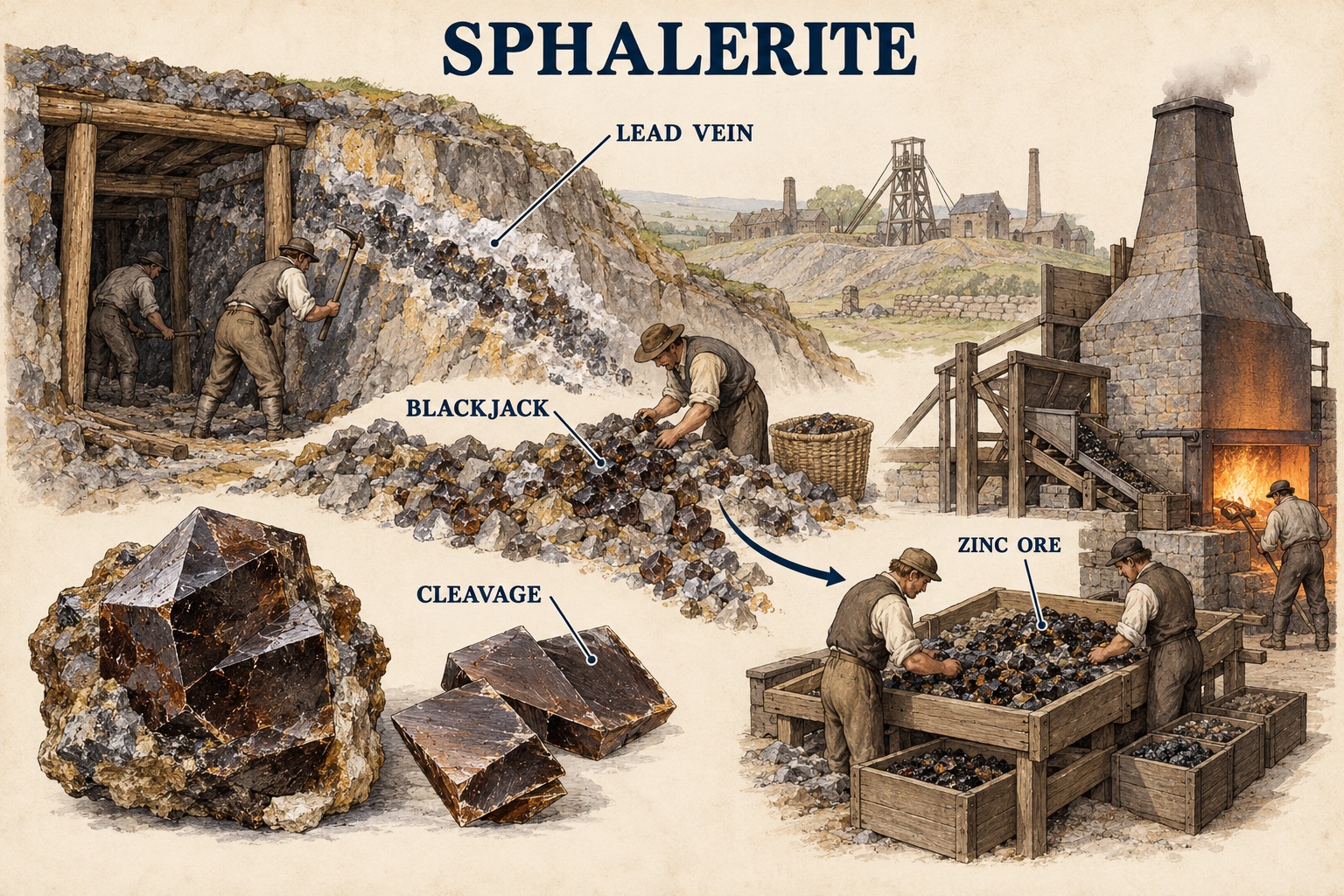
Named 'blende' by Georgius Agricola in 1546, from the German blenden, 'to blind' or deceive, because the mineral resembles lead ore in appearance but contains no lead and was consequently often thrown away as worthless. English miners called the darker, resinous-looking varieties blackjack or mock ore for the same reason — even in the 16th century it was sometimes mistaken for silver ore. Zinc was not identified as its actual content until the first half of the 18th century, and no practical metallurgical method existed to extract that zinc until the 1860s, so for most of British mining history sphalerite was a nuisance mineral discarded from lead veins rather than worked for its own sake.
How it worked
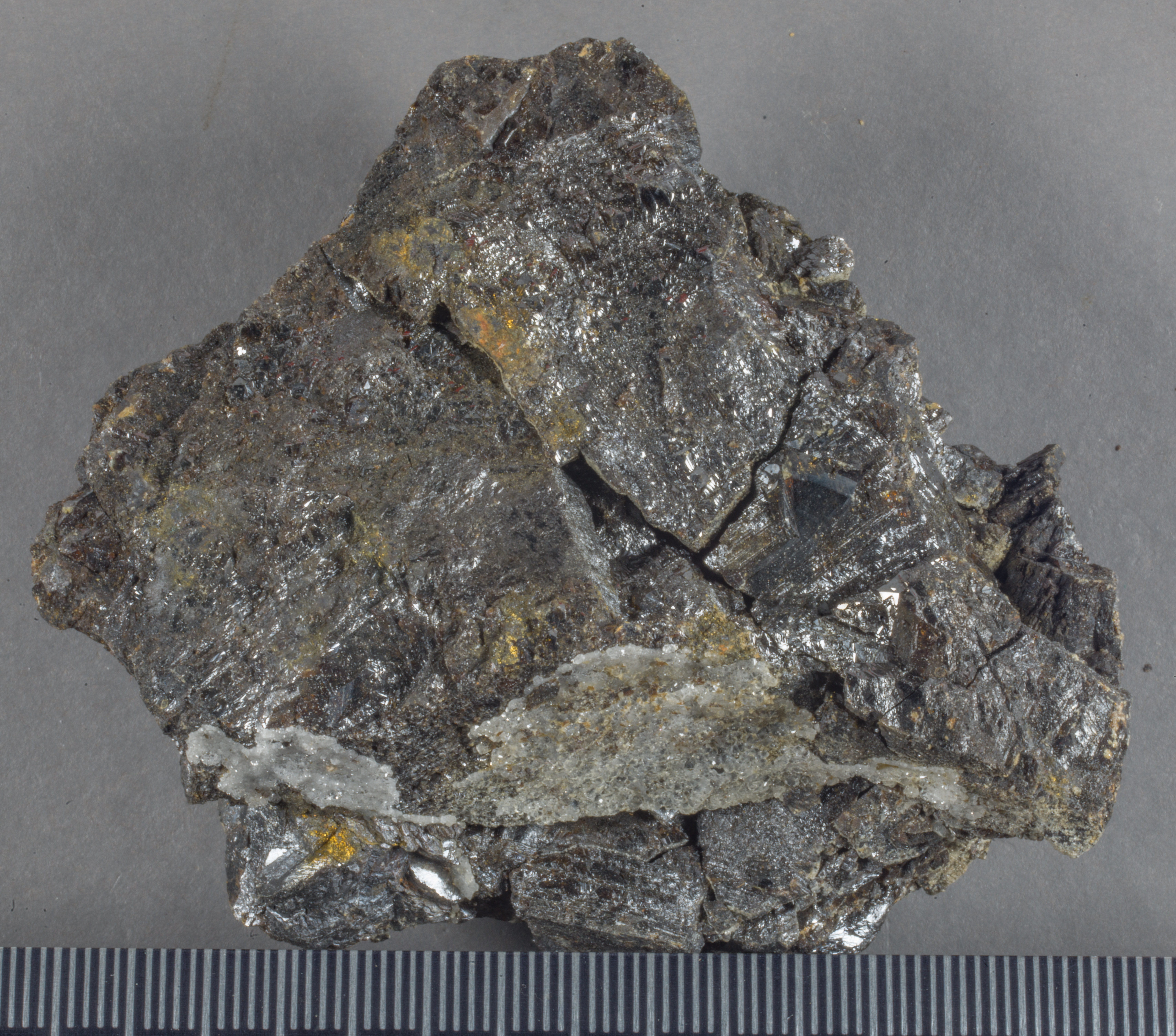
Sphalerite occurs as tetrahedral or dodecahedral crystals, massive, grainy or botryoidal habits, with a resinous to adamantine lustre and colour ranging from pale yellow through brown to black depending on iron content; its near-perfect dodecahedral cleavage and relative softness (3.5-4 on the Mohs scale) helped miners tell it apart from similarly heavy but harder minerals once they knew what to look for.
Why it was used
Once a workable extraction process existed from the 1860s onward, sphalerite became worth raising deliberately as Britain's principal zinc ore, frequently found growing alongside galena in the same lead veins across the country's orefields.
Risks & limitations
For most of its mining history, sphalerite was an unwanted by-product rather than a target ore — it was routinely discarded from lead workings for well over two centuries before its zinc content could be economically extracted, meaning huge quantities were lost to spoil heaps long before demand for zinc created a reason to recover it.
Regional variation
Occurs alongside galena in most of Britain's major lead orefields, most commonly in south-west England's hydrothermal veins, but also as a replacement deposit in limestone in districts such as Derbyshire.
Related terminology
Mines associated with this term
5 examples chosen from 27 linked records — the term page is not an index.
- Brownley Hill Mine — Cumbria (well documented example)
Named in this record’s history: “…has since produced notable specimens of galena, fluorite, millerite, sphalerite and rarer supergene minerals.” - Coalcleugh — Northumberland (well documented example)
Named in this record’s geology: “…same veins and became the last commodity worked here; the zinc, as sphalerite, sat alongside the galena all along and was waste to the lead miners.” - Curraghinalt Gold Mine — County Tyrone (well documented example)
Named in this record’s geology: “…hessite and in pyrite, with arsenopyrite, chalcopyrite, galena and sphalerite; it was introduced in two phases, one about 90% gold and a later,…” - East Boscaswell Mine — Cornwall (well documented example)
Named in this record’s history: “…of St Just, working tin-bearing lodes for cassiterite and some sphalerite. An old mine, it was reopened in 1859 by a new company; the mining…” - Gravel Hill Mine — Cornwall (well documented example)
Named in this record’s geology: “…Lower Devonian Meadfoot Group slates (killas): siderite with black sphalerite, oxidised near surface to haematite, goethite and limonite to about…”
Sources
- (secondary) 1911 Encyclopædia Britannica/Blende — Wikisource
- (secondary) Sphalerite — Minerals.net
Record created: 27 August 2026 · Last researched: 27 August 2026