 MineArchive
Blaenserchan Colliery
| Location | Abersychan, near Pontypool, Torfaen — 51.7120, -3.0953 (exact) |
|---|---|
| Commodity | Coal |
| Type | Coal |
| Worked | 1890–28 August 1985 |
| Maximum depth | Second shaft around 354-363 yards |
| Operators | Partridge, Jones & Co. (1890–?) |
Overview
A Pontypool-area colliery sunk in 1890, whose 95 years of production ended not with its own closure but by being quietly absorbed into a neighbour's underground network in 1969, decades before its final closure in 1985 as the last deep mine to work the Afan Lwyd Valley.
History
Blaenserchan Colliery was sunk with a single shaft in 1890 by Partridge, Jones & Co Ltd, initially reaching the Tillery seam at a depth of 113 yards and using the neighbouring Llanerch Colliery as its ventilation (downcast) shaft. The shaft was deepened to 362 yards in 1899 to reach the Steam Coal seams, and a second shaft, around 354-363 yards deep, was sunk in the early-to-mid 1910s. The colliery worked house coal from the Tillery seam at first, later extending to the Brithdir, Five-Feet/Gellideg, Four-Feet, Nine-Feet, Meadow Vein and Black Vein seams, and eventually the thin but crucial Garw seam — only 2ft 9in to 3ft thick, but holding some 3.5 million tons of reserves that proved vital to the colliery's later operations. Employment grew steadily — 398-436 underground workers in 1896, a combined 2,060 with Llanerch by 1918, around 1,105 by 1923 — before falling to 720 at the industry's 1947 nationalisation.
In 1969, Blaenserchan stopped winding coal to its own surface altogether: production was instead routed underground through the neighbouring Tirpentwys Colliery and on to Hafodyrynys for processing, with Blaenserchan itself continuing purely as an underground working. That arrangement changed again in 1977, when coal began reaching the surface via a drift at the Abertillery New Mine instead. Blaenserchan finally closed on 28 August 1985, the last deep mine to have worked the Afan Lwyd Valley, with 424 men employed at the end; its surface buildings were demolished between March and May 1988.
Geology
Worked the Upper and Middle Coal Measures of the eastern South Wales Coalfield's Blaenavon/Pontypool district, through numerous seams from the Tillery down to the thin but valuable Garw seam.
Workings
A deep shaft colliery, its original 1890 shaft eventually deepened to 362 yards and supplemented by a second shaft from the early-to-mid 1910s; from 1969 it was worked purely as underground production routed through neighbouring collieries rather than wound to its own surface.
Closure
Closed on 28 August 1985 after 95 years of production, the last deep mine to have worked the Afan Lwyd Valley; surface buildings were demolished between March and May 1988.
What remains
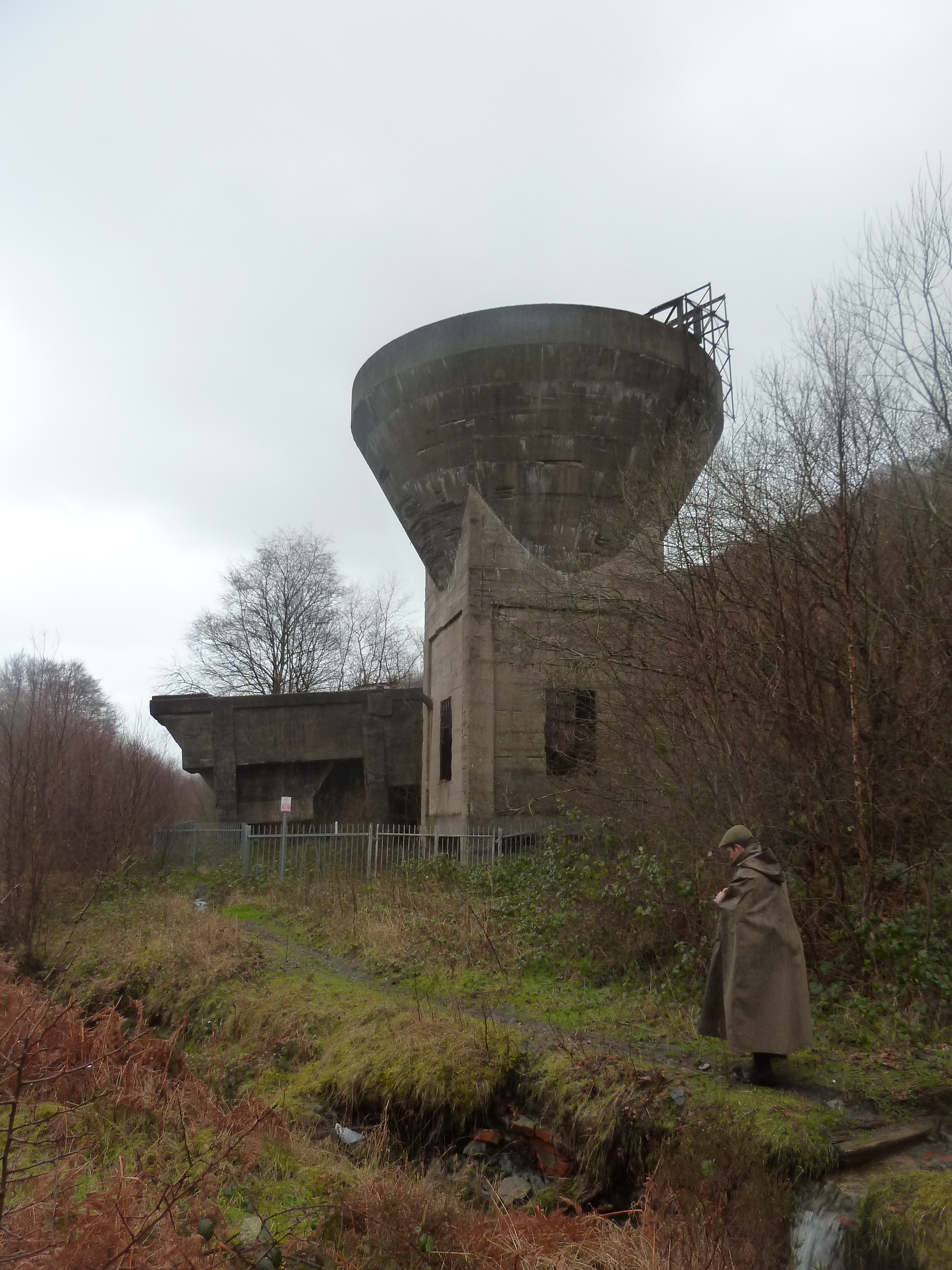
The colliery washery and other surface remains, including the site of the pithead baths steps, survive in ruined form; an underground roadway has also been documented by explorers.
Ruined washery buildings and other surface remains survive at the site, part of a wider post-industrial landscape in the Blaenserchan valley.
Related mines
- Gwenallt Colliery — Gwenallt was connected to Blaenserchan through the Meadow Vein.
- Llanerch Colliery — Llanerch supplied the downcast ventilation for Blaenserchan until Blaenserchan sank its own downcast shaft in 1913; the two were returned together in the employment figures for 1908 and 1918.
- Rose Heyworth Colliery — Blaenserchan's coal was brought to the surface through the Abertillery New Mine drift that Rose Heyworth and Cwmtillery shared from 1959.
- Tirpentwys Colliery — After Tirpentwys stopped producing coal in 1969 it was retained as a pumping station and to provide ventilation for the coal-clearance system that carried Blaenserchan’s coal underground to Hafodyrynys — the closed pit kept open to keep its neighbour working.
Nearby mines
- Glyn-nant-ddu Colliery — 0.3 miles (0.4 km) NE
- Llanerch Colliery — 0.5 miles (0.9 km) E
- Blaencuffin Level — 0.9 miles (1.4 km) W, Blaenau Gwent
- Cwmbyrgwm Colliery — 0.9 miles (1.5 km) NE
- Gwenallt Colliery — 1.2 miles (1.9 km) E
Straight-line distance, within 9 miles (15 km). Show on the map.
Recorded claims
Individual factual claims, each attached to the source(s) that support it below. Where sources disagree, both are kept.
- Blaenserchan Colliery was sunk in 1890 by Partridge, Jones & Co Ltd, reaching the Tillery seam at 113 yards, and deepened to 362 yards in 1899; a second shaft followed in the early-to-mid 1910s. 1,2
- Employment grew from around 400 underground workers in 1896 to a combined 2,060 with Llanerch by 1918, working seams including Tillery, Brithdir, Four-Feet, Nine-Feet, Meadow Vein, Black Vein and the thin but reserve-rich Garw seam. 2
- From 1969 Blaenserchan's coal was wound to the surface via the neighbouring Tirpentwys Colliery rather than its own shafts, a routing that changed again in 1977; the colliery finally closed on 28 August 1985 as the last deep mine in the Afan Lwyd Valley. 1,2
Sources
- (secondary) Blaenserchan Colliery, Pontypool — Welsh Coal Mines
- (secondary) Blaenserchan Colliery — Northern Mine Research Society
Record created: 27 August 2026 · Last researched: 27 August 2026