 MineArchive
Washery
| Category | Ore Processing |
|---|
A colliery's coal-washing and preparation plant, where run-of-mine coal was cleaned of stone and dirt, crushed and graded by size before sale.
Historical usage
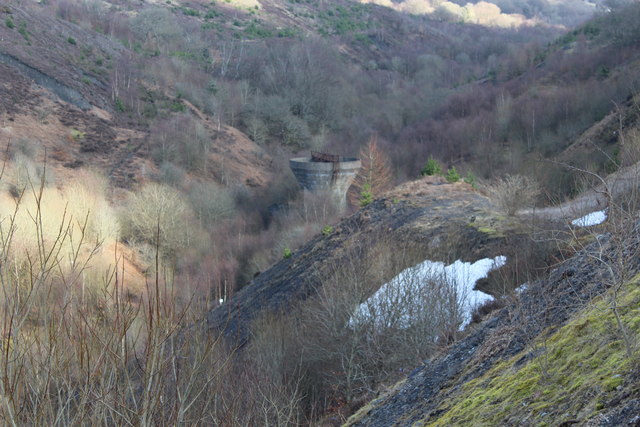
Coal preparation plants -- almost always called washeries in British coalfield usage -- became increasingly important through the 20th century as seams grew dirtier and customers demanded a more consistent, higher-quality product; large purpose-built washeries were added to many established collieries in the interwar and post-nationalisation periods, often as one of the largest and most visible surface structures on the site.
How it worked
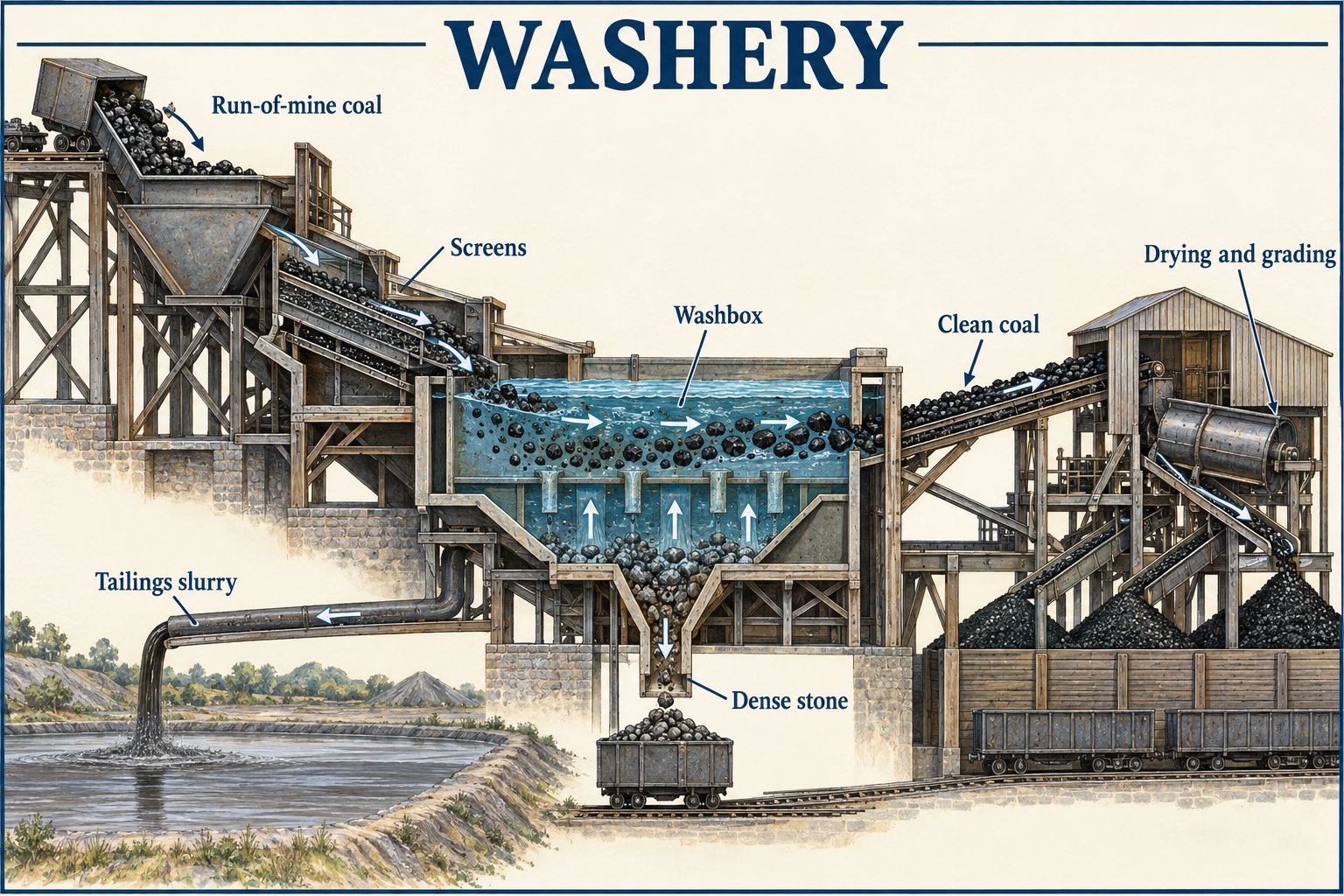
Coal washing relies on the difference in density between coal and the stone and shale mixed in with it as it comes out of the ground. Run-of-mine coal was first screened to sort it by size, then washed in water-based separation equipment -- washboxes and, later, froth flotation for the smallest grades -- that let the lighter coal float free of the denser waste ('ash'), before the cleaned coal was dried, graded and loaded out.
Why it was used
Cleaning and grading coal at the pit made it worth more to buyers and let a colliery meet the tighter specifications increasingly demanded by industrial and domestic customers, rather than shipping stone and dirt along with the coal itself.
Risks & limitations
Washeries were dusty, noisy places to work, and the fine coal slurry left over once the usable product was separated out — the 'tailings' — had to go somewhere: most collieries pumped it to a settling pond or lagoon, leaving a legacy of silted ground and, where a lagoon failed or overflowed, pollution of local watercourses that in some cases persisted for decades after the colliery itself closed. Coal dust generated during washing, crushing and drying was itself a genuine explosion hazard on the surface, distinct from the underground firedamp risk the washery had nothing to do with.
Regional variation
Simple jig washers and washboxes, relying on gravity and pulsating water to separate coal from denser waste, remained standard well into the 20th century; the largest, most modern washeries — increasingly common after nationalisation — added froth flotation to recover usable coal even from the very finest slurry that gravity-based washing could not economically clean.
Related terminology
Mines associated with this term
5 examples chosen from 82 linked records — the term page is not an index.
- Abernant Colliery — Neath Port Talbot (well documented example)
Named twice in this record, first in the history: “…Coal announced closure early in 1988, together with the Wernos washery; about 800 men were affected, and the men set aside their decision…” - Blaenserchan Colliery — Torfaen (well documented example)
Named twice in this record, first in the current condition: “The colliery washery and other surface remains, including the site of the pithead baths…” - Chisnall Hall Colliery — Lancashire (well documented example)
Named 4 times in this record, first in the summary: “…the last pit in the Wigan area apart from small private mines; its washery kept going four months longer, washing coal brought over from Wood…” - Marine Colliery — Blaenau Gwent (well documented example)
Named in this record’s history: “…the colliery's first full year to 600,000 tons by 1935; a large coal washery, described at the time as the largest in Britain, was built in…” - Allerton Bywater Colliery — West Yorkshire (well documented example)
Named in this record’s workings: “…laid in the 1930s from Wheldale to Fryston, which had the group’s washery.”
Disasters associated with this term
Included only where MineArchive's own research gives a reasonable evidential basis, with the nature of the relationship stated — not every disaster where this term might plausibly apply.
- Neilsland Colliery inrush, 1916 (contextual relationship)
Named 3 times in this record, first in the summary: “On 26 April 1916 washery sludge used to fill the old No. 3 Eddlewood shaft burst into the Ell…”
Sources
- (secondary) Coal mining - Coal preparation — Encyclopaedia Britannica
- (secondary) Coal preparation plant — Wikipedia
Record created: 31 August 2026 · Last researched: 31 August 2026