 MineArchive
Chisnall Hall Colliery
| Location | Coppull Moor, near Coppull, Borough of Chorley, Lancashire — 53.6062, -2.6821 (exact) |
|---|---|
| Commodity | Coal |
| Type | Coal |
| Worked | By 1896–24 March 1967 |
| Maximum depth | Unknown. |
| Operators | Pearson and Knowles Coal and Iron Company (1896–1947), National Coal Board (1947–1967) |
Overview
The largest colliery on the Lancashire coalfield north of Wigan, on Coppull Moor, worked from at least the 1890s until 1967. Over a thousand people were employed there in 1933, raising more than 300,000 tonnes a year. When it closed it was the last pit in the Wigan area apart from small private mines; its washery kept going four months longer, washing coal brought over from Wood Pit at Haydock.
History
The colliery on Coppull Moor was owned by the Pearson and Knowles Coal and Iron Company in 1896, when it employed 135 underground and 48 surface workers. By 1908 it appeared on maps as a coal mine with two shafts and railway sidings, connecting its mile-and-a-half mineral railway to the London and North Western Railway's West Coast Main Line.
It grew to be the largest colliery on the Lancashire coalfield north of Wigan: more than a thousand people were employed there in 1933, producing over 300,000 tonnes of coal a year.
The colliery closed on 24 March 1967 and was the last pit working in the Wigan area apart from small, privately owned mines. The washery and the railway stayed open about four months longer, washing coal brought from Wood Pit at Haydock. The site was restored by Lancashire County Council between 1981 and 1983 and opened to the public. The colliery's abandonment plans, twenty-four of them, are held by the Mining Remediation Authority.
Geology
The colliery worked the coal measures of the Lancashire coalfield on Coppull Moor, at its northern end beyond Wigan. No detail of the individual seams worked is recorded.
Workings
Two shafts, shown on maps from 1908 with railway sidings, served by a mineral railway a mile and a half long running to the London and North Western Railway's West Coast Main Line. A washery on the site outlasted the colliery itself by four months.
Closure
Closed on 24 March 1967, the last pit in the Wigan area apart from small privately owned mines. The washery and railway remained open for about four months afterwards, washing coal brought from Wood Pit at Haydock. No source gives the colliery's original sinking date; it is first recorded in company ownership in 1896.
What remains
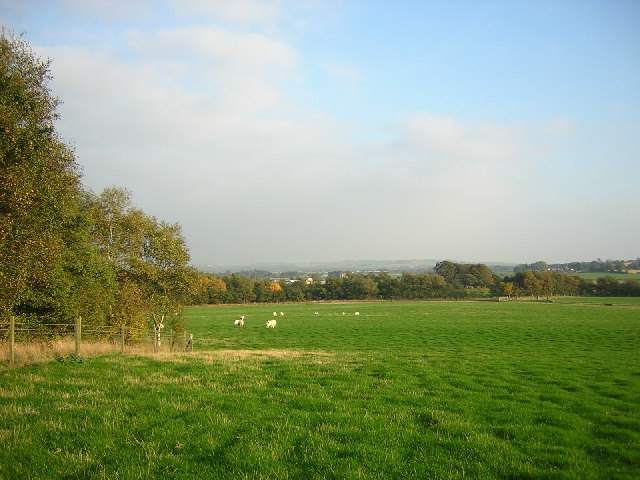
The site was restored by Lancashire County Council between 1981 and 1983 and opened to the public. It is now reclaimed open ground with paths, and nothing of the colliery stands.
None; the site was reclaimed in 1981–83 and is now public open space.
Redevelopment
Reclaimed by Lancashire County Council between 1981 and 1983 and opened to the public.
Related mines
- Ince Moss Colliery — Both worked by the Pearson and Knowles Coal and Iron Company.
- Wigan Junction Colliery — Both worked by the Pearson and Knowles Coal and Iron Company.
Nearby mines
- Blainscough Colliery — 1.0 miles (1.6 km) NE
- Broomfield Colliery — 1.1 miles (1.8 km) SE, Greater Manchester
- Langtree Colliery — 1.2 miles (2.0 km) SE, Greater Manchester
- Coppull Colliery — 1.3 miles (2.1 km) NE
- Birkacre Colliery — 2.0 miles (3.3 km) NE
Straight-line distance, within 9 miles (15 km). Show on the map.
Disasters & major incidents
-
Chisnall Hall Colliery overwind, 1893
29 July 1893 · Winding / Shaft Accident · 2 fatalities
Two men in the sinking pit at Chisnall Hall Colliery, Coppull, fell 170 yards on 29 July 1893 when the engineman overwound the hoppet and it parted from the safety hook.
Recorded claims
Individual factual claims, each attached to the source(s) that support it below. Where sources disagree, both are kept.
- The colliery on Coppull Moor was owned by the Pearson and Knowles Coal and Iron Company in 1896, when it employed 135 underground and 48 surface workers. 1
- By 1908 the colliery appeared on maps with two shafts and railway sidings connecting its mile-and-a-half mineral railway to the London and North Western Railway's West Coast Main Line. 1
- More than 1,000 people were employed at the colliery in 1933, producing more than 300,000 tonnes of coal annually; it was the largest coal mine on the Lancashire coalfield north of Wigan. 1
- The colliery closed on 24 March 1967 and was the last pit in the Wigan area apart from small privately owned mines; the washery and railway remained open about four months longer, washing coal brought from Wood Pit at Haydock. 1
- The site was restored by Lancashire County Council between 1981 and 1983 and opened to the public. 1,2
- The Mining Remediation Authority holds abandonment plan SFE412 for Chisnall Hall, one of twenty-four catalogue entries for the colliery. 3
Photographs & further reading
The colliery's ownership, scale and closure, and the reclamation of its site in the early 1980s.
View sourceSources
- (secondary) Chisnall Hall Colliery — Wikipedia
- (secondary) Coppull — Wikipedia
- (primary) CHISNALL HALL (Mine Remediation Authority abandonment plan SFE412, BGS mine plans catalogue) — British Geological Survey / Mining Remediation Authority
Record created: 3 September 2026 · Last researched: 24 September 2026