 MineArchive
Allerton Bywater Colliery
| Location | Allerton Bywater, near Castleford, West Yorkshire — 53.7530, -1.3745 (approximate) |
|---|---|
| Commodity | Coal |
| Type | Coal |
| Worked | 1875–1992 |
| Maximum depth | The Silkstone seam was worked at 385 yards |
| Operators | Airedale Collieries Ltd (1919–1947), National Coal Board (1947–1992) |
Overview
The third and last colliery in a village that had been getting coal since the fifteenth century, worked from 1875 to 1992 and the last deep mine in the Leeds area. It joined Wheldale and Fryston under Airedale Collieries Ltd in 1919 and passed to the National Coal Board in 1947. An explosion in the Silkstone seam on 10 March 1930 killed five men and a pit pony (see Disasters, below). When it closed 1,060 jobs went and millions of tonnes of coal were left underground.
History
Coal mining at Allerton Bywater goes back to the fifteenth century, and bell pits were worked in the south-east corner of Hollinhurst Wood in the seventeenth. The first colliery proper in the village ran from 1756 to 1820 on the shallow Warren House seam; a second worked the Haigh Moor seam at 140 yards from 1840 to 1875. Allerton Bywater Colliery was the third, sunk in 1875, and it outlasted every other pit in the district. In 1919 the Wheldale coal company — which had already amalgamated with the Fryston coal company — amalgamated with Allerton Bywater to form Airedale Collieries Ltd, putting the three Castleford-area pits under one owner. At nationalisation in 1947 they passed to the National Coal Board. On the morning of 10 March 1930 an explosion in the Old East District, in the Silkstone seam 385 yards down, killed five miners and a pit pony; around 150 men were working in that district at the time and a thousand were in the pit (see Disasters, below). It was the worst single accident in the village’s mining history, though not the whole of its cost: at least 99 miners died in the village collieries between 1856 and 1991, fourteen of them boys under eighteen. Allerton Bywater closed in 1992, the last deep mine in the Leeds area. Its neighbours had gone before it — Fryston in 1985, Wheldale in 1987.
Geology
The Yorkshire Coalfield east of Leeds, where the productive Coal Measures lie under the Aire valley. The village’s collieries worked progressively deeper seams as each was exhausted: the shallow Warren House from 1756, the Haigh Moor at 140 yards from 1840, and at Allerton Bywater itself the Silkstone, 4 feet 9 inches thick and 385 yards below the surface in the Old East District where the 1930 explosion occurred. Firedamp accumulated in those workings in explosive proportions, and coal dust in the district worsened what followed.
Workings
A shaft colliery working the Silkstone and other seams. In 1930 the Old East District was won by shot-firing: colliers drilled shot holes from the roof at eighteen-inch intervals, which a deputy charged with six ounces of explosive apiece and fired. Coal that needed washing was sent along a mineral line laid in the 1930s from Wheldale to Fryston, which had the group’s washery.
Closure
Allerton Bywater closed in 1992, the last deep mine in the Leeds area. 1,060 jobs were lost and millions of tonnes of coal were abandoned underground.
What remains
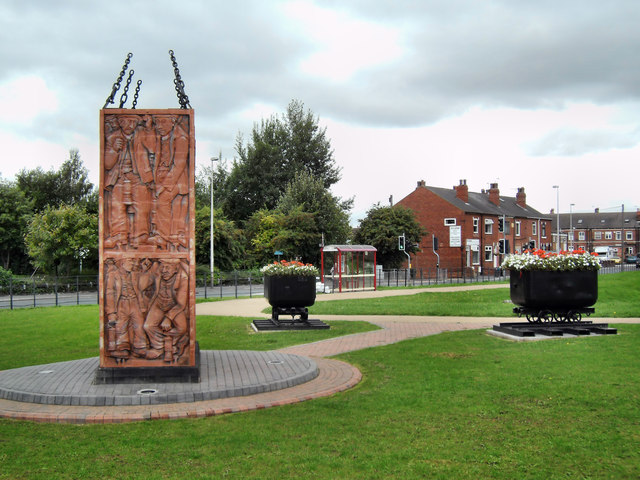
A memorial to the colliery stands in the village. The pit site has been redeveloped; Allerton Bywater was chosen as a Millennium Community after the closure, and the ground has been built over.
The colliery memorial. No colliery structure is known to survive.
Related mines
- Fryston Colliery — Both came under Airedale Collieries Ltd on its formation in 1919 and stayed together through nationalisation; Allerton Bywater outlasted Fryston by seven years and was the last deep mine in the Leeds area.
- Wheldale Colliery — The Wheldale coal company amalgamated with Allerton Bywater colliery in 1919 to form Airedale Collieries Ltd, which held both pits until nationalisation.
Nearby mines
- Ledston Luck Colliery — 1.6 miles (2.5 km) NE
- Savile Colliery — 1.8 miles (2.8 km) SW
- Methley Junction Colliery — 2.1 miles (3.5 km) SW
- Wheldale Colliery — 2.3 miles (3.7 km) SE
- Trench Pit, Garforth — 2.4 miles (3.9 km) N
Straight-line distance, within 9 miles (15 km). Show on the map.
Disasters & major incidents
-
Allerton Bywater Colliery explosion, 1930
10 March 1930 · Explosion · 5 fatalities
At about half past nine on the morning of Monday 10 March 1930, a deputy at Allerton Bywater Colliery fired his tenth shot of the shift into a place where firedamp had gathered in explosive proportions. The explosion, worsened by coal dust, killed five men and a pit pony. The inquest found no negligence, but noted that the face had not been thoroughly treated with inert dust and that the shot-firing dynamo in use should not have been.
Recorded claims
Individual factual claims, each attached to the source(s) that support it below. Where sources disagree, both are kept.
- Coal mining in the area can be traced back to the fifteenth century, with bell pits in Hollinhurst Wood in the seventeenth. The first colliery in the village operated from 1756 to 1820 on the shallow Warren House seam; from 1840 to 1875 the 140-yard-deep Haigh Moor seam was exploited; Allerton Bywater Colliery was the third, operating from 1875 until 1992. 1
- In 1919 the Wheldale coal company amalgamated with Allerton Bywater colliery to form Airedale Collieries Ltd, a company which also included Fryston Colliery. 2
- At least 99 miners died in the village collieries between 1856 and 1991, including fourteen boys under the age of 18. The worst disaster was an explosion in March 1930 which killed five men. 1
- The explosion of 10 March 1930 occurred in the Old East District in the Silkstone Seam, 385 yards below the surface; around 150 miners were working in the district, out of 1,000 who were in the pit at the time. 3
- When Allerton Bywater Colliery closed in 1992, 1,060 jobs were lost and millions of tonnes of coal were abandoned underground. It was the last deep mine in the Leeds area. 1
Photographs & further reading
The village article’s coal-mining section: five centuries of working, the three successive village collieries and their seams, the neighbouring pits, and the toll of at least 99 deaths between 1856 and 1991.
View sourceSources
- (secondary) Allerton Bywater — Wikipedia
- (secondary) Wheldale Colliery — Wikipedia
- (secondary) Allerton Bywater colliery explosion — Wikipedia
- (primary) BGS mine plans catalogue: Allerton Bywater — British Geological Survey
Record created: 7 September 2026 · Last researched: 7 September 2026