 MineArchive
Fryston Colliery
| Also known as | New Fryston Colliery |
|---|---|
| Location | New Fryston, Castleford, West Yorkshire — 53.7387, -1.3133 (approximate) |
| Commodity | Coal |
| Type | Coal |
| Worked | 1870s–1985 |
| Maximum depth | Unknown. |
| Operators | Airedale Collieries Ltd (1919–1947), National Coal Board (1947–1985) |
Overview
A Castleford colliery opened in the 1870s in the grounds of the now-demolished Fryston Hall, with a village built in the 1880s to house its men. It employed about 1,300 at its peak and carried the coal preparation plant for the whole Airedale group: Wheldale, which had no washery, sent its larger coal here by rail from the 1930s. Fryston closed in 1985, after which Wheldale had to install a barrel washer of its own.
History
The colliery opened in the 1870s in the grounds of the now-demolished Fryston Hall and took its name; the village of New Fryston was built in the 1880s to house some of the miners. The Fryston coal company amalgamated with the Wheldale coal company before the First World War, and in 1919 that combination amalgamated with Allerton Bywater colliery to form Airedale Collieries Ltd, putting the three Castleford pits under one owner. Fryston’s particular role in the group was preparation: Wheldale had no coal washing plant, so a mineral line was laid in the 1930s from Wheldale to Fryston and coal that required washing was sent here. The arrangement outlived nationalisation — Wheldale coal larger than an inch was still being sent to Fryston for treatment by locomotive in the National Coal Board years, while its smaller coal went straight to Glasshoughton coking plant or by barge to Ferrybridge power station. At its peak the pit employed around 1,300 miners. It closed in 1985, and a barrel washer was set up at Wheldale to do the work Fryston had done. The colliery buildings were demolished; the winding tower came down in September 1985.
Geology
The Yorkshire Coalfield in the Aire valley at Castleford, the same measures worked by Wheldale and Allerton Bywater on either side. What set Fryston apart in the group was not its geology but its surface plant: it had the washery the other two lacked.
Workings
A shaft colliery with the group’s coal preparation plant. A mineral line laid in the 1930s brought Wheldale’s washing coal across, and after nationalisation Wheldale’s coal larger than one inch continued to come here by locomotive for treatment. The winding tower was demolished in September 1985, after closure.
Closure
Fryston closed in 1985 and its buildings were demolished. The loss of its washery was felt immediately next door: a barrel washer was set up at Wheldale to clean the coal Fryston had been cleaning. Wheldale itself lasted two more years, Allerton Bywater until 1992.
What remains
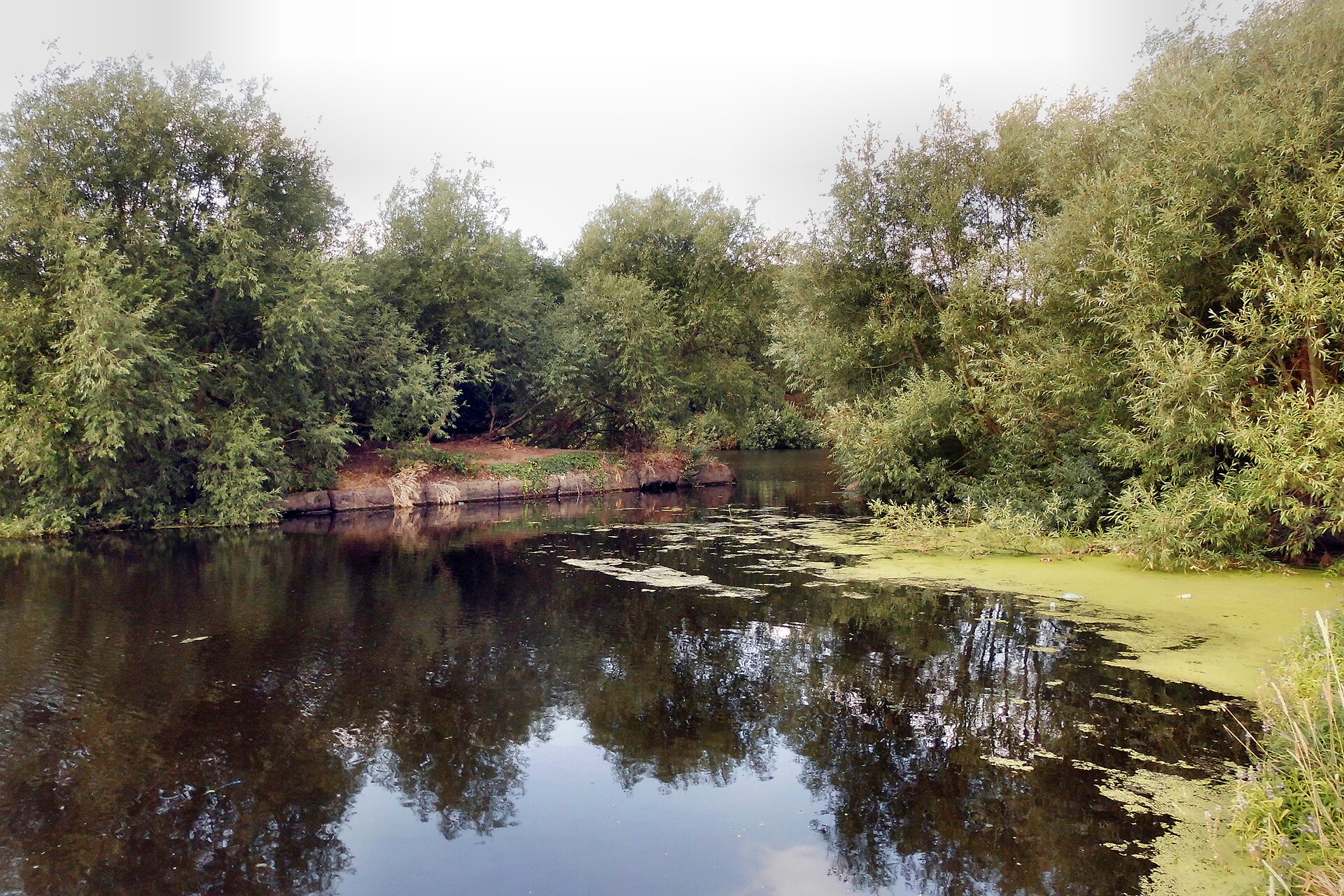
The colliery buildings were demolished after closure. The former colliery basin on the River Aire survives as a water feature in the reclaimed landscape. In 2005 a regeneration programme, the Castleford Project, carried out redevelopments in Fryston including a new village green that proved controversial and was the subject of a series of Channel 4 programmes.
The Fryston Colliery basin on the Aire. No colliery building survives.
Related mines
- Allerton Bywater Colliery — Both came under Airedale Collieries Ltd on its formation in 1919 and stayed together through nationalisation; Allerton Bywater outlasted Fryston by seven years and was the last deep mine in the Leeds area.
- Wheldale Colliery — Both were Airedale Collieries pits, and the connection was operational as well as corporate: Wheldale had no washery, so from the 1930s a mineral line carried its washing coal to Fryston, and after Fryston closed in 1985 Wheldale had to install a barrel washer of its own.
Nearby mines
- Wheldale Colliery — 0.9 miles (1.5 km) SW
- Glasshoughton Colliery — 2.2 miles (3.5 km) S
- Allerton Bywater Colliery — 2.7 miles (4.3 km) W
- Ledston Luck Colliery — 2.7 miles (4.3 km) NW
- Whitwood Colliery — 3.3 miles (5.2 km) SW
Straight-line distance, within 9 miles (15 km). Show on the map.
Recorded claims
Individual factual claims, each attached to the source(s) that support it below. Where sources disagree, both are kept.
- The colliery opened in the 1870s in the grounds of the now-demolished Fryston Hall and was named Fryston; the village was built in the 1880s to house some of the miners. At its peak the pit employed around 1,300 miners. 1
- Because Wheldale had no coal washing plant, in the 1930s a mineral line was laid from Wheldale to Fryston, and coal that required washing was sent to Fryston colliery. 2
- Coal from Wheldale smaller than one inch could be sent directly to Glasshoughton coking plant or by barge to Ferrybridge power station, but coal larger than one inch was sent by locomotive to Fryston colliery for treatment. 2
- Fryston colliery closed in 1985, and a barrel washer was set up to clean coal at Wheldale. 2,1
- After the pit’s closure the colliery buildings were demolished; the winding tower came down in September 1985. 1
Photographs & further reading
The colliery village: when the pit opened and in whose grounds, when the houses were built, the peak workforce, the 1985 closure and the demolition of the winding tower.
View sourceSources
- (secondary) New Fryston — Wikipedia
- (secondary) Wheldale Colliery — Wikipedia
- (primary) BGS mine plans catalogue: Fryston Colliery — British Geological Survey
Record created: 7 September 2026 · Last researched: 7 September 2026