 MineArchive
Pit Pony
| Also known as | Pit Ponies, Mining Horse, Colliery Horse, Pit Horse, Underground Stables |
|---|---|
| Category | Labour & Roles |
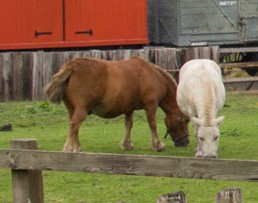
A horse, pony or mule worked underground in a mine, chiefly to haul tubs of coal between the coal face and the haulage road or the pit bottom. The word pony was applied loosely to any equine working below ground, whatever its size. The man or boy in charge of one was the driver, known in the north east as a rolley, horse or waggon driver.
Historical usage
The first recorded use of ponies underground in Britain was in the Durham coalfield in 1750. Their numbers rose sharply after the Mines and Collieries Act 1842, which barred women, girls and boys under ten from working underground following the public outcry over the Huskar Colliery disaster at Silkstone in 1838, where twenty-six children drowned: work that had been done by children now had to be done by animals. The practice peaked in 1913, when there were seventy thousand ponies underground in Britain.
Mechanisation then reduced them steadily. Fifty-five were still at work with the National Coal Board in 1984, chiefly at Ellington in Northumberland, which had kept as many as eighty-five in underground stables and was among the last large producers to use them; Wheldale was the last colliery in Yorkshire to do so, in 1972. Four ponies were brought out of Ellington when it closed for the first time in 1994, and none were used there afterwards. Probably the last colliery horse to work underground in a British coal mine was Robbie, retired from Pant y Gasseg near Pontypool in May 1999.
How it worked
In a shaft mine the ponies were normally stabled underground and came to the surface only during the colliery's annual holiday; they were fed largely on chopped hay and maize. A pony worked the ground between the face and the mechanised haulage — taking full tubs out along the gate roads to the landing where they were clipped onto the rope, and bringing the empties back — and on the roads that were too short-lived or too crooked for an engine and a rope to be worth installing. The driver led or rode with the pony and coupled and uncoupled the tubs.
Why it was used
A pony went where a rope could not. Gate roads changed as the face advanced, they were low and often crooked, and they did not last long enough to justify laying out engine haulage; a pony needed no track alignment, no engine house and no rope, and could be moved to a new road in a shift. Where a mine was small, or a district newly opened, ponies were the whole haulage system.
Risks & limitations
Conditions underground brought sustained public campaigning. The Coal Mines Regulation Act 1887 was the first national legislation to protect horses working underground, and pressure from the National Equine Defense League, founded in 1908 as the Pit Ponies' Protection Society, and the Scottish Society to Promote Kindness to Pit Ponies produced a royal commission report in 1911 detailing conditions, which led to further protective legislation. For the mine, ponies limited output: one pony moved a few tubs at a time where a rope moved a set, they had to be fed, stabled, watered and cared for underground, and they could not work the long main roads that made a large colliery pay.
Regional variation
Mules outnumbered ponies in American mines, and ponies were never common there. Within Britain the animal was general to every coalfield; the regional variation is in the name of the man with it, the driver being a rolley driver in the north east.
Mines associated with this term
5 examples chosen from 25 linked records — the term page is not an index.
- Ellington Colliery — Northumberland (well documented example)
Named twice in this record, first in the history: “…Workforce peaked at around 2,170-2,179 men during the mid-1980s, and pit ponies — around 50 at peak — were used until 1994, among the last…” - Minnie Pit — Staffordshire (well documented example)
Named twice in this record, first in the summary: “…to spontaneous combustion, and after explosions that killed the pit ponies in 1898 and nine men in 1915, an explosion of gas and coal dust on…” - Penallta Colliery — Caerphilly (well documented example)
Named twice in this record, first in the summary: “…now a country park watched over by a 656-foot earth sculpture of a pit pony.” - Wheldale Colliery — West Yorkshire (well documented example)
Named twice in this record, first in the summary: “…— before closing in 1987 as the last colliery in Yorkshire to use pit ponies and the last in Britain to run a steam locomotive on its sidings.” - Allerton Bywater Colliery — West Yorkshire (well documented example)
Named twice in this record, first in the summary: “…in the Silkstone seam on 10 March 1930 killed five men and a pit pony (see Disasters, below). When it closed 1,060 jobs went and millions…”
Disasters associated with this term
5 examples chosen from 13 linked records, most direct relationship first.
- Allerton Bywater Colliery explosion, 1930 (contextual relationship)
Named in this record’s summary: “…The explosion, worsened by coal dust, killed five men and a pit pony. The inquest found no negligence, but noted that the face had not…” - Bardykes Colliery Roof Fall, 1936 (contextual relationship)
Named in this record’s narrative: “…roof collapsed almost without warning, entombing five of them and a pit pony; the other two had, in a contemporary reporter's words, 'amazing…” - Big Pit fire (1913) (contextual relationship)
Named 5 times in this record, first in the summary: “Three men died in a fire near the underground stables while trying to rescue the pit ponies stabled there; the horses…” - East Cannock Colliery Explosion (1877) (contextual relationship)
Named twice in this record, first in the summary: “…explosion at East Cannock Colliery in 1877 killed four boys and four pit horses, and seriously injured two men.” - Llanbradach Colliery Explosion, 1901 (contextual relationship)
Named in this record’s summary: “…on the evening of 10 September 1901 killed eight men and forty-one pit ponies. Only fourteen men were underground at the time — ostlers, firemen…”
Sources
- (secondary) Ellington Colliery — Subterranea Britannica
- (secondary) Pit Terminology — Healey Hero
- (secondary) Pit pony — Wikipedia
Record created: 29 September 2026 · Last researched: 29 September 2026