 MineArchive
Minnie Pit
| Also known as | Podmore Hall Colliery, Podmore Hall Colliery, Minnie Pit |
|---|---|
| Location | Halmer End, Audley parish, near Newcastle-under-Lyme, Staffordshire — 53.0373, -2.3099 (exact) |
| Commodity | Coal |
| Type | Coal |
| Worked | 1881–April 1930 |
| Maximum depth | About 1,200 feet (359 yards, 328 m) to the Bullhurst |
| Operators | W. Y. Craig and Son (1881–1889), Midland Coal, Coke and Iron Company (1890–1930) |
Overview
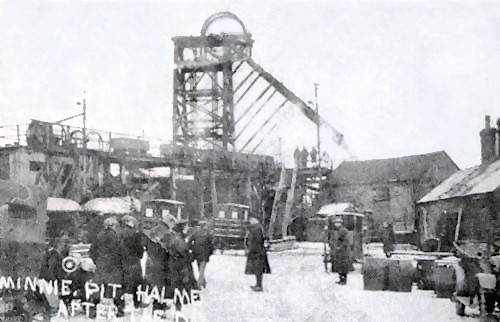
The Minnie Pit at Halmer End, on the north-western edge of the North Staffordshire coalfield, was the downcast and coal-winding shaft of the Podmore Hall Colliery, sunk from 1881 by W. Y. Craig and Son and named for the owner's daughter, who cut the first sod. About 1,200 feet deep to five thick seams, it was one of the most profitable pits in the coalfield and one of the most dangerous: the Bullhurst seam gave off firedamp freely and was liable to spontaneous combustion, and after explosions that killed the pit ponies in 1898 and nine men in 1915, an explosion of gas and coal dust on the morning of 12 January 1918 killed 155 men and boys, the worst disaster in the coalfield's history (see Disasters, below). The Midland Coal, Coke and Iron Company closed the pit in April 1930. A memorial garden and heritage site mark it today.
History
The Podmore Hall Colliery, whose principal winding pit was the Burley near Apedale, belonged to W. Y. Craig and Son, and the Minnie was begun in 1881 as its new downcast; Craig's daughter Minnie ceremonially cut the first sod, and the North Staffordshire Mining Group dates the start of sinking, three hundred yards from Halmer End station, to April 1883, water and quicksand having delayed the work in 1882. In 1890 the whole concern, with its ironworks, forge and coke ovens at Apedale and the Apedale and Podmore Hall Railway, became the Midland Coal, Coke and Iron Company Ltd. The pit worked the Four Feet, Five Feet, Banbury Seven Feet and Bullhurst seams, with the Ten Feet, Two Row and Hams recorded at various dates, and in 1894 employed 361 people, the Nos. 3 and 4 pits and the Hayswood another 494. An old shaft nearly a mile away at Miles Green, sunk in 1830 into the Bullhurst rearers where the seam climbs steeply back to the surface and known as the Bursted Onion, was connected underground with the workings. Firedamp troubled the whole combine: the Burley Pit exploded in March and June 1878 and in 1891, killing 23, nine and ten; at the Minnie an explosion on Sunday 6 February 1898 killed every pit pony but no men, and another on Sunday 17 January 1915 killed nine (see Disasters, below); both were blamed on gob fires in the Bullhurst. By 1918 the seam was worked in panels with 25-yard barriers and preparatory stoppings ready to seal each one against heating, 405 people were employed underground, and on Saturday 12 January 1918, pay day, 248 were below when at 9.45 a.m. gas in or near the goaf at the top of No. 4 district in the Bullhurst exploded and the coal dust of the roads carried the blast through the Bullhurst and Banbury Seven Feet: 155 died, 144 of them from carbon monoxide, and a rescue-brigade captain died two days later (see Disasters, below). The recovery of the last bodies took eighteen months and the inquiry did not report until 1920. The pit reopened, employed 535 in 1923 and was temporarily closed in 1933 after the Midland Coal, Coke and Iron Company shut it, with the Podmore Hall Colliery, its foundry, railway and ironworks, in April 1930 at the start of the depression; the Two Row was abandoned in 1925 and the Seven Feet Banbury of the Nos. 3 and 4 pits in 1926. The scrap firm Thomas W. Ward Ltd is the last owner the Durham Mining Museum lists. In the early 1980s the National Coal Board and the council put up a memorial 'to those who lost their lives in the fight to extract coal from this mine, Minnie Pit, Halmerend, 1890-1931'.
Geology
The Minnie worked the Middle Coal Measures of the coalfield's north-western rim, where the Bullhurst, Banbury Seven Feet, Five Feet and Four Feet seams dip steeply and the Bullhurst rears back to the surface at Miles Green. The Bullhurst gave off firedamp freely, was liable to spontaneous combustion, and its roof held the hard 'bull-dog' stone whose fall over the goaf the inspector thought a possible source of ignition in 1918; the Seven Feet was undulating and much faulted, so that pillar and stall was used in one part where modified longwall was used elsewhere.
Geological setting: Anticlines and Synclines (historical documentary reference), Faults and Fractures (well documented example), Sedimentary Beds and Seams (well documented example)
Workings
Two shafts, No. 1 or Minnie the downcast and coal-winding shaft and No. 3 the upcast with its fan, plus the old Bullhurst Rearers shaft at Miles Green connected underground, which in 1918 was opened as a downcast to ventilate the men escaping through the rearers. The Seven Feet was worked by modified longwall off counter heads with pillars left for the roads, and by pillar and stall where faulting was heavy; the Bullhurst in separate panels with 25-yard barriers, each with only an intake and a return road and stoppings ready to seal it. Shots were fired with Roburite No. 4, and a gob-stink examiner watched for heatings. The main haulage ran to the Banbury Dip cruts.
Closure
Closed with the whole Podmore Hall Colliery in April 1930, when the Midland Coal, Coke and Iron Company shut its pits, foundry, railway and ironworks at the start of the depression; the Durham Mining Museum shows the Minnie temporarily closed in 1933 and the memorial gives 1931.
What remains
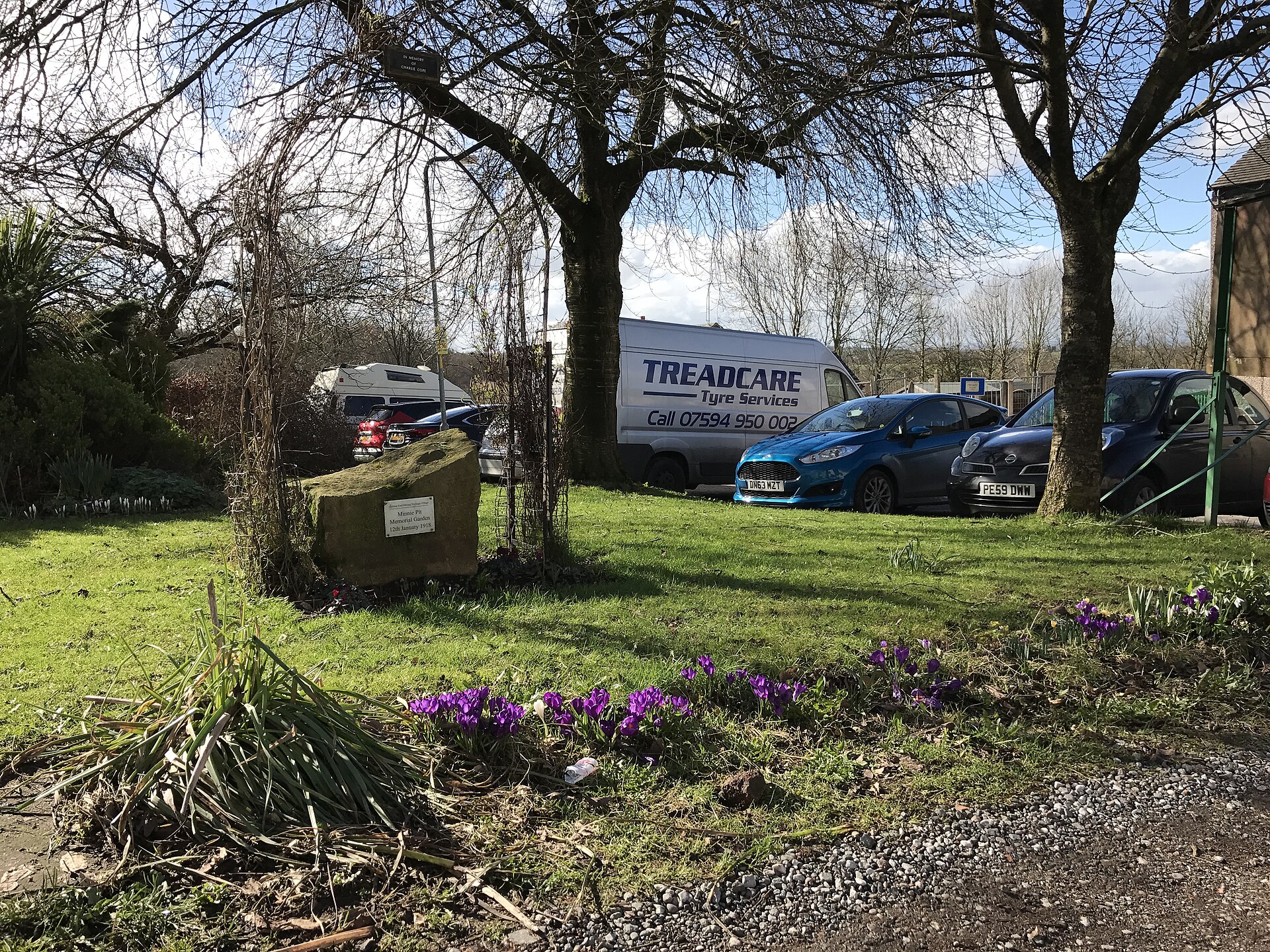
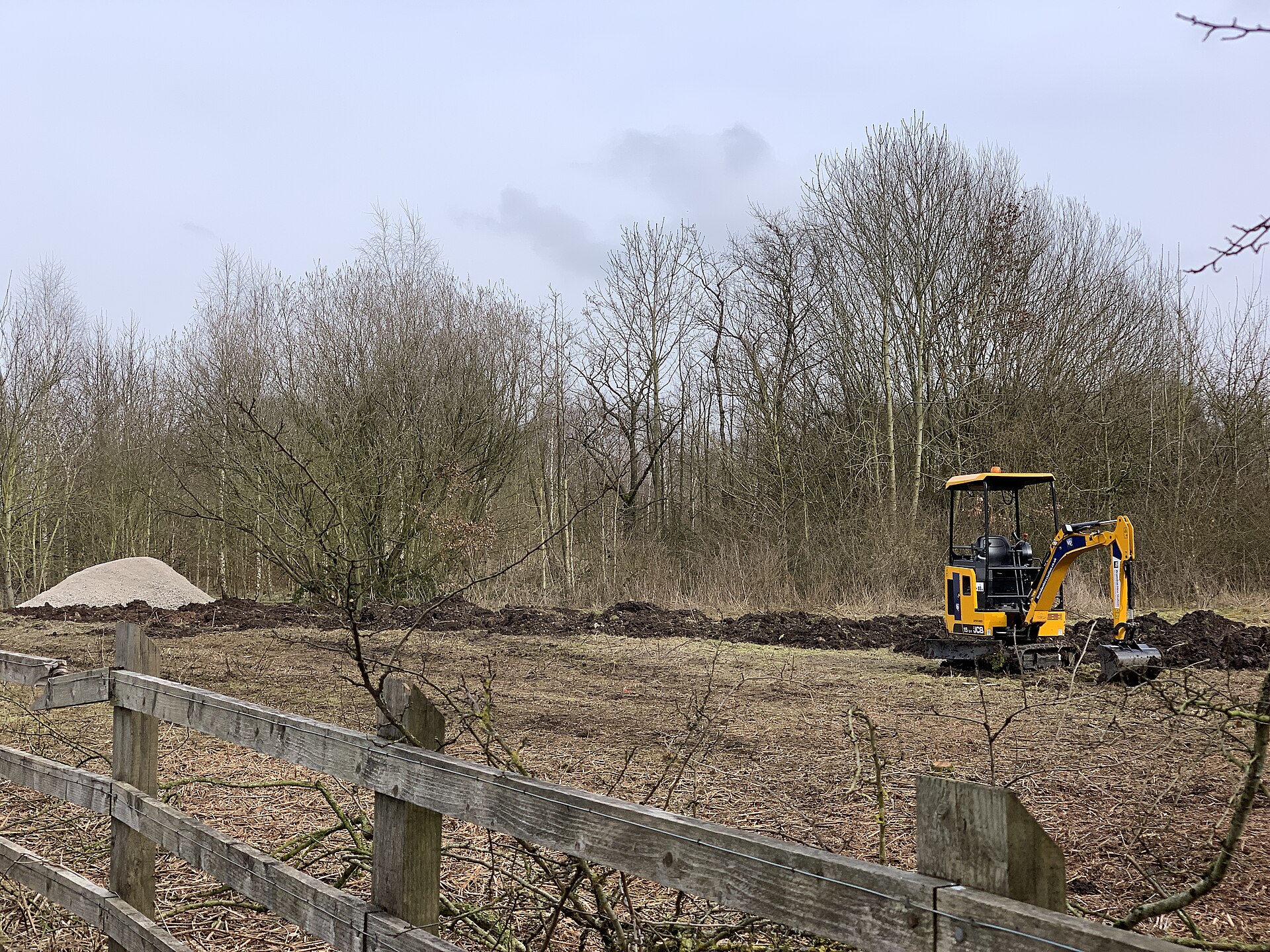
The pit site at Halmer End is a memorial garden and heritage site with information boards and memorial seats, photographed in 2017, 2020 and 2023, with a capped shaft beside the road; a plaque in Halmer End Methodist Church names the dead.
Capped shaft, memorial garden and heritage site; no colliery buildings.
Related mines
- Apedale Colliery — Both belonged to the Midland Coal, Coke and Iron Company's Podmore Hall and Apedale combine, with its ironworks at Apedale.
- Burley Pit — Wikipedia makes the Burley the principal winding pit of Podmore Hall Colliery, whose downcast shaft was the Minnie.
- Glasshouse Colliery — Midland Coal, Coke and Iron Co. collieries.
Nearby mines
- Leycett Colliery — 1.2 miles (2.0 km) S
- Boyles Hall Colliery — 1.3 miles (2.2 km) NE
- Diglake Colliery — 1.7 miles (2.8 km) NE
- Apedale Colliery — 2.0 miles (3.3 km) SE
- Rookery Colliery — 2.2 miles (3.6 km) NE
Straight-line distance, within 9 miles (15 km). Show on the map.
Disasters & major incidents
-
Minnie Pit explosion, 1915
17 January 1915 · Explosion · 9 fatalities
At about half past five on the evening of Sunday 17 January 1915 an explosion in the Minnie Pit at Halmer End, North Staffordshire, killed nine of a party of 27 engineering staff repairing a broken haulage engine, among them the colliery engineer John White. It was believed to have begun in the gassy Bullhurst district, but the inquest found no evidence of its cause. Three years later the same seam exploded and killed 155. -
Minnie Pit Explosion, 1918
12 January 1918 · Explosion · 156 fatalities
At about 9.45 on the morning of Saturday 12 January 1918, pay day, with 248 men and boys underground, an explosion of firedamp in or near the goaf at the top of No. 4 district in the Bullhurst seam of the Minnie Pit developed into an explosion of coal dust that swept the roads of the Bullhurst and Banbury Seven Feet seams. It killed 155, 144 of them by the afterdamp, and 44 of the dead were boys under sixteen; forty-seven escaped through the old Bullhurst Rearers shaft at Miles Green. Hugh Doorbar, captain of the Birchenwood rescue brigade, died two days later in breathing apparatus. Because the seam was gassy and liable to heat, the recovery of the workings took eighteen months, the inquest could not sit until October 1919 and the inquiry reported in 1920, finding the probable cause a defective safety lamp and blaming no one, but noting that the dust had not been removed and that the fireman's district was too large.
Culture
- Miners (Wilfred Owen) (Literature)
Owen's 'Miners' was written in direct response to the Minnie Pit explosion of 12 January 1918.
What's uncertain
Points where sources disagree or the record could not be settled; both accounts are kept. All open questions in the archive.
- Wikipedia gives the pit as opened in 1881; the North Staffordshire Mining Group dates the start of sinking to April 1883, water and quicksand having hampered the work in 1882. (disputed) 1,2,3
Recorded claims
Individual factual claims, each attached to the source(s) that support it below. Where sources disagree, both are kept.
- The pit was named for Minnie Craig, daughter of the owner W. Y. Craig, who cut the first sod. 1,2
- Wikipedia gives the pit as opened in 1881; the North Staffordshire Mining Group dates the start of sinking to April 1883, water and quicksand having hampered the work in 1882. (disputed) 1,2,3
- The pit was about 1,200 feet (359 yards) deep and worked the Four Feet, Five Feet, Banbury Seven Feet and Bullhurst seams. 4,1,3
- The Minnie was the No. 1 or downcast shaft of the Podmore Hall Colliery, whose principal winding pit was the Burley near Apedale; the company also had an ironworks, forge, coke ovens and its own railway. 4,1
- In 1890 the combine became the Midland Coal, Coke and Iron Company Ltd. 5,1
- The Minnie employed 361 in 1894 and 535 in 1923; 405 were employed underground in the whole mine in January 1918. 4,5
- An explosion on 6 February 1898 killed the pit ponies but no men; another on 17 January 1915 killed nine; both were attributed to gob fires in the Bullhurst. 4,5,1
- On 12 January 1918 an explosion of gas and coal dust in the Bullhurst and Banbury Seven Feet seams killed 155 men and boys, 44 of them under sixteen, and a rescue brigade captain died two days later. 4,5,1
- An old shaft at Miles Green, sunk in 1830 into the Bullhurst Rearers and known as the Bursted Onion, was connected underground and in 1918 saved the lives of 47 men and boys. 4,2
- The Minnie Pit and Podmore Hall Colliery closed in April 1930 with the company's foundry, railway and ironworks; the Durham Mining Museum shows the pit temporarily closed in 1933. 5,1
- Abandonment plans are dated 1925 for the Two Row and 1926 for the Seven Feet Banbury of the Nos. 3 and 4 pits. 6,7
- In the early 1980s the National Coal Board and the council erected a memorial to those who died at the pit between 1890 and 1931; the site is now a memorial garden and heritage site. 1,8,9
Photographs & further reading
W. Walker's full report, transcribed by the Durham Mining Museum: the colliery, the management, the narrative, the rescue, the cause and the list of the dead.
View sourceOwners, returns for the Minnie, Nos. 3 and 4 and Hayswood pits, and the names of all those killed.
View sourceJohn Lumsdon's narrative of the pit, the village and the morning of the explosion.
View sourceSources
- (secondary) Minnie Pit Disaster — Wikipedia
- (secondary) Explosion at Minnie Pit, Halmer End, 1918 (John Lumsdon) — Healey Hero
- (secondary) Minnie Pit Explosion 1918 (research by John Lumsdon) — North Staffordshire Mining Group
- (primary) Report on the causes of and circumstances attending the explosion which occurred at the Minnie Pit of the Podmore Hall Colliery on Saturday, the 12th January 1918, by W. Walker, H.M. Chief Inspector of Mines (1920) — Home Office; transcribed by the Durham Mining Museum
- (primary) Durham Mining Museum: Podmore Hall Colliery — Durham Mining Museum
- (primary) Podmore Hall (Minnie): Two Row seam abandonment plan, 1925 (mine plans catalogue) — British Geological Survey / Mining Remediation Authority
- (primary) Minnie Nos 3 and 4: Seven Feet Banbury seam abandonment plan, 1926 (mine plans catalogue) — British Geological Survey / Mining Remediation Authority
- (observational) Halmer End, Minnie Pit memorial garden (photograph, 4 March 2017) — Jonathan Hutchins, Geograph Britain and Ireland, via Wikimedia Commons
- (observational) Minnie Pit Disaster Heritage site (photograph, 4 March 2020) — Jonathan Hutchins, Geograph Britain and Ireland, via Wikimedia Commons

_-_geograph.org.uk_-_6744271.jpg)
Record created: 9 September 2026 · Last researched: 9 September 2026