 MineArchive
Minnie Pit Explosion, 1918
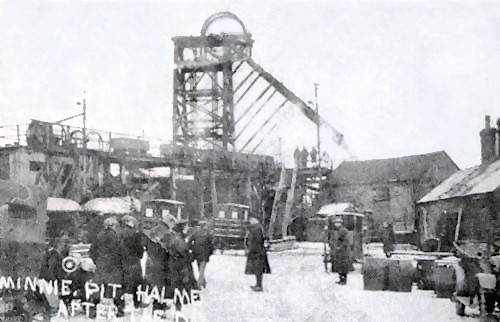
At about 9.45 on the morning of Saturday 12 January 1918, pay day, with 248 men and boys underground, an explosion of firedamp in or near the goaf at the top of No. 4 district in the Bullhurst seam of the Minnie Pit developed into an explosion of coal dust that swept the roads of the Bullhurst and Banbury Seven Feet seams. It killed 155, 144 of them by the afterdamp, and 44 of the dead were boys under sixteen; forty-seven escaped through the old Bullhurst Rearers shaft at Miles Green. Hugh Doorbar, captain of the Birchenwood rescue brigade, died two days later in breathing apparatus. Because the seam was gassy and liable to heat, the recovery of the workings took eighteen months, the inquest could not sit until October 1919 and the inquiry reported in 1920, finding the probable cause a defective safety lamp and blaming no one, but noting that the dust had not been removed and that the fireman's district was too large.
| Date | 12 January 1918 |
|---|---|
| Mine | Minnie Pit |
| Region | Staffordshire |
| Primary type | Explosion |
| Associated types | Gas / Asphyxiation, Rescue |
| Fatalities | 156 (155 killed by the explosion, 144 of them by carbon monoxide and 11 by violence with carbon monoxide, 44 of them boys under sixteen; Hugh Doorbar, captain of the Birchenwood rescue brigade, died on 14 January exploring in breathing apparatus, making 156. The DMM's per-colliery list gives 156.) |
| Injuries | Frank Halfpenny brought a badly injured boy to the shaft bottom; three were injured in the 1915 explosion. No count of the 1918 injured is recorded. |
| Context | During active mining |
Cause
An explosion of firedamp in or near the goaf at the top end of No. 4 district in the Bullhurst seam, developing into an explosion of coal dust confined to the roads reached by the Banbury Dip crut in the Bullhurst and Banbury Seven Feet. The Chief Inspector thought the igniting cause was either a defective safety lamp or sparks from the fall of the 'bull-dog' stone over the goaf, and the former the more probable; the coroner's jury found the evidence insufficient to show what caused the initial flame. Shot-firing and matches were ruled out.
Contributing factors
Coal dust on the roof, sides and floor of the roads carried the explosion far beyond the point of ignition, and the inspector found a breach of the Act in failing to remove it; the fireman's district in the Bullhurst was too large for him to do his statutory duties thoroughly, the shot-firer made part of the statutory examination, and air measurements in the seam were not recorded in the prescribed book. The Bullhurst gave off gas freely and had exploded in 1898 and 1915. Colliers had come out of Ratcliffe's Place for gas the night before and been sent back after 1.5 per cent was found, with no report made.
What happened
The manager Joseph Smith was in his office at the No. 3 pit when he was told that the haulage lads at the Minnie pit bottom wanted to come up: a sudden gust against the air current had thrown small coal and dirt outbye. Soot and smoke were pouring from the fan chimney of the upcast, the fan had slowed for a few minutes, and the haulage rope was fast. Frank Halfpenny, 500 yards from the pit bottom at the top of the new haulage, had lain down on the floor as the current reversed, then walked 800 yards through smoke to the Banbury Dip telephone to report to the surface, and came out carrying a badly injured boy. The agent and under-manager went down; the under-manager Charles Weaver found the pit bottom in confusion under thick oily dust and knew a methane explosion had gone off beyond the Banbury Dip. The top of the old Bullhurst Rearers shaft at Miles Green was opened to act as a downcast for the men in that seam, and 47 came out that way. In the Bullhurst 92 died, 42 in the Seven Feet, nine about the bottom of the Banbury cruts, four at their top, two half way down, four in the Bullhurst crut and two at the bottom of the upcast; 144 were killed by carbon monoxide and eleven by violence. Ninety-two men and boys had been in the Bullhurst day shift under one fireman, a shot-firer and a gob-stink examiner. Among the dead was Samuel Richardson, whose Bible, found beside him, was bought back by his son for a guinea in 1921 when it was to be sold for the strike fund.
Rescue & recovery
Rescue brigades from across the North Staffordshire coalfield were mobilised and worked in self-contained breathing apparatus, since the Bullhurst gave off firedamp freely and was liable to heat. Early on Monday 14 January Hugh Doorbar, captain of the Birchenwood team, collapsed and died in an irrespirable atmosphere in Lockett's Dip, where the air held 4.3 per cent carbon monoxide and only 9.5 per cent oxygen; the Minnie brigade brought out his body at 3 p.m. and James Thomas Machin, who led the team when Doorbar fell, was singled out for bravery. The management was criticised at the inquest for not sending a brigade down the upcast at once, but the inspector judged that the men at the shaft bottom were already dead. The owners thought further exploration too dangerous; the Miners' Federation, the North Staffordshire Miners' Association and the inspector pressed for the bodies to be recovered and the cause found, and with the ventilation wrecked by blown-down doors, destroyed air crossings and falls the work went on slowly for eighteen months, the last of the workings being recovered by November 1919.
Investigation & inquiry
The inquest before H. W. Adams sat on six days in October 1919, heard forty witnesses and found the deaths caused by an explosion of gas and coal dust in the Bullhurst and Banbury seams, with insufficient evidence of what caused the initial flame; it held that the pit had been run in accordance with the Coal Mines Act but that systematic removal of the dust would have limited the explosion, blamed no particular person, and called for regulations on the treatment of coal dust, for shot-lighters to report unsafe conditions in writing and for the men to use their right to inspect the mine. The formal inquiry under Section 83 by William Walker, H.M. Chief Inspector of Mines, with H. K. Beale as legal assessor, heard evidence at Stoke Town Hall on 3 to 5 December 1919, the owners, the Miners' Federation, the North Staffordshire and Midland miners' bodies, the firemen's and enginemen's unions and the Carnegie Hero Fund all represented. Walker fixed the origin in or near the goaf at the top of No. 4 district in the Bullhurst, rejected the theory of four mining engineers that a gob fire in the sealed No. 5 panel had started it after the officials testified the stopping was blown inbye, rejected Eden's Place and the Seven Feet as urged in anonymous letters to the Staffordshire Sentinel, and concluded that a defective safety lamp was the more probable igniting cause, with sparks from falling bull-dog stone not ruled out; a missing lamp, No. 463, found in Dean's Drift in January 1920 with a standard missing, was tested at Eskmeals and did not pass flame. His report, dated 31 May 1920, recorded breaches of the Act in the failure to remove coal dust, to record air measurements and in the size of the fireman's district.
Legal & regulatory aftermath
No prosecution is recorded. Walker recorded three breaches of the Coal Mines Act 1911 and endorsed the suggestions made at the inquiry: that withdrawals of men for gas be reported, that every fireman's inspection finding danger be recorded, that a certificated official be underground on every shift, that shot-firing books record the place and weight of every charge, that prohibitions on shot-firing be posted at the pit head, that all shots be fired by certificated firemen, and that the daily coal-dust examination be given to someone other than the fireman. The Miners' Federation raised a relief fund by a levy of 6s 3d a week on other pits and the company paid compensation, but many families were left in poverty.
Changes to practice & legislation
The inquest jury's call for regulations on the treatment of coal dust and for research into making it inert, and Walker's call for research into whether sparks from falling stone can ignite firedamp, fed the post-war work on stone dusting; no specific regulation is recorded to this disaster.
Memorials & commemoration
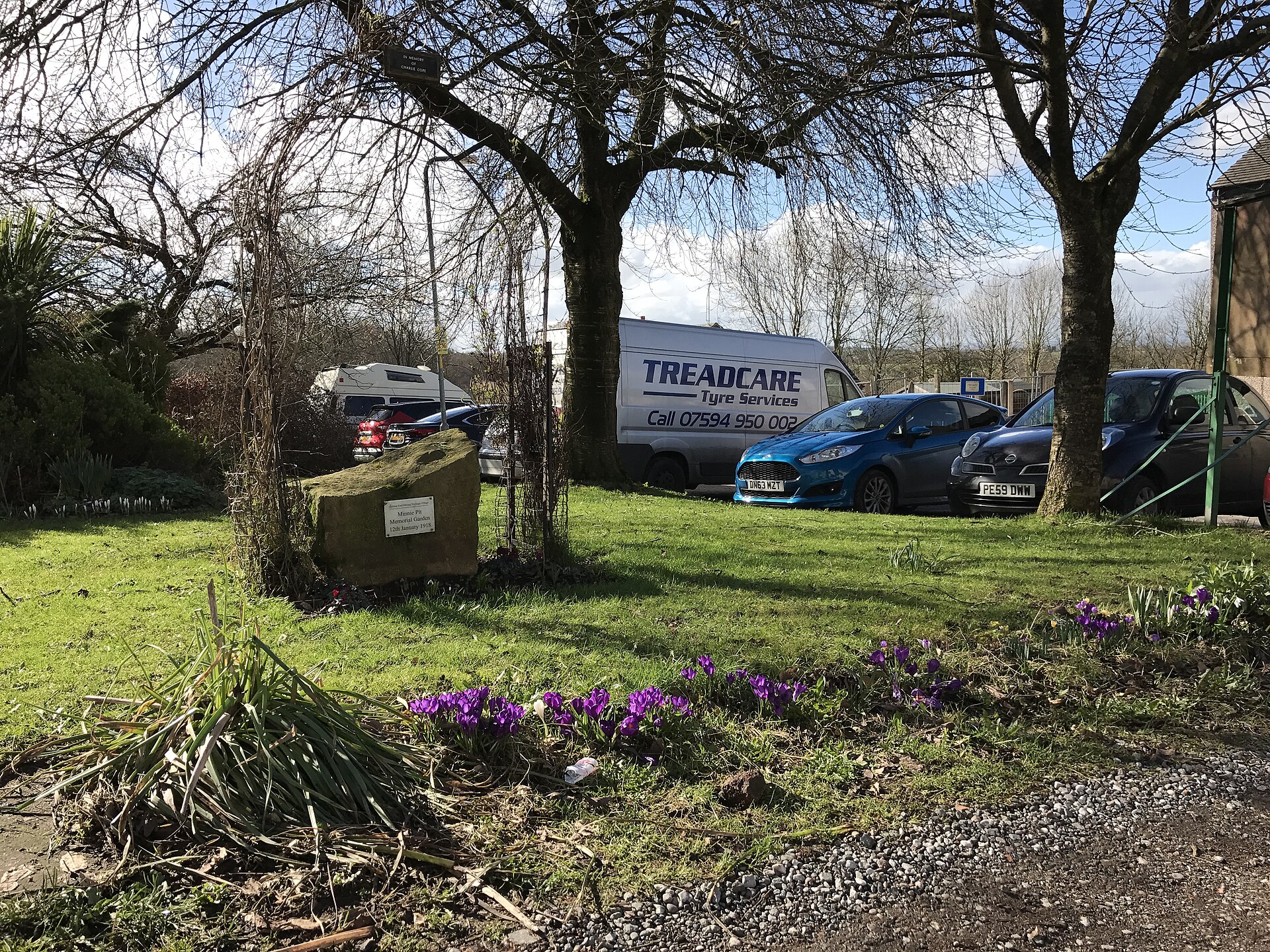
A memorial erected by the National Coal Board and the local council in the early 1980s stands at the pit site, now a memorial garden and heritage site with memorial seats and information boards; a plaque in Halmer End Methodist Church names the dead. The disaster is remembered in Wilfred Owen's poem 'Miners', written in its immediate aftermath.
Recorded claims
Individual factual claims, each attached to the source(s) that support it below. Where sources disagree, both are kept.
- 155 were killed by the explosion, 144 by carbon monoxide and 11 by violence with carbon monoxide; Hugh Doorbar of the Birchenwood rescue brigade died on 14 January, making 156. 1,2,3
- 44 of the dead were boys under sixteen. 3
- The explosion occurred at about 9.45 a.m. on Saturday 12 January 1918 with 248 people underground of 405 employed below. 1,4
- The Chief Inspector concluded the explosion originated in or near the goaf at the top end of No. 4 district in the Bullhurst seam, gas developing into coal dust confined to the Bullhurst and Banbury Seven Feet roads. 1
- Walker thought a defective safety lamp the more probable cause, with sparks from falling bull-dog stone not ruled out; the jury found insufficient evidence of the initial flame. 1,3,4
- 92 died in the Bullhurst seam, 42 in the Seven Feet, nine about the bottom of the Banbury cruts, four at their top, two half way down, four in the Bullhurst crut and two at the bottom of the upcast. 1
- Forty-seven men and boys escaped by the old Bullhurst Rearers shaft at Miles Green, opened as a downcast during the rescue. 1,5
- Hugh Doorbar died in Lockett's Dip in an atmosphere of 4.32 per cent carbon monoxide and 9.51 per cent oxygen; his Proto apparatus was found to have a main valve that could not be fully closed. 1
- The inquest before H. W. Adams sat on six days in October 1919, heard forty witnesses and blamed no particular person, but held that systematic removal of dust would have limited the explosion. 1,3
- William Walker's formal inquiry heard evidence at Stoke Town Hall on 3 to 5 December 1919 and reported on 31 May 1920. 1,4
- The report recorded breaches of the Coal Mines Act in failing to record air measurements, failing to remove coal dust, and giving the fireman too large a district. 1
- Recovering the workings and bodies took eighteen months because the Bullhurst gave off gas freely and was liable to spontaneous combustion; the owners had thought it too dangerous to continue. 1,3,4
- The Miners' Federation of Great Britain raised a relief fund by a levy of 6s 3d a week on miners at other pits, and the company paid compensation. 3
Related terminology
Mining terms this disaster is structurally linked to, with the nature of the relationship.
- Breathing Apparatus (rescue/recovery concept)
All exploration was done in self-contained breathing apparatus; Doorbar's Proto set was examined after his death. - Captain (contextual relationship)
Named twice in this record, first in the summary: “…the old Bullhurst Rearers shaft at Miles Green. Hugh Doorbar, captain of the Birchenwood rescue brigade, died two days later in breathing…” - Coal Mines Act 1911 (contextual relationship)
Named in this record’s aftermath: “No prosecution is recorded. Walker recorded three breaches of the Coal Mines Act 1911 and endorsed the suggestions made at the inquiry: that withdrawals…” - Crosscut (contextual relationship)
Named 3 times in this record, first in the cause: “…of coal dust confined to the roads reached by the Banbury Dip crut in the Bullhurst and Banbury Seven Feet. The Chief Inspector thought…” - Goaf (direct cause)
The explosion originated in or near the goaf, where bull-dog stone had fallen. - Miners' Federation of Great Britain (contextual relationship)
Named 3 times in this record, first in the rescue and recovery: “…dead. The owners thought further exploration too dangerous; the Miners' Federation, the North Staffordshire Miners' Association and the inspector…” - Stone Dusting (contextual relationship)
The jury and the inspector called for the treatment of coal dust and research into making it inert.
Photographs & further reading
This page doesn't try to reproduce everything — these are the best original sources found for this disaster.
The Chief Inspector's full report, transcribed by the Durham Mining Museum, with the list of the dead in Appendix A.
View sourceJohn Lumsdon's account of the explosion, its mechanism and the inquiry.
View sourceSources
- (primary) Report on the causes of and circumstances attending the explosion which occurred at the Minnie Pit of the Podmore Hall Colliery on Saturday, the 12th January 1918, by W. Walker, H.M. Chief Inspector of Mines (1920) — Home Office; transcribed by the Durham Mining Museum
- (primary) Durham Mining Museum: Podmore Hall Colliery — Durham Mining Museum
- (secondary) Minnie Pit Disaster — Wikipedia
- (secondary) Minnie Pit Explosion 1918 (research by John Lumsdon) — North Staffordshire Mining Group
- (secondary) Explosion at Minnie Pit, Halmer End, 1918 (John Lumsdon) — Healey Hero
Record created: 9 September 2026 · Last researched: 9 September 2026