 MineArchive
Breathing Apparatus
| Category | Structures & Machinery |
|---|
A self-contained device supplying breathable oxygen and scrubbing exhaled carbon dioxide, worn by rescue workers to survive and operate in the irrespirable, gas-filled atmosphere left behind after a mine explosion, fire or inrush.
Historical usage
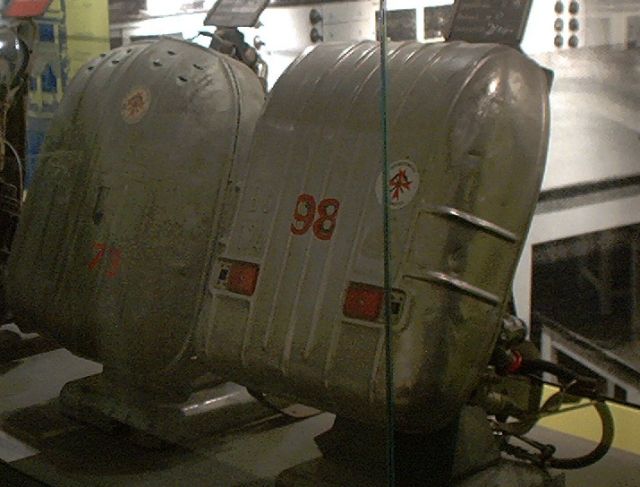
The first practicable self-contained closed-circuit breathing apparatus was designed in 1878 by the English marine engineer Henry Fleuss, working with Siebe, Gorman & Co. of London; in 1880 Fleuss himself used his own apparatus to explore the flooded, gas-filled workings of Seaham Colliery in the aftermath of a major explosion, one of the earliest recorded uses of self-contained breathing apparatus in a British mine rescue. The design was progressively refined over the following decades, and in 1902 Siebe Gorman's Robert Davis perfected two related sets, the 'Proto' and the lighter 'Salvus', both of which went on to become standard mine-rescue equipment across Britain for much of the 20th century. Salvus sets, mostly borrowed from local fire stations, were among the equipment used by rescuers at the Knockshinnoch Castle Colliery inrush of 1950, helping bring 116 trapped miners out alive.
How it worked
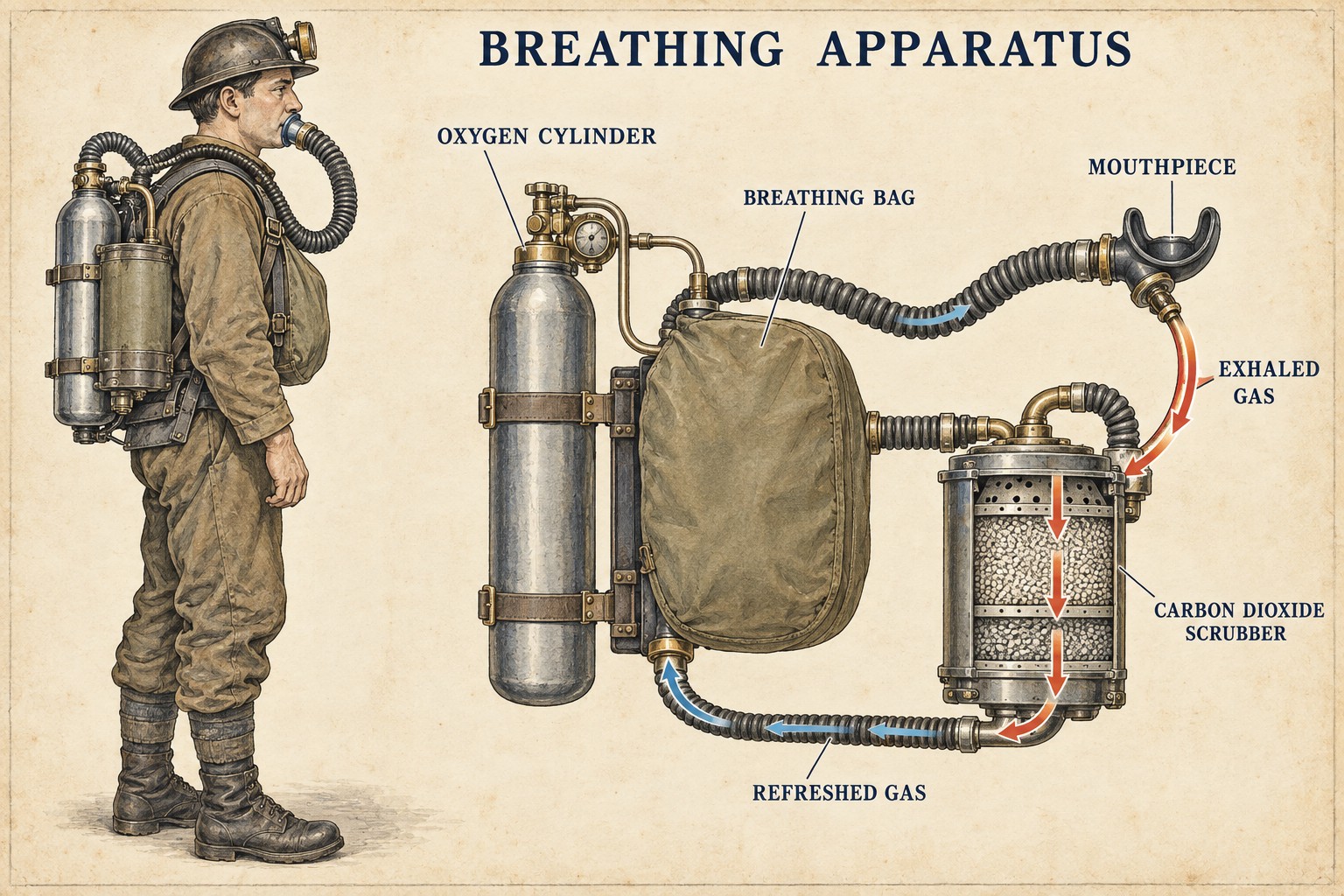
Breathing apparatus of this kind combined a supply of compressed oxygen, carried in a steel cylinder, with a chemical scrubber — typically a canister of soda lime or a caustic-potash-soaked material — that absorbed exhaled carbon dioxide, allowing the wearer to rebreathe a continuously refreshed supply of oxygen in an atmosphere that would otherwise be fatal within minutes. The Proto set gave around 30 to 40 minutes of use on a single charge; the lighter Salvus set, developed for less demanding rescue work, could last closer to an hour.
Why it was used
After an explosion, fire or inrush, a mine's atmosphere could be entirely unbreathable for a considerable distance around the incident; breathing apparatus let trained rescue teams enter that atmosphere directly to search for survivors and re-establish ventilation, rather than waiting for natural airing to make the area safe, which could take far too long for anyone still trapped alive.
Risks & limitations
Early sets were heavy and cumbersome to work in, gave a strictly limited duration before the oxygen supply or the carbon dioxide scrubber was exhausted, and required real training to use safely — a rescuer who ran out of oxygen or exhausted their scrubber deep underground faced exactly the same fate as the miners they were trying to save.
Related terminology
Fresh Air Base, Mines Rescue Station, Proto Apparatus, Self-Rescuer
Disasters associated with this term
5 examples chosen from 24 linked records, most direct relationship first.
- Cardowan Colliery explosion, 1960 (rescue/recovery concept)
Rescue men wore Proto apparatus, not coupled up. - Knockshinnoch Castle Colliery Inrush (rescue/recovery concept)
The disaster's own recorded rescue account explicitly describes 87 sets of Siebe Gorman Salvus oxygen breathing apparatus used to bring survivors out. - Lyme Pit explosion, 1930 (rescue/recovery concept)
The rescuers wore gas masks and oxygen. - Minnie Pit Explosion, 1918 (rescue/recovery concept)
All exploration was done in self-contained breathing apparatus; Doorbar's Proto set was examined after his death. - Minnie Pit explosion, 1915 (rescue/recovery concept)
Rescue brigades with breathing apparatus joined the search.
Sources
- (secondary) Development of mine rescue and underwater breathing apparatus: appliances of Henry Fleuss — PubMed
- (secondary) Siebe Gorman Salvus — Wikipedia
Record created: 23 August 2026 · Last researched: 23 August 2026