 MineArchive
Mines Rescue Station
| Category | Structures & Machinery |
|---|
A dedicated building where trained rescue teams were based, equipped and trained, typically serving every colliery within a set radius — Britain's response, made a legal requirement in 1911, to earlier disasters where volunteer rescuers had no formal training or equipment at all.
Historical usage
The first purpose-built central rescue station in Britain opened at Howe Bridge, Lancashire, in 1908, prompted by a 1907 Royal Commission on Mines recommendation following the Courrières mining disaster in France the previous year, in which around 1,100 miners died. The Coal Mines Act 1911 made rescue provision compulsory, requiring a station within 10 miles (later extended to 15) of any colliery employing over 100 men. Around 46 rescue centres were established nationally: roughly ten were permanently staffed with full-time professional teams, while the remainder held a smaller core of instructors who trained and oversaw part-time rescue teams drawn from each colliery's own workforce.
How it worked
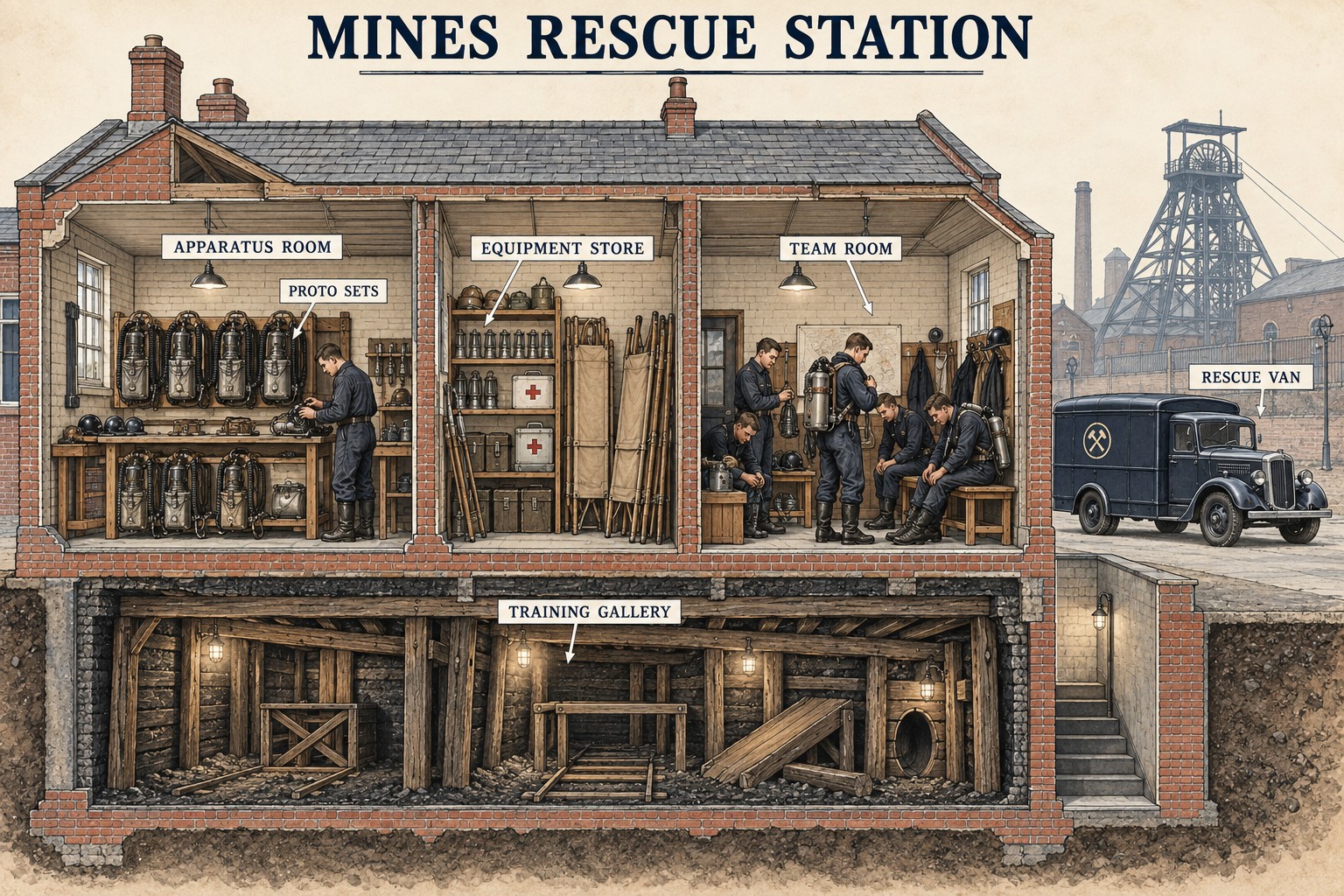
Stations held breathing apparatus (Proto sets for most of the 20th century) and other rescue equipment, alongside a training gallery built to simulate underground roadways so teams could practise and be assessed under realistic conditions. When a colliery disaster occurred, teams — permanent or part-time — mobilised from the nearest station and travelled to the affected pit, often working alongside teams from neighbouring stations on major incidents.
Why it was used
Centralising equipment, training and expertise in dedicated stations gave British coal mining a consistent, professionally trained rescue capability, in sharp contrast to earlier disasters such as Oaks Colliery in 1866, where untrained volunteers descending to help had themselves become casualties in a second explosion.
Regional variation
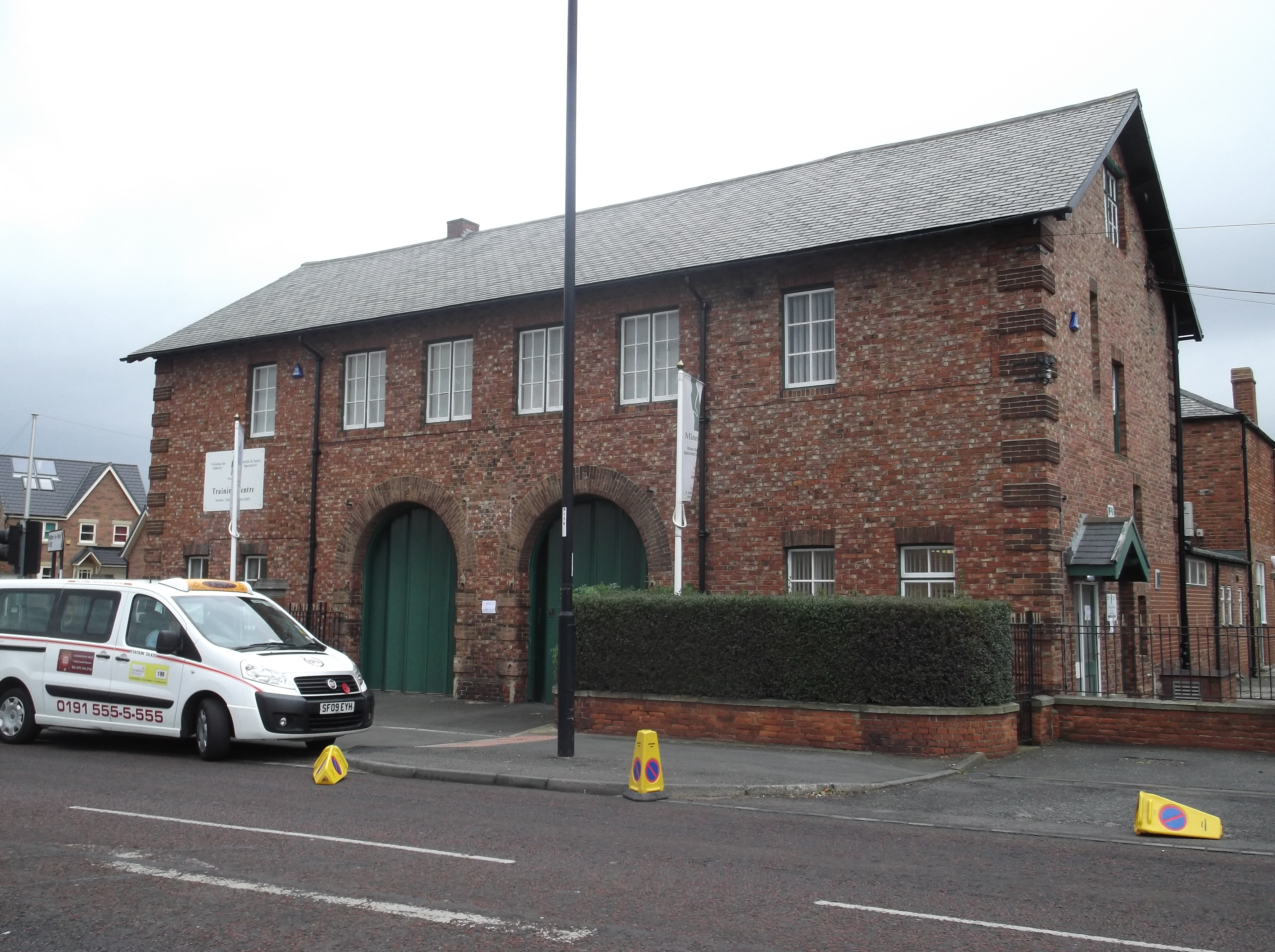
Rescue station density broadly tracked each coalfield's size, with multiple stations across County Durham, Lancashire, South Wales and Yorkshire; many stations closed or found new roles as deep coal mining contracted from the 1980s onward, though some, like Houghton-le-Spring's 1913 building, survive and continue training work today.
Related terminology
Breathing Apparatus, Coal Mines Act 1911, Fresh Air Base, National Coal Board
Mines associated with this term
Included only where MineArchive's own research gives a reasonable evidential basis — not every mine where this might plausibly apply.
- Astley Green Colliery — Greater Manchester (well documented example)
The mine's own recorded history explicitly describes mines rescue teams from Boothstown Mines Rescue Station responding to the 1939 disaster. - Berry Hill Colliery — Staffordshire (well documented example)
Named in this record’s redevelopment: “…on the site in 1966, and the pithead baths became the Berryhill mines rescue station in 1963. The land was reclaimed in the 1970s, the tips filling the…”
Disasters associated with this term
5 examples chosen from 11 linked records, most direct relationship first.
- Astley Green Colliery explosion, 1939 (rescue/recovery concept)
The disaster's own recorded rescue account explicitly describes teams from Boothstown Mines Rescue Station responding, though being driven back by further explosions. - Auchengeich Colliery explosion, 1931 (rescue/recovery concept)
The Lanarkshire brigade was underground in gas helmets within twenty-five minutes, with Coatbridge following. - Auchengeich Colliery fire, 1959 (rescue/recovery concept)
Rescue teams could do almost nothing against a fire seated in the return airway, and the effort became a recovery of bodies rather than a rescue. - Auchenharvie Colliery inrush, 1895 (rescue/recovery concept)
Rescue here was improvised by the colliery's own men over two days, before organised rescue brigades existed in the district. - Cardowan Colliery explosion, 1960 (rescue/recovery concept)
Coatbridge Central Rescue Station was called.
Sources
- (secondary) Evolution of the Mines Rescue Service — Association of British Mining Equipment Companies
- (secondary) Howe Bridge Mines Rescue Station — Wikipedia
Record created: 23 August 2026 · Last researched: 23 August 2026