 MineArchive
Berry Hill Colliery
| Also known as | Berryhill Colliery |
|---|---|
| Location | Berry Hill, Fenton, Stoke-on-Trent, Staffordshire — 53.0134, -2.1572 (approximate) |
| Commodities | Coal, Iron |
| Type | Coal |
| Worked | 1840s–1960 |
| Maximum depth | About 750 yards (No. 1 shaft) |
| Operators | W. T. Copeland (1840–?), W. Bowers (1860–?), Henry Worthington (1880–1914), John Slater Ltd (1918–1947), National Coal Board (1947–1960) |
Overview
A Fenton colliery and ironworks in the Potteries, worked for coal and ironstone from the 1840s, re-sunk to about 750 yards in the 1930s and closed in 1960, later the Coal Board's area headquarters.
History
Berry Hill lay at Fenton, about a mile east-north-east of Stoke, on ground now partly the Berryhill Fields. Coal and ironstone working is thought to have begun in the 1840s under W. T. Copeland. W. Bowers, prominent in the Cheadle coalfield, bought the site in the early 1860s and by 1870 had built an ironworks there, which lasted into the twentieth century. On 12 March 1872 an explosion killed six men (see Disasters, below).
After Bowers died, Henry Worthington bought the business in the 1880s: nearly 1,000 acres, with mineral rights under 500 to 700 more. The company built a brickworks that outlived the colliery. It went into receivership around the start of the First World War, and in 1918 John Slater set up John Slater Ltd to run Berry Hill and New Haden, later trading as Berry Hill Collieries Ltd.
In the early 1930s a new shaft was sunk to about 750 yards; coaling stopped for a time and Berry Hill's tonnage went to New Haden, but work resumed in 1933 with all winding at the new No. 1. The colliery employed 1,190 in 1940 and passed to the National Coal Board in 1947. Output declined with the geology, and coal winding ceased in 1960.
Geology
North Staffordshire Coal Measures with blackband ironstone, worked for both; the Peacock seam outcropped at the marl hole beside the brickworks.
Workings
The colliery occupied three sites, with shafts named New No. 1, Ash, Broadfields, Bush, Cottage, Knowles, Marl Hole, Quarry, Railway, Rose, Top and Deep. In the early 1930s a new No. 1 shaft was sunk to about 750 yards and from 1933 all winding was concentrated there. An ironworks stood on the site from about 1870 and a brickworks continued after the colliery closed.
Closure
Output declined because of geological conditions and coal winding ceased in 1960.
What remains
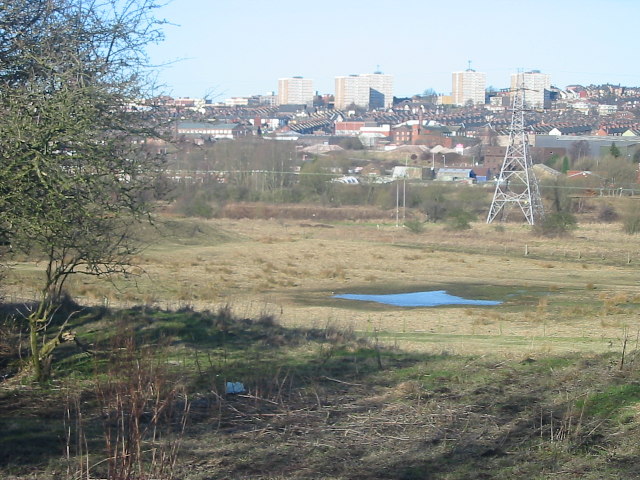
The site is the Berry Hill Industrial Estate. Part of the colliery land is now Berryhill Fields, a local nature reserve, after a plan for opencast mining was turned down in 1994.
Redevelopment
The National Coal Board built its North Staffordshire area headquarters on the site in 1966, and the pithead baths became the Berryhill mines rescue station in 1963. The land was reclaimed in the 1970s, the tips filling the marl hole, and became an industrial estate.
Related mines
- New Haden Colliery — Both run by John Slater's company from 1918; Berry Hill's tonnage was transferred to New Haden while the new shaft was sunk in the early 1930s.
Nearby mines
- Ubberley Colliery — 0.7 miles (1.2 km) NE
- Fenton Park Colliery — 1.0 miles (1.7 km) SE
- Mossfield Colliery — 1.2 miles (2.0 km) SE
- Far Green Colliery — 1.3 miles (2.1 km) NW
- Stafford Colliery — 1.5 miles (2.5 km) S
Straight-line distance, within 9 miles (15 km). Show on the map.
Disasters & major incidents
-
Berry Hill Colliery explosion, 1872
12 March 1872 · Explosion · 6 fatalities
On 12 March 1872 an explosion of firedamp at Berry Hill Colliery, Fenton, killed six men. The inquest blamed the careless use of naked lights where gas was present.
Recorded claims
Individual factual claims, each attached to the source(s) that support it below. Where sources disagree, both are kept.
- Coal and ironstone working is thought to have begun in the 1840s under W. T. Copeland; W. Bowers acquired the site in the early 1860s and had built an ironworks by 1870. 1
- Berry Hill colliery, Fenton, worked from 1863 to 1960 and occupied three sites in the same area. 2
- In 1918 John Slater set up John Slater Ltd to operate Berry Hill and New Haden collieries, later trading as Berry Hill Collieries Ltd. 3,1
- A new shaft sunk in the early 1930s to nearly 750 yards became No. 1, and all coal winding was concentrated there from 1933. 1
- The colliery employed 1,140 in 1937, 1,190 in 1940 and 1,100 in 1947, when it raised 320,000 tons. 4
- The pithead baths became the Berryhill rescue station in 1963 and a new NCB area headquarters opened on the site in July 1966. 1,2
- Two coal mines worked on the present Berryhill Fields in the first half of the 20th century; a plan for opencast mining there was turned down in 1994. 5
- Plans of blackband ironstone workings at Berryhill No. 3 Pit record abandonment in 1922. 6
Photographs & further reading
Jim Worgan's history of the colliery's owners, shafts, closure and later use of the site.
View sourceThe county's short account of the colliery and its later role as Coal Board headquarters.
View sourceSources
- (secondary) A History of Berryhill Colliery, by Jim Worgan - North Staffordshire Mining Group — North Staffordshire Mining Group
- (secondary) Berry Hill Colliery - Staffordshire Past Track — Staffordshire County Council
- (primary) Durham Mining Museum - Berry Hill Collieries Ltd. — Durham Mining Museum
- (primary) Durham Mining Museum - Berryhill Colliery (UK) — Durham Mining Museum
- (secondary) Berryhill Fields — Wikipedia
- (primary) BGS mine plans: blackband ironstone workings, Berryhill No. 3 Pit (abandoned 1922) — British Geological Survey / Mining Remediation Authority
Record created: 1 October 2026 · Last researched: 1 October 2026