 MineArchive
Opencast Working
| Also known as | Opencast (Short form used adjectivally, e.g. 'the Great Opencast'), Opencut (Alternative spelling) |
|---|---|
| Category | Mine Workings & Access |
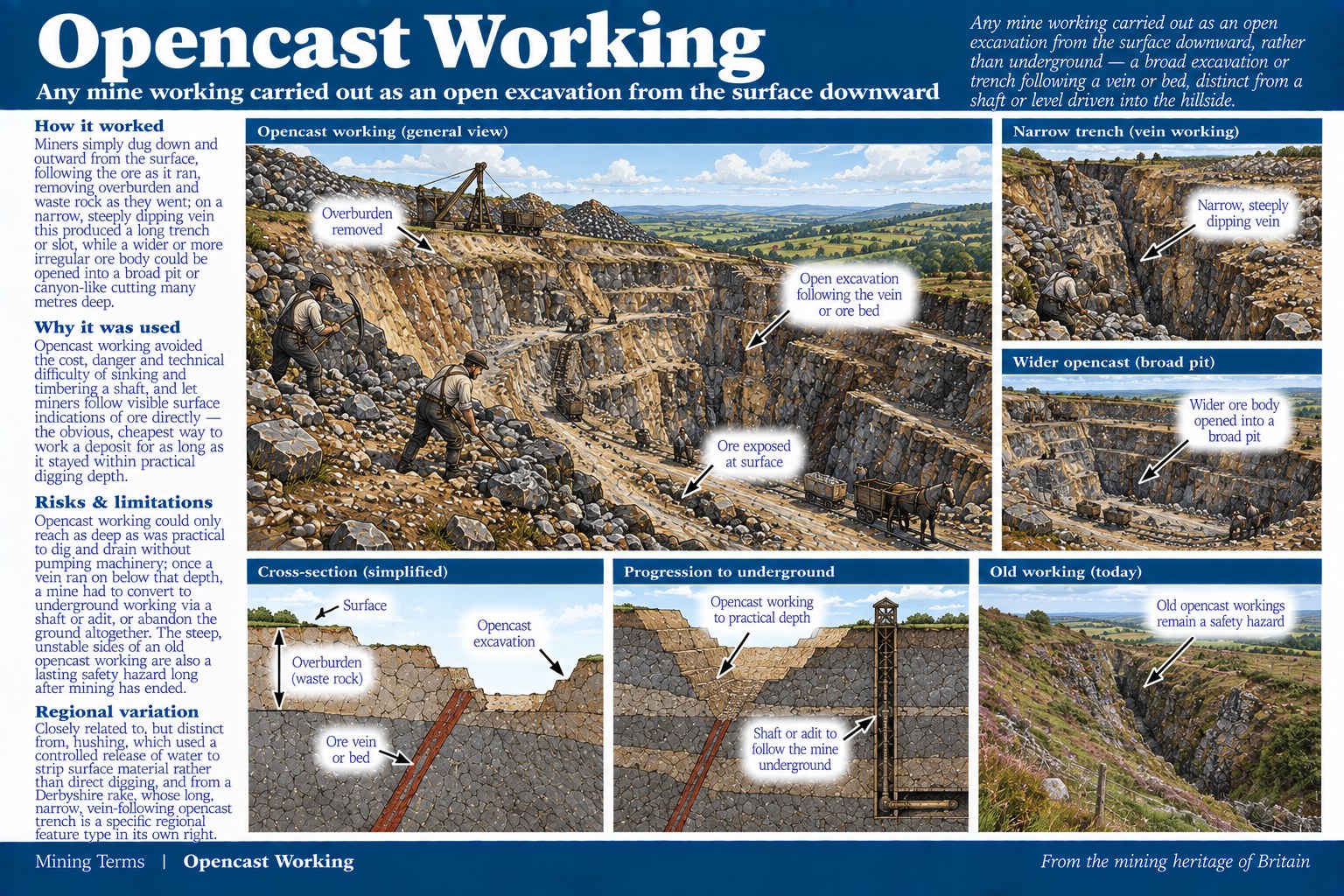
Any mine working carried out as an open excavation from the surface downward, rather than underground — a broad excavation or trench following a vein or bed, distinct from a shaft or level driven into the hillside.
Historical usage
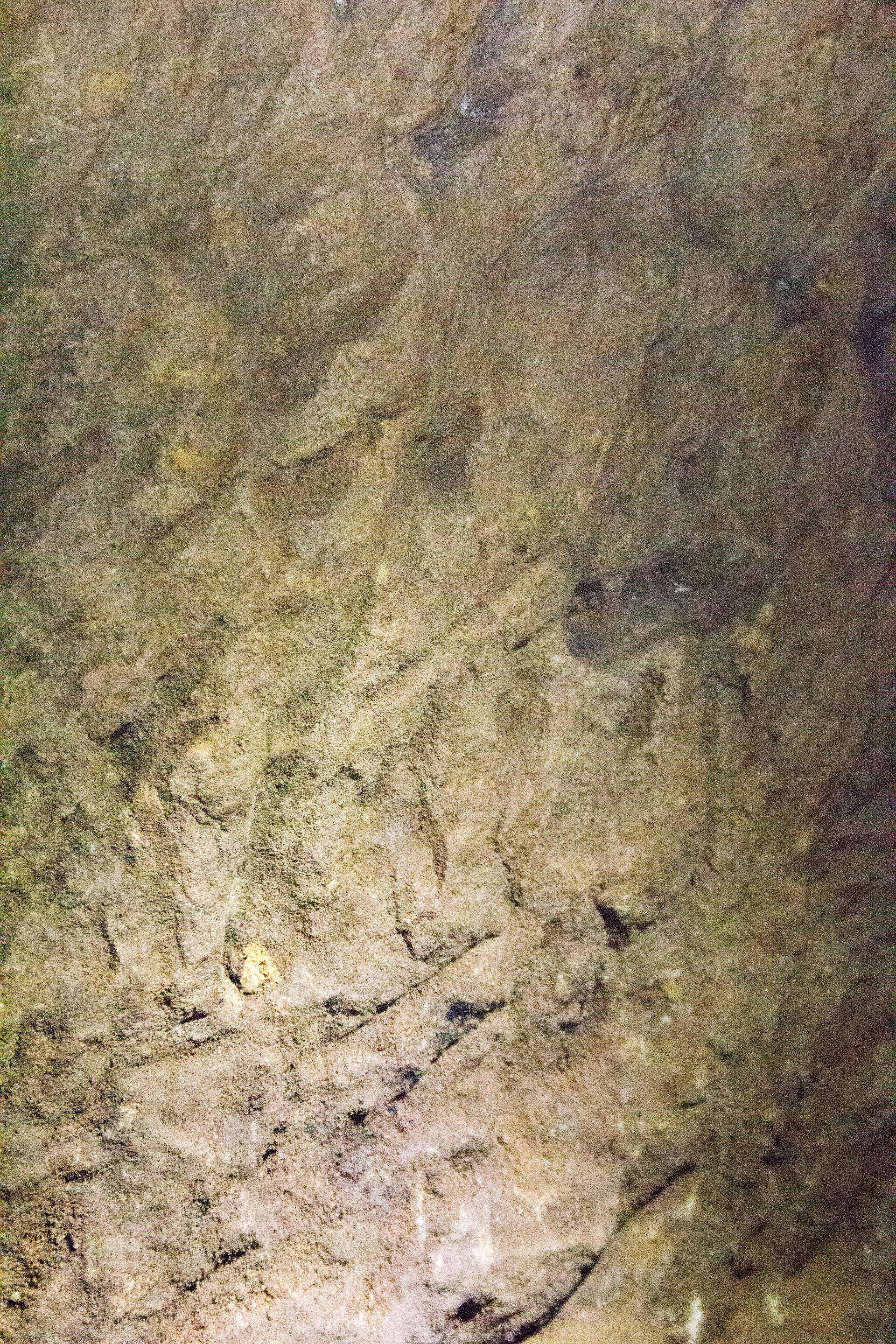
Opencast working is one of the oldest mining methods in Britain, used wherever a vein or ore body ran close enough to the surface to be worked without the expense of sinking a shaft; the technique appears from prehistoric tin streaming and Roman lead working through to some of the largest surviving mine features in the country, such as the Great Opencast at Craig-y-Mwyn in Powys and Engine Vein at Alderley Edge in Cheshire, worked intermittently from the Bronze Age to the 19th century.
How it worked
Miners simply dug down and outward from the surface, following the ore as it ran, removing overburden and waste rock as they went; on a narrow, steeply dipping vein this produced a long trench or slot, while a wider or more irregular ore body could be opened into a broad pit or canyon-like cutting many metres deep.
Why it was used
Opencast working avoided the cost, danger and technical difficulty of sinking and timbering a shaft, and let miners follow visible surface indications of ore directly — the obvious, cheapest way to work a deposit for as long as it stayed within practical digging depth.
Risks & limitations
Opencast working could only reach as deep as was practical to dig and drain without pumping machinery; once a vein ran on below that depth, a mine had to convert to underground working via a shaft or adit, or abandon the ground altogether. The steep, unstable sides of an old opencast working are also a lasting safety hazard long after mining has ended.
Regional variation
Closely related to, but distinct from, hushing, which used a controlled release of water to strip surface material rather than direct digging, and from a Derbyshire rake, whose long, narrow, vein-following opencast trench is a specific regional feature type in its own right.
Related terminology
Mines associated with this term
5 examples chosen from 126 linked records — the term page is not an index.
- Glenbuck Colliery — East Ayrshire (well documented example)
Named 7 times in this record, first in the summary: “…village that grew up around the mines was entirely demolished for opencast coal extraction in the 1990s, but it lives on as the unlikely…” - Graig Ddu Quarry — Gwynedd (well documented example)
Named in this record’s workings: “Originally worked as an open quarry — one of the few true opencast slate sites in the Blaenau Ffestiniog area — with underground…” - Honister Slate Mine — Cumbria (well documented example)
Quarrying began as opencast working on the crag faces in the late 17th century, going underground only when the faces were worked out. - Lassodie Colliery — Fife (well documented example)
Named 6 times in this record, first in the closure notes: “…and their families fourteen days to vacate the company houses. Opencast working returned to the ground in the 1960s and again from the late 1990s to…” - Park Slip Colliery — Bridgend (well documented example)
Named twice in this record, first in the history: “…ended for good. Park Slip West was later absorbed into the Margam Opencast Site; the eastern part of the site is today managed as Parc Slip…”
Disasters associated with this term
Included only where MineArchive's own research gives a reasonable evidential basis, with the nature of the relationship stated — not every disaster where this term might plausibly apply.
- Arkwright Town Methane Evacuation, 1988 (contextual relationship)
The settlement was an opencast scheme that removed the old workings which were the source of the gas. - Disappearance of Thomas Severn, Mapperley Colliery, 1918 (contextual relationship)
Named in this record’s investigation: “…with no evidence to confirm any of them. In the 1950s, opencast working reached the area Severn was last known to be in; a rumour that his…”
Sources
- (primary) Engine Vein opencast copper mine, 150m north of Warden's Cottage, Nether Alderley, Cheshire East — Historic England (Scheduled Monument record)
- (secondary) Lead — Out of Oblivion
Record created: 22 August 2026 · Last researched: 22 August 2026