 MineArchive
Honister Slate Mine
| Also known as | Honister Green Slate Mine, Kimberley Mine, Honister Crag Quarry |
|---|---|
| Location | Honister Pass, between Borrowdale and Buttermere, Cumbria — 54.5106, -3.1961 (exact) |
| Commodity | Slate |
| Type | Slate |
| Worked | from Late 17th century |
| Operators | Buttermere Green Slate Company (1900–1980), Alfred McAlpine (1980–1989), Mark Weir (1997–2011) |
Overview
The last working slate mine in England, cut into the crag at the head of a Lake District pass — closed after three centuries in the 1980s, reopened by one man in 1997, and now selling green slate and via ferrata tickets out of the same building.
History
Quarrying for Westmorland green slate has gone on at Honister since the late 17th century, beginning as opencast working on the crag faces. By 1870 the workings had gone underground beneath Honister Crag, with further working across the valley at Yew Crags and on Dubbs Moor. Self-acting inclines were installed in 1879 and production peaked at 2,598 tons a year by 1888. The Kimberley Mine was opened from 1926, reached by a substantial electrically powered incline 600 feet long; Dubbs Quarry stopped in 1932. After a long decline the mine closed in the 1980s under Alfred McAlpine ownership, and that looked like the end of it. It was not: in 1997 the local businessman Mark Weir took on the abandoned buildings, machinery and workings, and slate production began again that December — eleven years after the mine had shut.
Geology
Honister works Westmorland green slate, a volcaniclastic rock of the Borrowdale Volcanic Group — compacted volcanic ash, cleaved by later earth movements into a stone that splits cleanly. Its colour is the thing that sets it apart: a distinctive green, quite unlike the blue and grey slates of Wales and Cornwall, and prized as a roofing and facing stone for exactly that reason. Lakeland slate runs through a range of shades, and Honister's green is the best known of them.
Geological setting: Slate and Regional Metamorphism (well documented example)
Workings
Both opencast and underground. The early work was on the crag faces; by 1870 the mine had gone in under Honister Crag itself, and the 20th-century Kimberley Mine was entered from the Road End Level by an electrically powered incline 600 feet long and 14 feet square. Self-acting inclines from 1879 carried slate down the fellside, and a narrow-gauge railway still runs on the site.
Closure
Honister closed in the 1980s and reopened in 1997. Accounts differ on the closure year — 1986 and 1989 both appear — but agree that production restarted in December 1997 after an eleven-year gap.
What remains
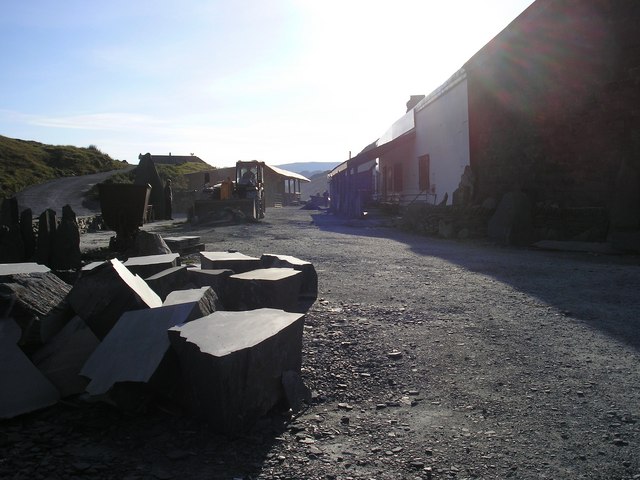
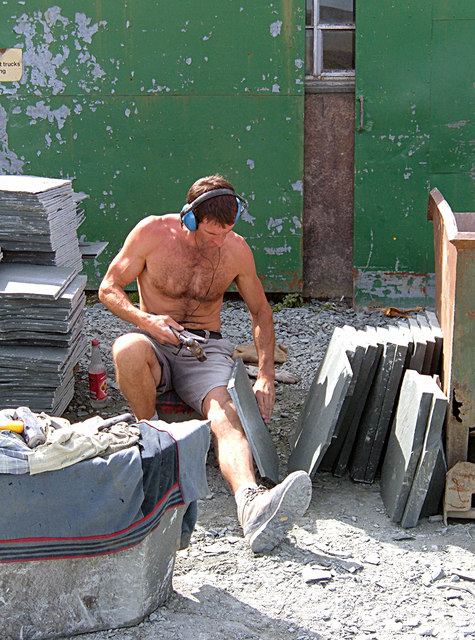
Working, and open to visitors. Slate is still produced, alongside underground tours, England's first via ferrata, a narrow-gauge railway and a zip wire approved in 2018. It is the last working slate mine in England. Explorers describe the complex as roughly a third abandoned, a third active and a third show mine: a mine plan shows some nineteen adits, most of them long since blocked by collapses.
The mine buildings, inclines, spoil runs and tramway formations across the head of the pass, all still in use or in view.
Redevelopment
None — the site was reopened as a mine, with the visitor operation built around it rather than replacing it.
Related mines
- Dubs Quarry — Dubs was one of the Honister group's workings and is barely separable from it in the record: the official lists return its people as included in Honister's in most years, and its slate went down the fell to Honister Hause.
- Hodge Close Quarry — Both ended up with Buttermere Green Slate Quarries Ltd, which held Hodge Close by the 1940s and worked the Honister group throughout.
- Quay Foot Quarry — Both were worked by the Buttermere Green Slate Quarries Ltd. and both took the green slate of the Borrowdale Volcanic Group; Honister was the company's principal mine, employing eighty-eight of its hundred people in 1930 against this quarry's three.
- Yew Craggs Quarry — Two faces of one deposit: the green slate veins cross the high hause between Buttermere and Borrowdale from Honister Crag to Yew Crag opposite, and slate was brought down from the workings on both crags to the road by hand-sledge for over a century before the Hause became the centre of operations after 1892.
Nearby mines
- Dubs Quarry — 0.2 miles (0.4 km) SW
- Yew Craggs Quarry — 0.4 miles (0.6 km) NE
- Seathwaite Wad Mine — 0.7 miles (1.1 km) SE
- Rigg Head Quarry — 1.3 miles (2.1 km) NE
- Dale Head Copper Mine — 1.4 miles (2.3 km) N
Straight-line distance, within 9 miles (15 km). Show on the map.
What's uncertain
Points where sources disagree or the record could not be settled; both accounts are kept. All open questions in the archive.
- The mine closed in the 1980s under Alfred McAlpine ownership after a protracted decline; sources give the year as both 1986 and 1989. (disputed) 1,2
Recorded claims
Individual factual claims, each attached to the source(s) that support it below. Where sources disagree, both are kept.
- Quarrying for Westmorland green slate has taken place at Honister since the late 17th century, beginning as opencast work. 1,2
- By 1870 the workings extended underground beneath Honister Crag, with further working at Yew Crags and Dubbs Moor; self-acting inclines were installed in 1879. 1
- Production peaked at 2,598 tons a year by 1888. 1
- The Kimberley Mine was developed from 1926, entered from the Road End Level by an electrically powered incline 600 feet long and 14 feet square; Dubbs Quarry ceased in 1932. 1
- The mine closed in the 1980s under Alfred McAlpine ownership after a protracted decline; sources give the year as both 1986 and 1989. (disputed) 1,2
- Mark Weir reopened the site in March 1997 and slate production restarted that December; Honister is the last working slate mine in England, now combining slate production with underground tours, England's first via ferrata and a narrow-gauge railway. 2,3
- Exploration reports describe Honister as about a third abandoned, a third working and a third show mine, with most of the nineteen adits shown on an old mine plan now blocked by collapses. 4
Photographs & further reading
An engineering-history account of the workings and their inclines.
View sourceThe working mine's own site, with visiting and product information.
View sourceSources
- (secondary) Honister Slate Mine — Wikipedia
- (primary) Craft, adventure and Cumbrian heritage — Honister Slate Mine
- (secondary) Honister Slate Mine — Visit Cumbria
- (observational) Mines 13 — Kimberley and Honister Slate, Cumbria, February 2022 — 28DaysLater
- (observational) Honister Slate Mine, Cumbria, December 2025 — 28DaysLater
Record created: 24 August 2026 · Last researched: 24 August 2026