 MineArchive
Park Slip Colliery
| Also known as | Parc Slip Colliery |
|---|---|
| Location | Tondu, Bridgend — 51.5410, -3.5960 (exact) |
| Commodity | Coal |
| Type | Coal |
| Worked | 1860s–1904 |
| Maximum depth | Deepest level (No.8) reached 1,166 yards from the surface |
| Operators | Llynfi, Tondu and Ogmore Coal and Iron Company (1872–1878), North's Navigation Collieries Company Limited (1878–1904) |
Overview
A Glamorgan colliery whose name is now inseparable from the 1892 explosion that killed 112 men and boys, one of the worst mining disasters in Welsh history and the tragedy from which the pit never fully recovered.
History
Park Slip Colliery, near Tondu, began working in the 1860s under John Brogden and Sons. In 1872 the Brogdens' interests were consolidated with the Llynfi Coal and Iron Company Ltd to form the Llynfi, Tondu and Ogmore Coal and Iron Company, a venture that failed in 1878. North's Navigation Ltd (renamed North's Navigation Collieries Company Limited in 1899) then took control, working difficult geology near the coalfield's southern outcrop. The colliery was worked through two slants fifteen yards apart, and by 1892 had eight horizontal levels off the main road, the deepest, No.8, reaching 1,166 yards from the surface; its two principal seams were the Gellideg (locally 'Cribbwr Fawr', 54-66 inches thick) and the Upper Nine Feet, a 7ft-8in bed of mixed coal and dirt. Output reached 79,955 tons in 1889.
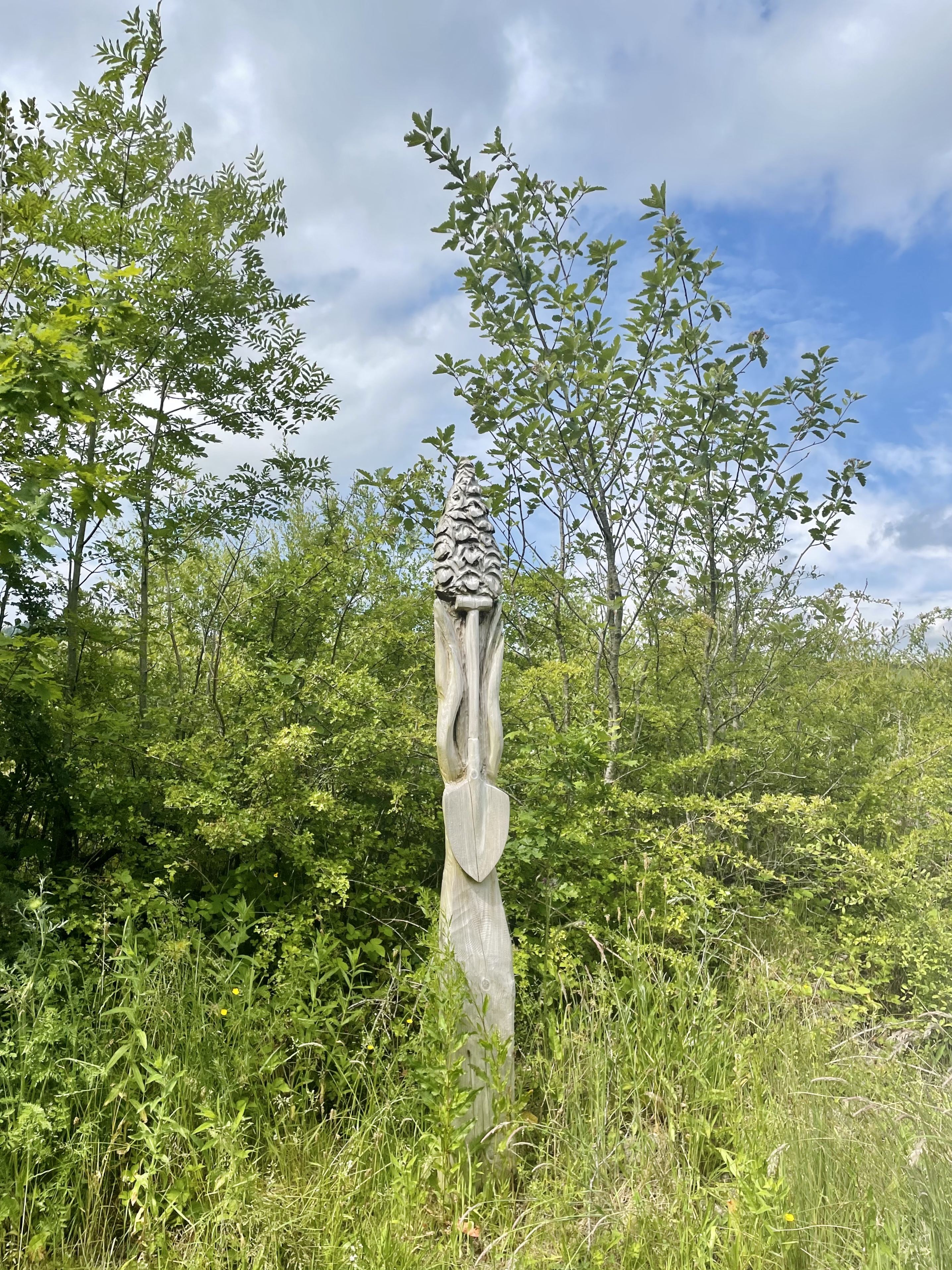
On 26 August 1892 an explosion of firedamp, its violence multiplied by coal dust, tore through the workings, killing 112 of the men and boys underground — one of the worst single mining disasters in Welsh history (see the separate disaster record). Output collapsed to 20,000 tons by 1894 as the colliery struggled to recover, and it finally closed in 1904. A brief reopening in 1924 worked the Gellideg seam intermittently through the rest of the decade, with a much-reduced workforce, before mining ended for good. Park Slip West was later absorbed into the Margam Opencast Site; the eastern part of the site is today managed as Parc Slip Nature Reserve by the Wildlife Trust of South and West Wales, with a memorial to the 1892 dead.
Geology
Park Slip worked the South Wales Coalfield's Upper Coal Measures close to its southern outcrop, where North's Navigation Ltd found the geology considerably more difficult than in the coalfield's central basin, extracting the Gellideg and Upper Nine Feet seams through two slants.
Workings
Worked through two slants (inclined shafts) fifteen yards apart, with eight horizontal levels off the main road by 1892, the deepest reaching 1,166 yards from the surface.
Closure
Never fully recovered from the 1892 explosion; output nearly quartered by 1894, and the colliery closed in 1904. A brief 1924 reopening worked the Gellideg seam intermittently through the 1920s before mining ended for good.
What remains
The eastern part of the former colliery is now Parc Slip Nature Reserve, managed by the Wildlife Trust of South and West Wales, with grassland, woodland and wetland habitats and a memorial to the 1892 disaster; the western part was absorbed into the Margam Opencast Site.
A memorial of 112 stones, one for each victim of the 1892 explosion, and a commemorative wooden statue stand at Parc Slip Nature Reserve.
Related mines
- Coegnant Colliery — Both were owned by North's Navigation Collieries, which held Park Slip from 1878 and Coegnant from 1889.
Nearby mines
- Ynysawdre Colliery — 0.5 miles (0.8 km) NE
- Coytrahen Park Colliery — 0.9 miles (1.4 km) N
- Barrow Colliery, Bryncethin — 1.5 miles (2.4 km) E
- Ton Phillip Colliery — 1.9 miles (3.0 km) W
- Tytalwyn Colliery — 2.4 miles (3.9 km) W
Straight-line distance, within 9 miles (15 km). Show on the map.
Disasters & major incidents
-
Park Slip Colliery explosion, 1884
2 April 1884 · Explosion · 2 fatalities
An explosion of gas at Park Slip Colliery, Tondu, on 2 April 1884 killed two men, one of them the manager's son, and injured seventeen. -
Park Slip Colliery explosion, 1892
26 August 1892 · Explosion · 112 fatalities
An explosion of firedamp, its violence multiplied by coal dust, tore through Park Slip Colliery near Tondu on 26 August 1892, killing 112 of the men and boys underground — one of the worst single mining disasters in Welsh history. -
Park Slip Colliery roof fall, 1899
23 November 1899 · Collapse / Roof Fall · 2 fatalities
A repairer and his son were killed at Park Slip Colliery, Tondu, on 23 November 1899 when rock fell from a fault slip as they enlarged a heading.
Recorded claims
Individual factual claims, each attached to the source(s) that support it below. Where sources disagree, both are kept.
- Park Slip began working in the 1860s under John Brogden and Sons, passed to the Llynfi, Tondu and Ogmore Coal and Iron Company from 1872 (failed 1878), then to North's Navigation Ltd from 1878. 1,2
- The colliery worked the Gellideg and Upper Nine Feet seams through two slants, with the deepest of eight levels reaching 1,166 yards from the surface by 1892; output was 79,955 tons in 1889. 1
- An explosion on 26 August 1892 killed 112 men and boys; output nearly quartered by 1894 and the colliery closed in 1904, reopening only briefly and intermittently in 1924. 1,2
- The eastern part of the former colliery is now Parc Slip Nature Reserve, managed by the Wildlife Trust of South and West Wales, with a memorial to the 1892 disaster; the western part was absorbed into the Margam Opencast Site. 2
- Parc Slip Colliery stood near Tondu, Bridgend, at about 51.541 N, 3.596 W. 2
Sources
- (secondary) Park Slip Colliery - Tondu - Bridgend — Northern Mine Research Society
- (secondary) Parc Slip Colliery — Wikipedia
Record created: 27 August 2026 · Last researched: 27 August 2026