 MineArchive
Pithead Baths
| Also known as | Pit Head Baths (An alternative, two-word spelling used by some sources and some colliery records on this archive.) |
|---|---|
| Category | Structures & Machinery |
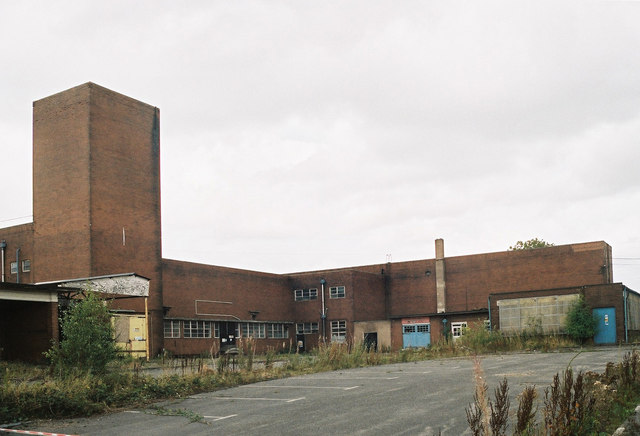
A purpose-built washing and changing facility at a colliery's surface site, letting miners wash and change out of their working clothes before going home, rather than carrying pit dirt back to a house with no bathroom of its own — built nationally under a dedicated welfare programme from 1926 onward.
Historical usage
The Miners' Welfare Fund was established in 1921, funded by a levy on coal production (initially a halfpenny, later a penny per ton), to pay for recreational, educational and welfare facilities for mining communities. From 1926 until the early 1960s, its Miners' Welfare Committee designed and built more than 800 pithead baths across British coalfields, described in 1939 as 'a colossal social experiment taking architectural form'; between 1928-30 alone around 127 baths schemes were built, and by the end of the Second World War roughly 63% of the mining workforce had access to pithead baths at their own colliery.
How it worked
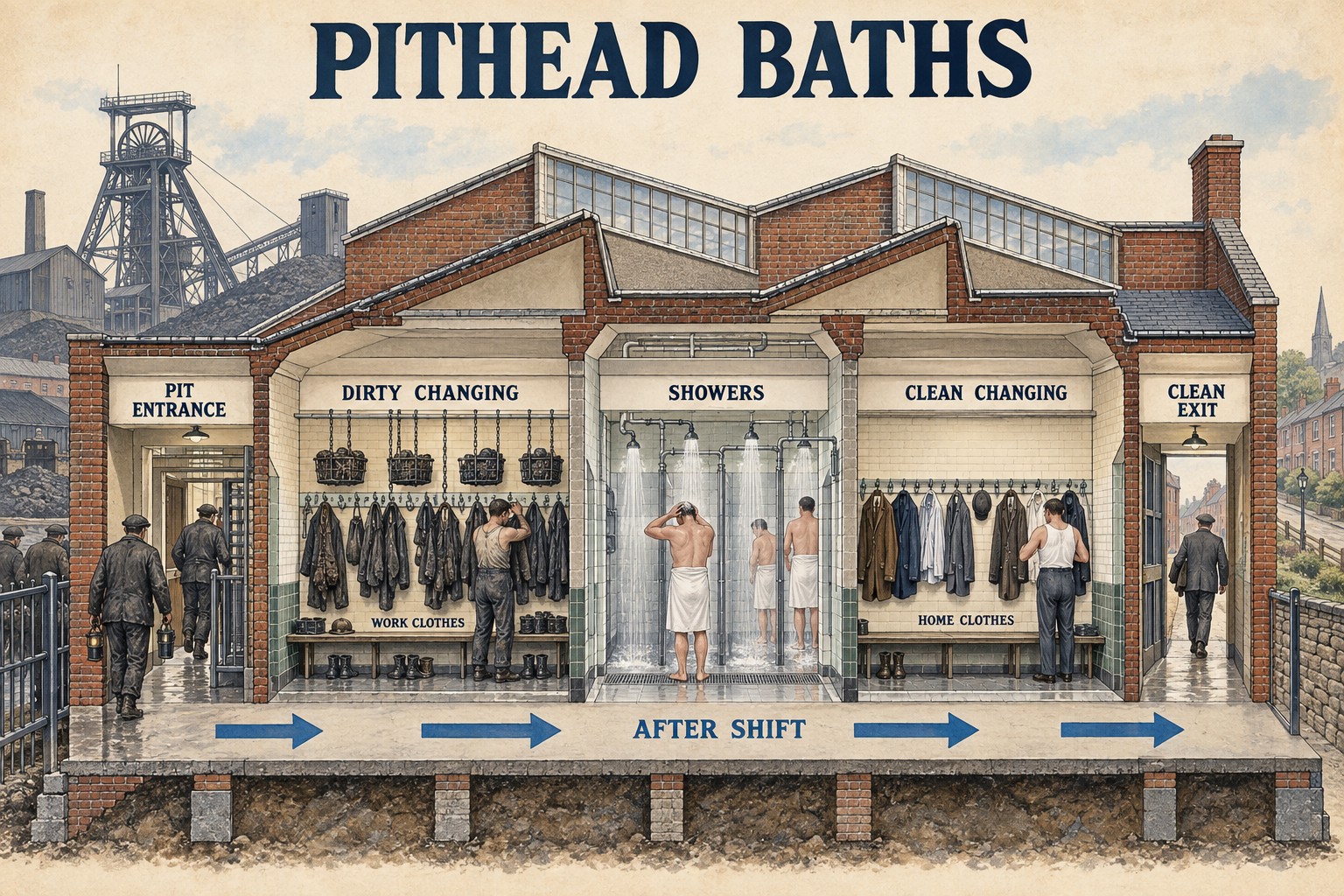
A pithead baths building was organised around a strict separation of 'clean' and 'dirty' sides, run by an attendant: a miner arriving for a shift changed out of his own clothes on the clean side, into working clothes stored separately on the dirty side, and reversed the process at the end of his shift, washing before changing back — keeping coal dust and pit dirt out of the miner's own clothes and out of his home.
Why it was used
Before the programme, most miners had no choice but to wash at home in a tin bath filled from a kettle, often with the whole household's water heated and hauled for the purpose, and to carry pit dirt through the house in the process; pithead baths moved that burden from the home to the colliery itself, a welfare reform The Twentieth Century Society describes as predating the National Health Service by more than two decades in its scale of organised public provision for a single industry's workforce.
Risks & limitations
Provision depended on a colliery being large enough, and its management willing enough, to take up the scheme — by the outbreak of the Second World War, over a third of the mining workforce still had no pithead baths at all, and the programme itself only began in 1926, decades into the industry's history, so most 19th-century and earlier collieries closed before ever having one.
Related terminology
Mines associated with this term
5 examples chosen from 82 linked records — the term page is not an index.
- Weetslade Colliery — Tyne and Wear (surviving physical example)
The colliery's pithead baths were still an extant building in 2000, one of only three surviving locally according to the Tyne and Wear HER. - Blaenserchan Colliery — Torfaen (well documented example)
Named in this record’s current condition: “…washery and other surface remains, including the site of the pithead baths steps, survive in ruined form; an underground roadway has also been…” - Calverton Colliery — Nottinghamshire (well documented example)
Named in this record’s history: “…2 in shaft was finished early in 1939, and by September a canteen, pithead baths, lamp room, offices and 22 houses of a planned colliery village had…” - Chatterley Whitfield Colliery — Staffordshire (well documented example)
Named in this record’s surface remains: “…the 1891 brick chimney, the 1938 Lancashire boiler house, the pithead baths, the Platt Shaft headgear (c. 1900), the Institute Shaft headgear…” - Eastern United Colliery — Forest of Dean (well documented example)
Named 3 times in this record, first in the workings: “…Railway's Forest of Dean Branch, and the surface plant included pit-head baths.”
Disasters associated with this term
Included only where MineArchive's own research gives a reasonable evidential basis, with the nature of the relationship stated — not every disaster where this term might plausibly apply.
- Greenrigg Colliery pithead fire (contextual relationship)
Opened at the rebuilt pithead in 1930.
Sources
- (secondary) Pithead Baths — The Twentieth Century Society
- (secondary) The Pithead Baths: Caphouse — National Coal Mining Museum for England
Record created: 27 August 2026 · Last researched: 27 August 2026