 MineArchive
Miners' Welfare Fund
| Also known as | Miners' Welfare Commission, Mining Industry Act 1920 welfare levy, Coal Industry Social Welfare Organisation, CISWO |
|---|---|
| Category | Law & Custom |
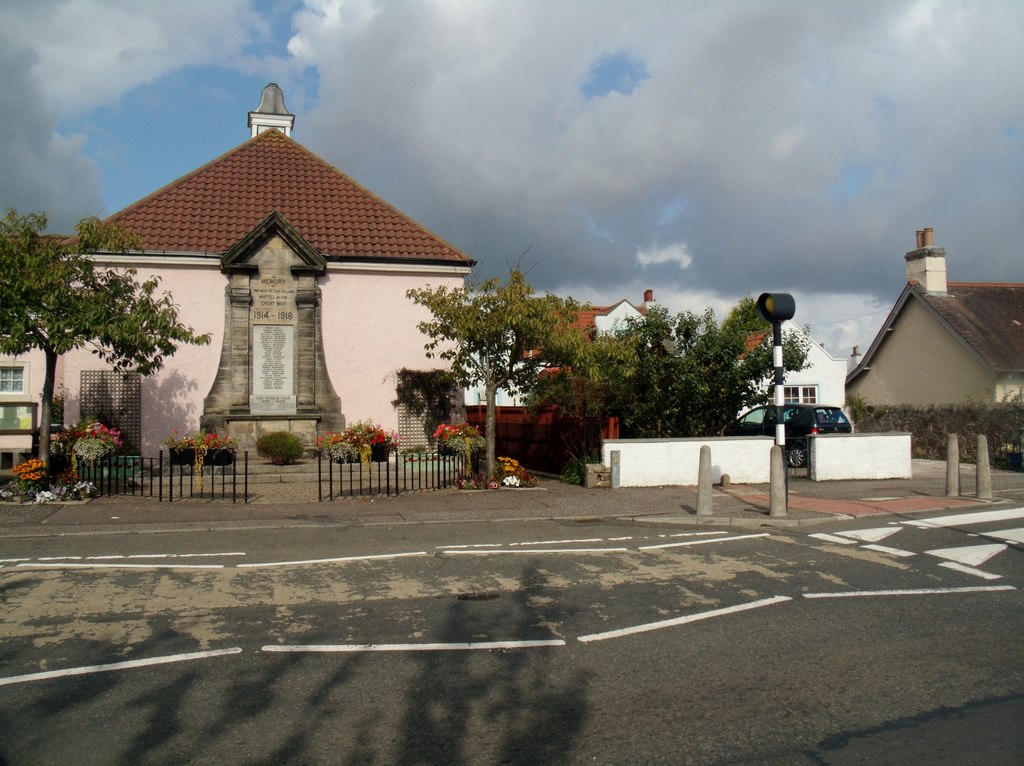
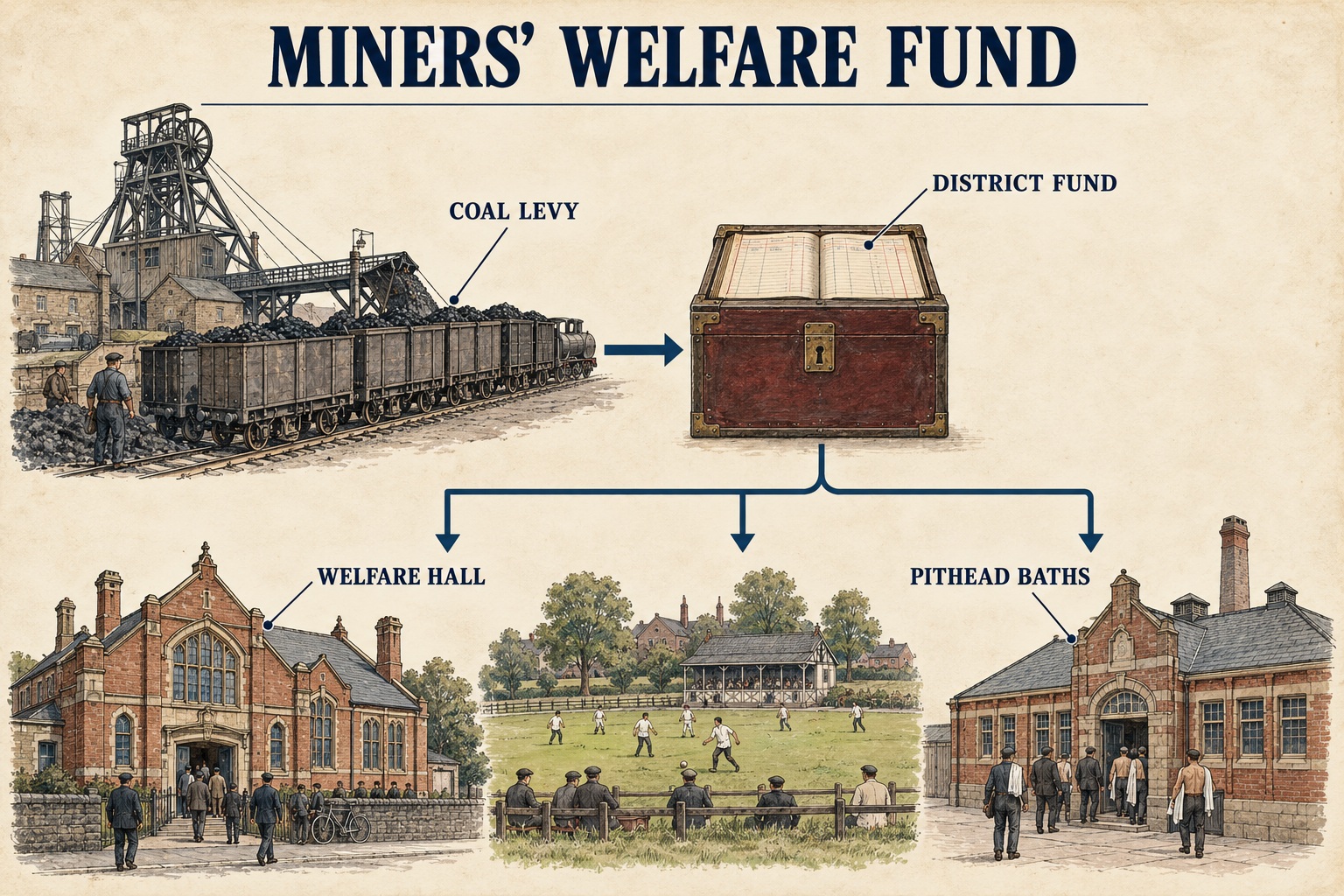
A national fund for the welfare of coal miners and their families, created by section 20 of the Mining Industry Act 1920 and paid for by a levy of a penny on every ton of coal raised in the country. It built the welfare halls, institutes, recreation grounds and pithead baths that stand in mining villages all over Britain.
Historical usage
The fund came out of the Sankey Commission, and the levy ran from July 1920. It was administered not by the government but by a statutory committee with, in its chairman's words, absolute discretion; the Board of Trade could veto the purposes but not the decisions. At a penny a ton on around 240 million tons a year the fund took in roughly a million pounds annually, and between 1920 and 1951 more than thirty million pounds was spent. In 1934, after an inquiry under Lord Chelmsford, the levy was halved to a halfpenny and the fund's life extended to 1951. The Miners' Welfare Act 1952 finally discontinued the levy and wound the fund up, and its successor body survives today as the Coal Industry Social Welfare Organisation, a charity since 1995 and still the only national charity working solely for former coal miners, their families and their communities.
How it worked
Money was raised by the levy and divided between district committees, which brought forward schemes for their own coalfields. What the committee would fund was set out in section 20 as purposes connected with the social well-being, recreation and conditions of living of workers in or about the coal mines, and elaborated in a memorandum of October 1921. In practice that meant welfare institutes and halls, recreation grounds and playing fields, convalescent homes, scholarships, and from 1926 the national pithead baths programme that built more than eight hundred baths.
Why it was used
Housing had been deliberately excluded from the fund's purposes, and wages were nobody's business but the industry's, so what was left was everything around the work: somewhere to meet, somewhere for the children to play, somewhere to wash. Viscount Chelmsford, who chaired the committee, put its object to the House of Lords in 1922 as being to bring sweetness and light into the mining districts and to brighten the individual and social life of those districts.
Risks & limitations
The money was a levy on coal, so four fifths of it came out of the men's own wages under the wage agreements of the day, and in bad years that was resented. In June 1922 the Lancashire and Cheshire district, where colliers were working three shifts a week for 25s 9d, asked for their share of the fund to be paid out in aid of wages. The Law Officers said it would be legal. The committee refused: Parliament had not intended it, the money would be gone in weeks, and nothing lasting would remain. Lord Strachie told the House that the men would rather have help with the rent than musical entertainments. The committee's answer was that it would fund any scheme within the Act that happened to create work.
Related terminology
Colliery Band, Miners' Federation of Great Britain, Miners' Row, National Coal Board, National Union of Mineworkers, Pithead Baths
Mines associated with this term
Included only where MineArchive's own research gives a reasonable evidential basis — not every mine where this might plausibly apply.
- Callendar Colliery — Falkirk (well documented example)
Named in this record’s history: “…canteen for 150 diners, built and equipped by the company under the Miners' Welfare Commission, opened in the colliery yard. The closure of the Callendar pit…” - Conygre Colliery — Somerset (well documented example)
Timsbury's miners' welfare field, on which Conygre Hall was built in 1973, was bought out of a levy of a penny on every ton of coal raised locally — the Miners' Welfare Fund's own mechanism, described on this record without being named. - Ludlows Colliery — Somerset (well documented example)
Named in this record’s history: “…a small installation for 396 men with a canteen, designed for the Miners' Welfare Commission. The Middle and Ludlows workings in the No. 5 seam were abandoned in…” - Wellesley Colliery — Fife (well documented example)
Named in this record’s history: “…first in Scotland and the second in Britain — and extended them with Miners' Welfare Fund money in 1938. By then Wellesley's Baum-type central washery was the…”
Disasters associated with this term
Included only where MineArchive's own research gives a reasonable evidential basis, with the nature of the relationship stated — not every disaster where this term might plausibly apply.
- Gleision Colliery Flooding, 2011 (contextual relationship)
Named in this record’s memorials: “…within a day, with the Prince of Wales as royal patron and the Coal Industry Social Welfare Organisation administering it. Churches across South Wales held prayers on 18…”
Sources
- (primary) Miners' Welfare Fund, House of Lords, 21 June 1922 — Hansard, UK Parliament
- (secondary) About us — Coal Industry Social Welfare Organisation
Record created: 11 September 2026 · Last researched: 11 September 2026