 MineArchive
Cardowan Colliery explosion, 1960
| Date | 25 July 1960 |
|---|---|
| Mine | Cardowan Colliery |
| Region | North Lanarkshire |
| Primary type | Explosion |
| Associated types | Fire, Rescue |
| Fatalities | 4 (Killed: John Dewar, 40, engineer; Theodore Stenzel, 32, engineer; William Murphy, 54, deputy. Died on 31 July: William Hamilton, 58, deputy. Hansard, the day after, gave three killed and seven burned.) |
| Injuries | Seven injured, one of whom, the deputy William Hamilton, died. The report's casualty list includes the Group Manager W. G. Neilson, H.M. District Inspector Fred Tootle, the deputy Thomas Davidson, the rescue man Allan Bridges, the overman John Henderson and Duncan Scott senior. |
| Context | During active mining (The re-opening, during the July holiday, of the North Side Coking Coal districts of the National Coal Board's Cardowan Colliery at Stepps, sealed since an underground fire on 29 January 1960.) |
Shortly before 7 p.m. on 25 July 1960, as a party led by the Group Manager and the District Inspector came away from clearing an airway over a roof fall on No. 4 East face at Cardowan, firedamp exploded behind them and flame swept the intake. The district had been sealed for six months after a fire. Three men working on the gas drainage pipes in the return were killed and seven were burned, one of whom died a week later. The Deputy Chief Inspector concluded that half-burned coal had reheated once fresh air reached it.
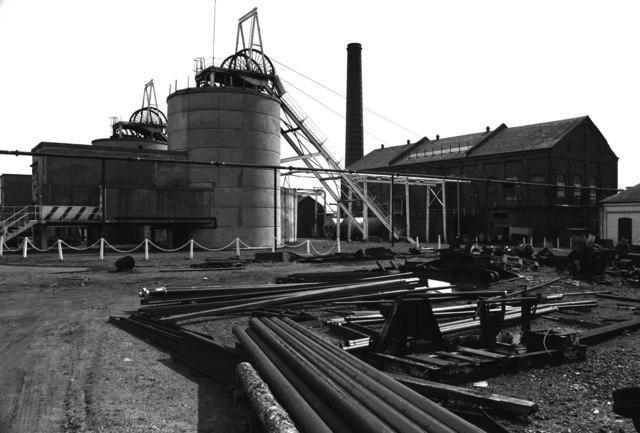
Cause
Firedamp ignited on or near No. 4 East face, in the report's opinion by the reheating of carbonaceous material that had been on fire in January, after fresh air had reached it for several days.
Contributing factors
The Kilsyth Coking Coal gave off 1,060 cubic feet of gas a ton, and 1½ to 2 million cubic feet of methane lay behind the seals. Leakage at air crossings delayed re-ventilation for days; samples were taken where leakage diluted them and carbon monoxide readings were not followed up; the deputy and two mechanics were sent into the return while gas remained inbye of them and work on the fall could send it on to them; and the rescue men accompanied the workers closely instead of standing off under cover.
What happened
A firedamp ignition in the undercut on 29 January had spread along the face, and after several small explosions in the waste the district was sealed 1,420 yards out. On 16 July the seals were breached by shots fired from the surface behind a head of water, and over the following days rescue teams opened doors, pumped water from the intake and restored the air. On the 25th, when the methane drainage failed, Dewar, Stenzel and Murphy were sent into the left-hand return to find the fault while a party opened a hole 38 feet long through the fall on the face. They had crawled through, found the face apparently normal, and were walking out when they were enveloped in flame and thrown about. Bridges, his arm injured, turned on Henderson's oxygen, got his own going with another man's help and led Tootle out to clear air on the trunk road.
Rescue & recovery
At 6.55 p.m. the rescue instructor W. Adams answered a call saying only 'Blast, need assistance, I am choking', sent the standing-by brigade straight underground and called the Coatbridge Central Rescue Station. The survivors were brought out, the three bodies recovered, and the seals were then rebuilt because of the risk of further explosions; the district was not reopened before the report was written.
Investigation & inquiry
Richard Wood, Minister of Power, told the Commons on 26 July that he had directed H. R. Houston, Deputy Chief Inspector of Mines, to make a special report under section 121 of the Mines and Quarries Act 1954. Houston reported on 20 December 1960 and the report was published as Cmnd. 1260 in January 1961.
Changes to practice & legislation
Houston recommended a detailed agreed plan for every re-opening of a sealed fire area with one senior official in charge each shift; allowing more than six months for heated coal to cool; removing gas as a plug; surface laboratories, sampling near any suspected heating and graphs of results for the manager; no work in returns without breathing apparatus until gas was cleared; rescue brigades kept under cover nearby; and consideration of self-rescuers for everyone underground.
Recorded claims
Individual factual claims, each attached to the source(s) that support it below. Where sources disagree, both are kept.
- An explosion on 25 July 1960, during work to reopen a district sealed off some months earlier after an underground fire, killed 3 men and burned 7 more; HM Deputy Chief Inspector of Mines H.R. Houston made a special report on the accident. 1
- The report records three killed and seven injured, one of whom, the deputy William Hamilton, died on 31 July 1960. 2
- Houston concluded, as a matter of opinion for want of evidence, that firedamp was ignited on No. 4 East face by the reheating of carbonaceous material that had been on fire in January; electrical apparatus and the safety lamps of the men in the return were ruled out. 2
- Air samples from the right-hand return showed small amounts of carbon monoxide from 21 July onward, which Houston said should have prompted a review of where and how samples were taken. 2
- Houston found the re-ventilation had been run on an ad hoc basis with little urgency, nine days passing before enough air reached the rise side of No. 4 East. 2
Related terminology
Mining terms this disaster is structurally linked to, with the nature of the relationship.
- Breathing Apparatus (rescue/recovery concept)
Rescue men wore Proto apparatus, not coupled up. - Firedamp (direct cause)
Firedamp exploded on reopening a sealed fire area. - Fresh Air Base (rescue/recovery concept)
A fresh air base was set up at No. 1 East Junction. - Longwall (contextual relationship)
No. 4 East was a double-unit longwall conveyor face. - Mines Rescue Station (rescue/recovery concept)
Coatbridge Central Rescue Station was called. - National Coal Board (contextual relationship)
An NCB Scottish Division colliery. - Proto Apparatus (rescue/recovery concept)
Samples were collected by men in Proto apparatus. - Return Airway (contributing factor)
Men were sent into the return while gas remained. - Self-Rescuer (contextual relationship)
Self-rescuers were recommended for re-opening work. - Spontaneous Combustion (direct cause)
Half-burned coal reheated in fresh air.
Sources
- (primary) Cardowan Colliery, Steppes (Explosion) (Hansard, 26 July 1960) — UK Parliament, House of Commons (Historic Hansard)
- (primary) Explosion at Cardowan Colliery, Lanarkshire: Report by H. R. Houston (Cmnd. 1260) — Ministry of Power, HMSO, 1961 (via the Edinburgh Research Archive)
Record created: 8 September 2026 · Last researched: 13 September 2026