 MineArchive
Inrush
| Also known as | Inundation (Added 2026-09-29 after 22 records were found using it for a sudden ingress of water.) |
|---|---|
| Category | Ground Conditions & Hazards |
A sudden, uncontrolled flood of water, mud, peat or other loose material breaking into underground workings — one of the most dangerous hazards in mining, capable of overwhelming a working in minutes with little or no warning.
Historical usage
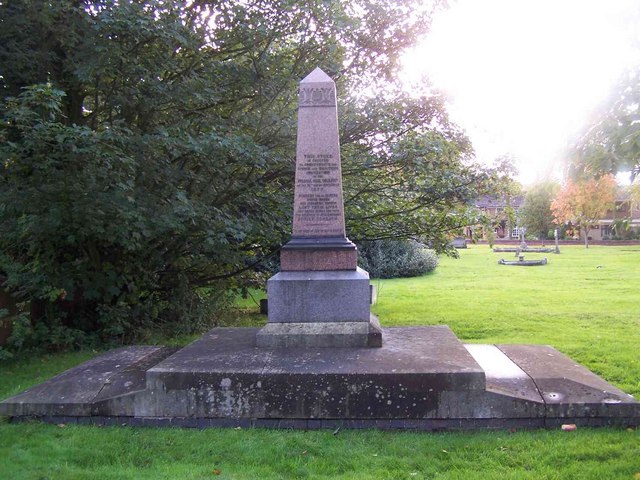
The danger of groundwater breaking unexpectedly into workings was recognised from the earliest days of British mining; the earliest detailed technical accounts of mining practice, dating from the late 17th and early 18th centuries, already devote extensive attention to the problem of unwanted water ingress. Inrushes have caused some of the worst disasters in British mining history, from East Wheal Rose's 1846 flood, when a thunderstorm sent floodwater pouring into the workings within minutes, to the Knockshinnoch Castle Colliery inrush of 1950, when a waterlogged surface bog broke through into workings driven too close to the surface, trapping 129 miners and killing 13. The word the Victorians carved on the memorials was usually inundation rather than inrush. The stone in St Michael and All Angels' churchyard at Pelsall records 'the sudden and disastrous inundation of the Pelsall Hall Colliery on the 14th day of November 1872 whereby 22 miners lost their lives'.
How it worked
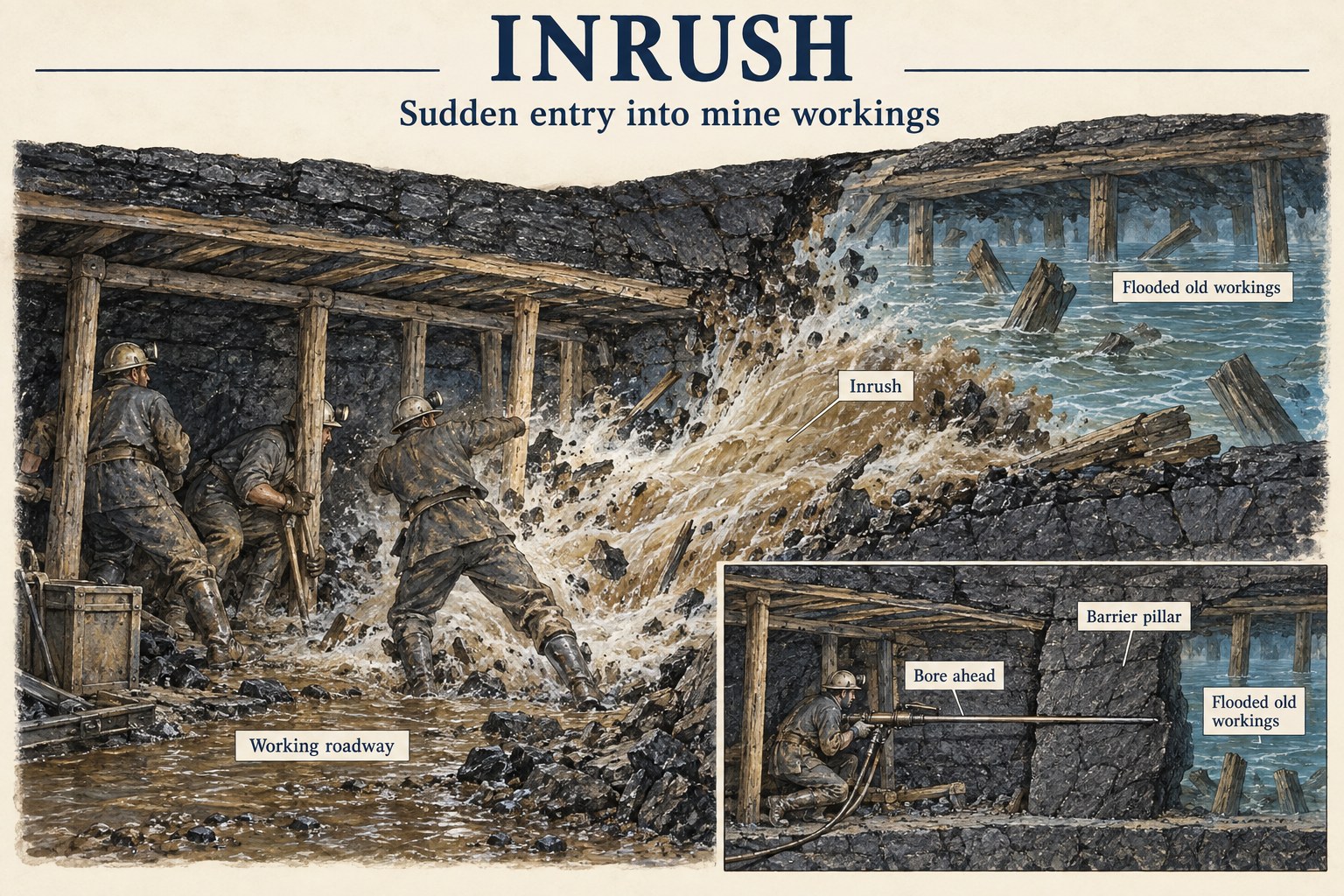
An inrush occurs when mine workings breach, or come too close to, a body of water, saturated ground, or loose flowing material — whether a flooded neighbouring mine, a watercourse, or waterlogged surface ground — allowing it to break through suddenly under gravity and hydrostatic pressure and flood the workings far faster than normal seepage or planned drainage.
Why it was used
The defence against an inrush was never a machine but a rule: bore ahead. Where workings approached old or unidentified ground, boreholes were kept driven in advance of the face, so that a hole and not a man found the water first, with further holes to the sides and above where the ground was suspect. This is General Rule 13 of the Coal Mines Regulation Acts, and inquiry after inquiry turned on whether it had been observed: at Auldhouseburn in 1898 the sheriff directed the jury that the inrush was due to a failure to keep boreholes in advance, and three men had drowned in consequence. Around the borehole sat the rest of the practice — abandonment plans deposited so that the position of old workings was known at all, barriers of solid coal left unworked against a flooded neighbour, and dams built to hold back water already met.
Risks & limitations
An inrush can flood a working faster than miners can escape, extinguish candles and lamps to leave them in total darkness, and cut off the normal routes to the surface entirely, as happened at both East Wheal Rose and Knockshinnoch; even where escape is possible, the flooded ground left behind can take years, or prove impossible, to fully drain and rework.
Regional variation
The hazard takes the shape of the ground. In the coalfields the classic inrush is water from abandoned workings next door, which is why the barrier and the borehole matter so much in a crowded field. In Scotland and the north the surface itself could be the danger: at Knockshinnoch in 1950 it was waterlogged moss and peat that came through the roof. In Cornwall and the lead fields the risk was surface water finding a shaft in a storm, as at East Wheal Rose. Healey Hero's glossary defines the word for both cases at once — striking a body of water, or of material that can flow when wet — and the Scottish glossaries speak of a mine being drowned rather than flooded.
Related terminology
Care and Maintenance, Shaft Sinking, Submarine Mining
Mines associated with this term
5 examples chosen from 48 linked records — the term page is not an index.
- Diglake Colliery — Staffordshire (notable incident)
The 1895 inrush from the flooded old Diglake workings drowned 77 men. - Elswick Colliery — Tyne and Wear (notable incident)
Two hewers died on 4 May 1900 when the Beaumont seam workings at South Elswick holed into unknown old workings full of water. - Lofthouse Colliery — West Yorkshire (well documented example)
The South 9B face lay about 750 ft down when three million gallons burst in from abandoned 19th-century workings. - Snowdown Colliery — Kent (well documented example)
Named in this record’s history: “…other Kent shafts: water. The No. 1 shaft was lost to a sudden inrush at 260 ft, and the shaft was abandoned. A second shaft succeeded,…” - Adelaide Mine — Cheshire (well documented example)
Named in this record’s summary: “…It was the last working rock-salt mine in Northwich when a sudden inrush of water forced its evacuation on 13 March 1928, flooding the…”
Disasters associated with this term
5 examples chosen from 46 linked records, most direct relationship first.
- Auchenharvie Colliery inrush, 1895 (direct cause)
Water held in abandoned workings released into a live face — the textbook case, and the reason the boundary dyke was legally protected. - Auldhouseburn Colliery inundation, 1898 (direct cause)
The inrush came from the abandoned and water-filled Crossflat workings when the cross-cut holed into them without boreholes kept in advance. - Brynamman Colliery Inrush, 1933 (direct cause)
Water broke into the slant. - Bryncoch Colliery inundation, 1859 (direct cause)
Water from old workings broke in. - Brynmally Colliery inrush, 1856 (direct cause)
Water from old workings.
Sources
- (observational) Memorial to the Pelsall Hall Colliery mining disaster — Geograph Britain and Ireland
- (primary) 'Making water': The hydrogeological adventures of Britain's early mining engineers — Geological Society, London, Special Publications
- (primary) Coal Mines Act 1862 (25 & 26 Vict. cap. 79) — Durham Mining Museum
- (primary) Glossary of Scotch Mining Terms — James Barrowman (1886), via Scottish Mining Website
- (secondary) Knockshinnoch disaster — Wikipedia
- (secondary) Pit Terminology — Healey Hero
Record created: 23 August 2026 · Last researched: 11 September 2026