 MineArchive
Adelaide Mine
| Also known as | Adelaide Salt Mine, Verdin's Marston Mine, Adelaide Marston Mine |
|---|---|
| Location | Marston, Cheshire — 53.2768, -2.4956 (approximate) |
| Commodity | Salt |
| Type | Mineral |
| Worked | 1850 or 1852–13 March 1928 (flooded) |
| Maximum depth | 336 ft (112 yards); also given as 330 ft |
| Operators | Joseph Verdin and Sons (1850–1888), Salt Union Ltd (1888–1928) |
Overview
A Cheshire rock-salt mine at Marston, near Northwich, worked from 1850 by the salt firm Joseph Verdin and Sons and known locally for the underground banquets and dances held in its 'Crystal Ballroom' chamber. It was the last working rock-salt mine in Northwich when a sudden inrush of water forced its evacuation on 13 March 1928, flooding the workings for good and leaving a subsidence lake, Adelaide Flash, on the surface above.
History
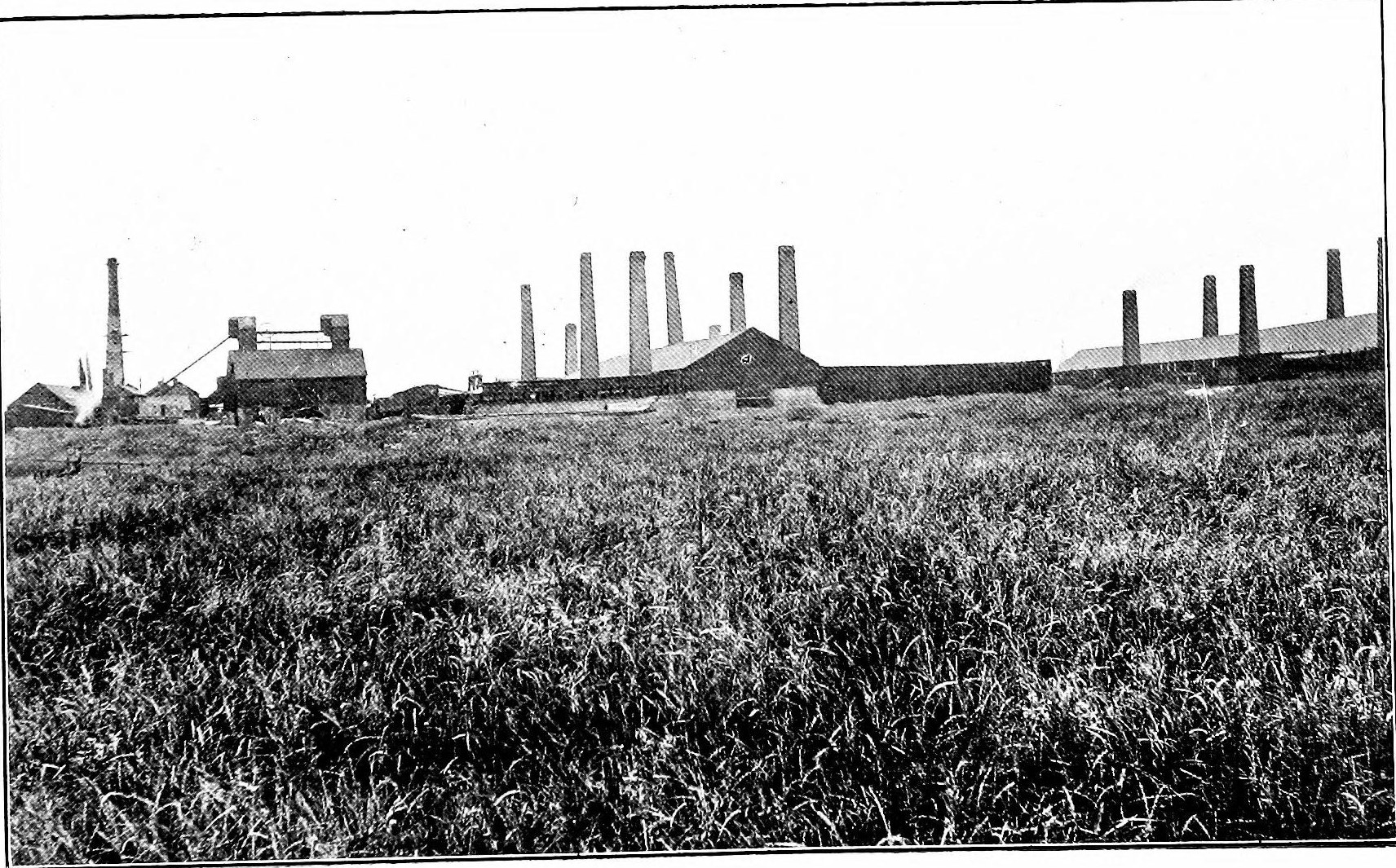
The Adelaide Mine was sunk at Marston in 1850 and named after Adelaide of Saxe-Meiningen, queen consort to William IV. Another account has the rock-salt mine sunk into the bottom bed in 1852 by Woodyatt and Eauchus and sold a year or so later to the Verdins. It was owned and worked by Joseph Verdin and Sons, by the late nineteenth century the largest salt manufacturer in Britain, which also worked salt plants at Witton, Moulton, Over, Wharton and Middlewich; the firm ran it as J. Verdin and Sons (Rock Mine), or Verdin's Marston Mine, until the Salt Union was formed in 1888 and took it over. The land for the salt works at the surface was leased in 1869, and by 1888 the Adelaide was the largest salt works in the Marston and Wincham district, with 47 pans beside the rock mine.
Rock salt was won from broad chambers cut into the Northwich Halite bed, the roof carried on massive pillars of unworked salt left in a regular grid pattern. Around 1880 the Verdins brought in rock-cutting machinery, an 'Air Engine and Rock Cutter' made by Walker Brothers of Wigan, and in 1884–86 the mine shipped about 12,500 tons a year. As well as a working mine it became a notable Victorian and Edwardian tourist attraction: parties were lowered down the shaft in a cage to dine and dance by candle and gaslight among the pink salt caverns, a chamber known as the 'Crystal Ballroom'. The visits of Grand Duke Michael of Russia and, in 1844, of Emperor Nicholas I, which are often attached to the Adelaide, were made to the older Marston Old Mine nearby, before the Adelaide was sunk.
By the early twentieth century it was one of the largest rock-salt workings still active in the area: the Salt Union's inventory of 1908 called it the only working mine in the Cheshire district, in excellent order, with a new rock mill three years old. The workings were extended in the following decades under Ollershaw Lane and the neighbouring salt works, and by 1928 it was the last rock-salt mine still being worked at Northwich, with forty to fifty hands. Flooding on 13 March 1928 brought mining at the site to a permanent end (see Disasters, below); production of rock salt continued instead at Salt Union's mine at Winsford.
Geology
Rock salt from the Northwich Halite, won from broad chambers with the roof carried on massive pillars of unworked salt left in a regular grid.
Workings
Room-and-pillar workings in the Northwich Halite, with pillars of rock salt reported at around ten yards square, spaced twenty to twenty-five yards apart, supporting an excavated area given as roughly fifteen acres by 1896. A separate account gives the mine's total extent as nine and a half acres at a depth of around 330 feet; the two figures disagree and are given here as separate claims. Rock salt was moved underground by pony and tub to the shaft bottom, then raised, crushed and graded by surface machinery before being sent on by rail and the River Weaver/Weaver Navigation. By its abandonment the workings covered 12.7 hectares at an average height of 6 metres.
Closure
Closed permanently by the flooding of 13 March 1928, which is generally described as the end of rock-salt mining at Northwich itself, as distinct from the brine-pumping industry that continued in the district. An engineering study of the Northwich mines cites archive evidence that the Adelaide failed through creep of its salt pillars, the stage at which loaded rock salt loses strength and gives way suddenly. The collapse of the ground above, which made the flashes, is dated in one account to 1929.
What remains
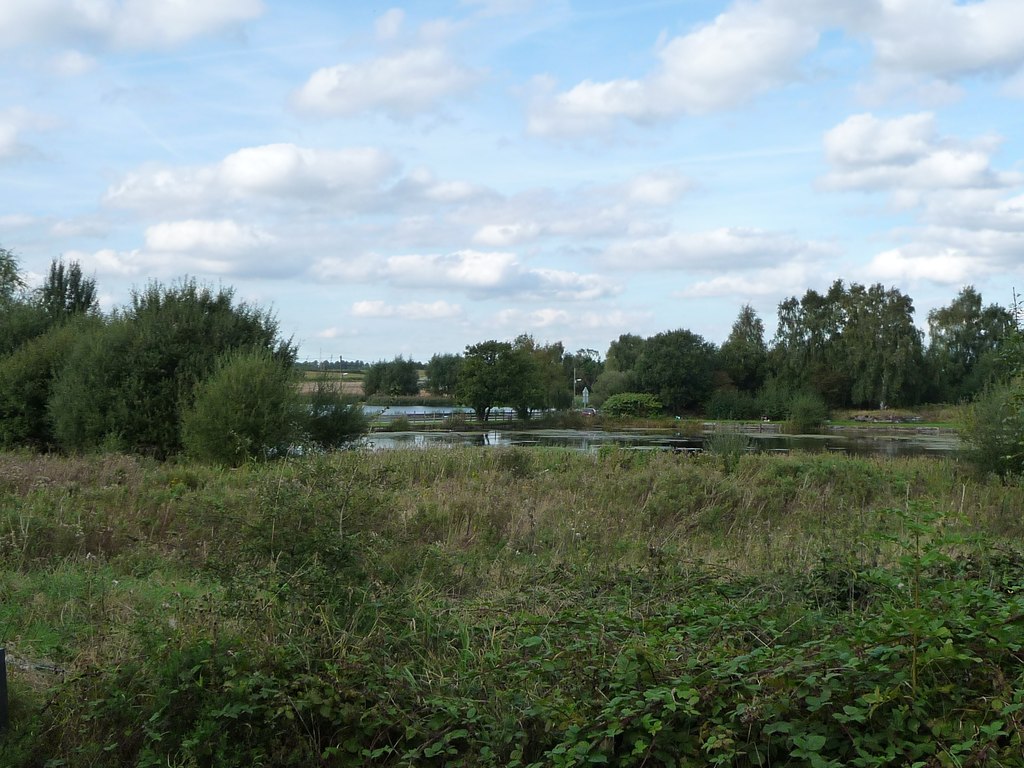
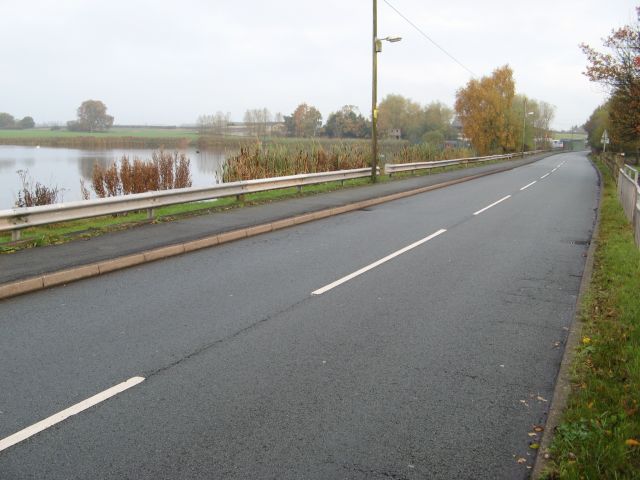
The collapsed and flooded workings, together with subsidence of the ground above, formed a body of open water on the surface at Marston known as Adelaide Flash, which survives today alongside Ollershaw Lane as a landscape and wildlife feature within the Northwich Community Woodlands. The salt works above foundered into the flooded crater, and the workings remain open below. Levelling of the nearby canal bank from 1991 to 2011 found about 0.6 metres of subsidence at the western edge of the mine.
No mine buildings survive above ground; the site is now open water and surrounding woodland/parkland rather than a recognisable industrial site.
Related mines
- Marston Old Mine — Neighbouring Marston rock-salt mines, both Salt Union property from 1888, whose sinking ground forced the Trent and Mersey Canal onto its new cut in 1958; the Old Mine's imperial visit of 1844 is often wrongly attached to the Adelaide.
- Neumann's Mine — The last of the Northwich rock-salt mines, flooded in 1928 by the same failure that had made Neumann's Flash.
Nearby mines
- Crystal Mine, Marston — 0.1 miles (0.2 km) SW
- Lion Salt Works — 0.1 miles (0.2 km) S
- Marston Old Mine — 0.2 miles (0.3 km) NW
- New Zealand Mine, Marston — 0.2 miles (0.3 km) S
- Marston Pool Mine — 0.4 miles (0.6 km) NW
Straight-line distance, within 9 miles (15 km). Show on the map.
Disasters & major incidents
-
Flooding of the Adelaide Mine
13 March 1928 · Flooding / Inundation · 0 fatalities
A sudden inrush of water flooded the Adelaide rock-salt mine at Marston overnight on 13 March 1928, ending rock-salt mining at Northwich for good and creating the subsidence lake now known as Adelaide Flash.
What's uncertain
Points where sources disagree or the record could not be settled; both accounts are kept. All open questions in the archive.
- Opened in 1850 and named after Adelaide of Saxe-Meiningen, queen of William IV; the owners were Joseph Verdin and Sons. (disputed) 1
- Given as roughly nine and a half acres of workings at a depth of around 330 feet. (disputed) 1,4
- Given as around fifteen acres by 1896, with rock-salt pillars around ten yards square spaced twenty to twenty-five yards apart, worked under manager Thomas Ward. (disputed) 2
- A rock-salt mine was sunk in the bottom bed by Woodyatt and Eauchus in 1852 and sold a year or so later to Messrs Verdin. (disputed) 3
- The last working in the Adelaide Mine was in 1929. (disputed) 10
- The collapse of the mine created the flashes either side of Ollershaw Lane in 1929. (disputed) 3
Recorded claims
Individual factual claims, each attached to the source(s) that support it below. Where sources disagree, both are kept.
- Opened in 1850 and named after Adelaide of Saxe-Meiningen, queen of William IV; the owners were Joseph Verdin and Sons. (disputed) 1
- A hall at the foot of the shafts was known as the 'Crystal Ballroom', from dances held in the mine, and the workings were specially illuminated when the mine was opened to the public. 2,1,3
- Given as roughly nine and a half acres of workings at a depth of around 330 feet. (disputed) 1,4
- Given as around fifteen acres by 1896, with rock-salt pillars around ten yards square spaced twenty to twenty-five yards apart, worked under manager Thomas Ward. (disputed) 2
- The Mining Remediation Authority holds mine plan records for 'ADELAIDE' in Cheshire (including a combined Salt Union Adelaide/Albert plan), confirming the mine's inclusion in the statutory abandoned-mine plans archive. 5
- Joseph Verdin and Sons was, by the 1880s, the largest salt manufacturer in Britain, operating six Cheshire salt works and employing over 1,000 people. 6
- A rock-salt mine was sunk in the bottom bed by Woodyatt and Eauchus in 1852 and sold a year or so later to Messrs Verdin. (disputed) 3
- The visit of Emperor Nicholas I of Russia in 1844 was made to the Marston Old Mine, a separate and older mine at Marston. 3,7
- The Verdins worked the mine as J. Verdin and Sons (Rock Mine) and Verdin's Marston Mine until the formation of the Salt Union in 1888. 3
- Around 1880 an 'Air Engine and Rock Cutter' by Walker Brothers of Wigan was installed, and about 12,500 tons a year were shipped in 1884–86. 3
- In 1908 it was the only working rock-salt mine in the Cheshire district and in excellent order. 3
- The mine was 336 feet deep, with two shafts within a few feet of each other. 3,8
- The mine closed on 13 March 1928 when water entered the main shaft; forty to fifty hands were employed. 2,9,8
- The catalogued abandonment plan is dated 12 March 1928. 5
- Archive evidence indicates that the mine failed through tertiary creep of its salt pillars. 10
- The last working in the Adelaide Mine was in 1929. (disputed) 10
- The collapse of the mine created the flashes either side of Ollershaw Lane in 1929. (disputed) 3
- Started in 1850 and abandoned in 1928 after a catastrophic shaft flood, the last mine worked at Marston; the workings cover 12.7 hectares at an average height of 6 metres, and the works above foundered into the flooded crater. 11
- The western edge of the mine sank by about 0.6 metres between 1991 and 2011. 11
Photographs & further reading
A 2015 photograph of Adelaide Flash with a note that scant traces in the nearby fields mark the site of the works.
View sourceThe Lion Salt Works museum's story of the Adelaide Mine and its flooding; its account of an 1844 imperial visit belongs to the neighbouring Marston Old Mine.
View sourceCouncil archaeological assessment of the Marston salt sites, with the Adelaide works' history, the Salt Union inventories and photographs of the works in 1928.
View sourceA 2012 paper on twenty years of surveying the sinking canal at Marston, with a table and plan of the seven rock-salt mines beside it.
View sourceSources
- (secondary) A crystal ballroom beneath Northwich's feet — Lion Salt Works (West Cheshire Museums)
- (secondary) How disaster struck Northwich's last salt mine — cc-publishing.co.uk (Cheshire local history archive)
- (primary) Saltscape Project, Northwich, Cheshire: assessment of sites for archaeological fieldwork (Project A8, report 2015-001) — Cheshire West and Chester Council (Chris Hewitson)
- (secondary) Salt in Cheshire (1915) — Albert F. Calvert (E. and F. N. Spon, London); Internet Archive
- (primary) Mine plan: ADELAIDE, Cheshire (feature 21861412) — Mining Remediation Authority / BGS mine plans catalogue
- (secondary) Joseph Verdin (1807-1873) — Grace's Guide to British Industrial History
- (secondary) Marston, Great Budworth: Kelly's Directory of Cheshire (1896) — Forebears (transcription of Kelly's Directory of Cheshire, 1896)
- (secondary) Northwich, Cheshire, UK. History: The Salt Industry and its Legacy — Northwich salt history pages (GeoCities archive)
- (secondary) Northwich Stabilisation Project — Northwich Townscape Heritage Project
- (secondary) Stabilisation of abandoned salt mines in North West England (Brooks, O'Riordan, Bird, Stirling and Billington, IAEG 2006 paper 781) — Arup / International Association for Engineering Geology
- (secondary) Long-term time-lapse microgravity and geotechnical monitoring of relict salt mines, Marston, Cheshire, U.K. (Geophysics 77(6), B287-B294, 2012) — Pringle, Styles, Howell, Branston, Furner and Toon; Keele University repository
Record created: 26 August 2026 · Last researched: 1 October 2026