 MineArchive
Flooding of the Adelaide Mine
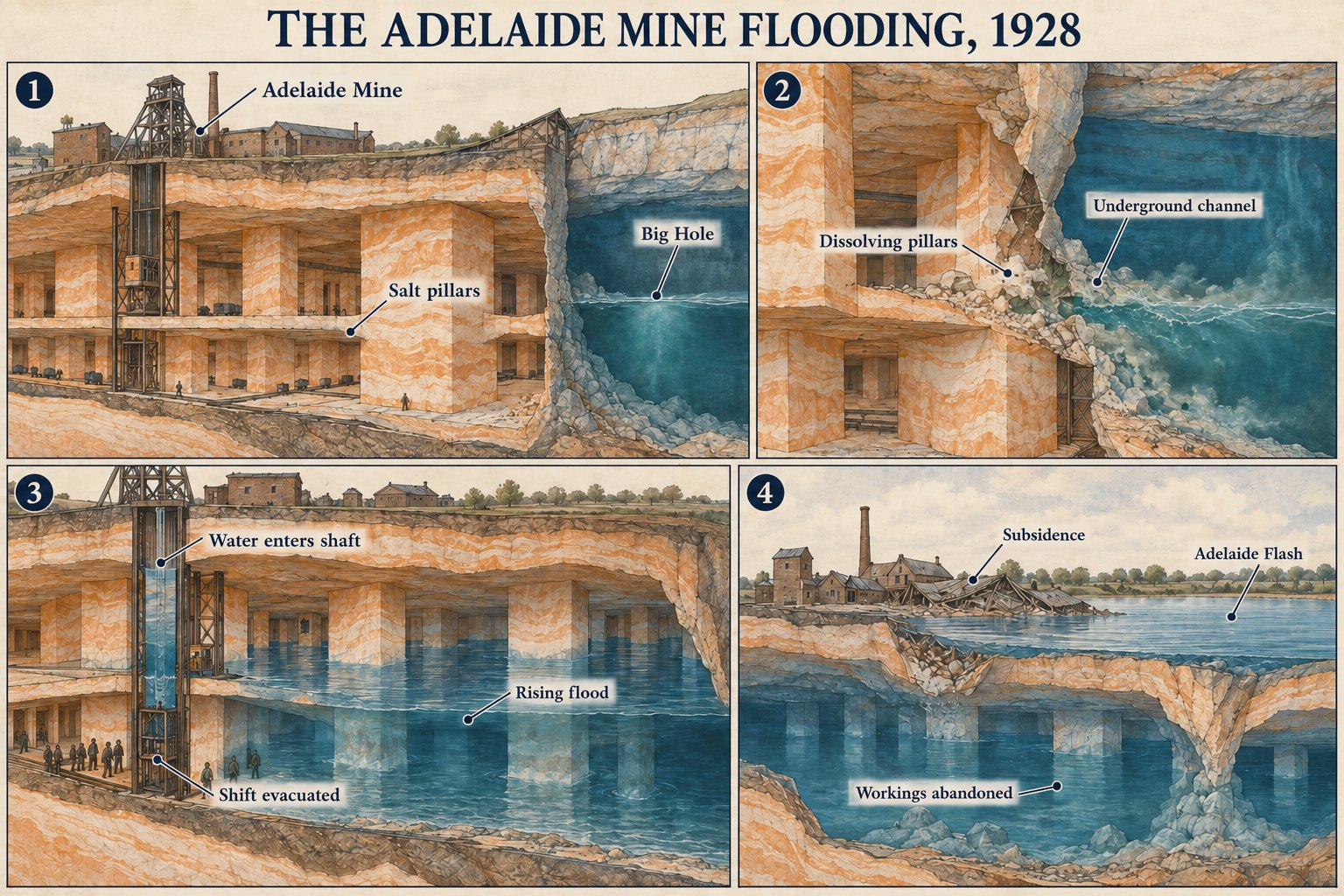
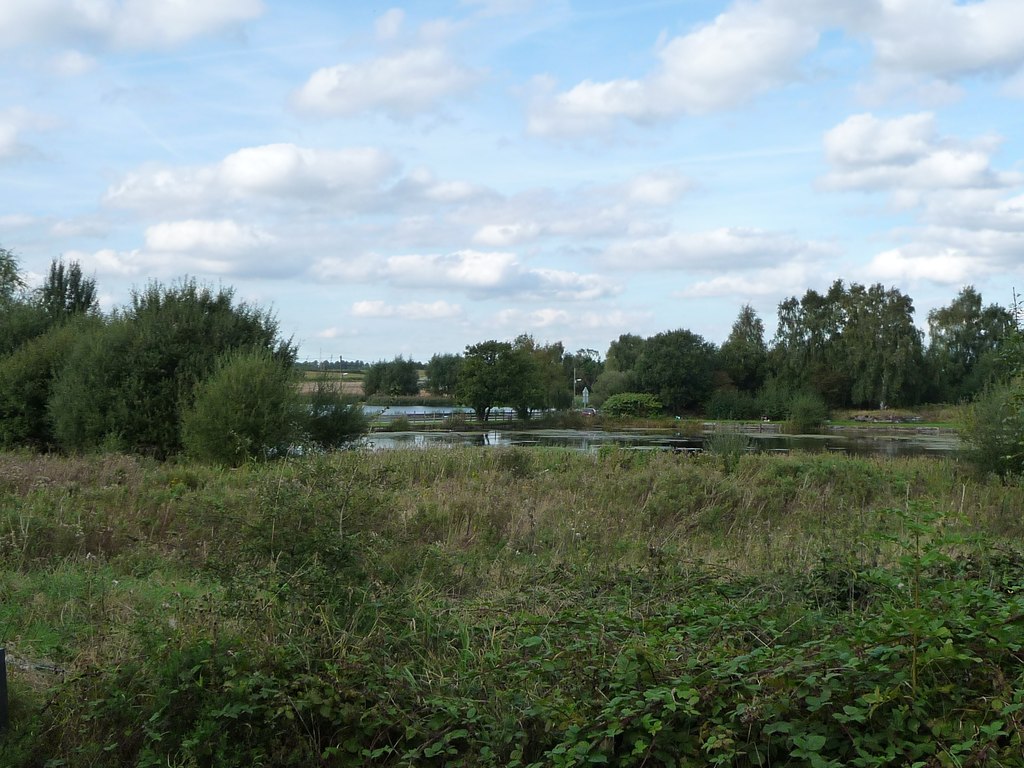
A sudden inrush of water flooded the Adelaide rock-salt mine at Marston overnight on 13 March 1928, ending rock-salt mining at Northwich for good and creating the subsidence lake now known as Adelaide Flash.
| Date | 13 March 1928 |
|---|---|
| Mine | Adelaide Mine |
| Region | Cheshire |
| Primary type | Flooding / Inundation |
| Associated types | Collapse / Roof Fall |
| Fatalities | 0 (No human fatalities are recorded; the four pit ponies working underground could not be rescued and were humanely destroyed by a licensed slaughterer sent down as the water rose.) |
| Context | During active mining (Occurred while the mine was still an active working concern, not during closure or abandonment.) |
Cause
Water breaching from a nearby flooded former working (locally known as the 'Big Hole') through an underground channel into the Adelaide workings.
Contributing factors
The mine's massive rock-salt roof-pillars were already being slowly dissolved by water seeping through fissures in the ground above; the final inrush overwhelmed what remained of the workings' structural support in a single night.
What happened
On 13 March 1928 water was seen entering the main shaft partway down. Attempts were made to plug the leak, but the water rose steadily through the evening, eventually displacing all the air from the underground chambers. Investigation afterwards traced the source to millions of gallons draining in from the 'Big Hole', a nearby flooded working, through a channel that had opened up between the two. Rescue attempts focused on evacuating the 40-50 miners working that shift, who escaped safely; the four ponies stabled underground could not be brought up in time.
Rescue & recovery
A licensed horse-slaughterer, Mr Ashbrook, was sent down the mine to destroy the ponies humanely as the floodwater rose around them. No underground recovery of plant or machinery was possible once the workings flooded; surface buildings were left to subside into the water over the following years.
Changes to practice & legislation
The flooding brought an end to rock-salt mining at Northwich itself; production shifted to Salt Union's mine at Winsford, which continued rock-salt mining in the district. It left around 40-50 miners with, in a contemporary account, little prospect of finding similar work locally.
Memorials & commemoration
No known memorial. The Adelaide Flash subsidence lake itself stands as the enduring physical trace of the event.
Recorded claims
Individual factual claims, each attached to the source(s) that support it below. Where sources disagree, both are kept.
- Water was seen entering the main shaft on 13 March 1928; the workings flooded overnight after water drained in from a nearby flooded working known as the 'Big Hole'. 1
- The mine's four pit ponies could not be rescued and were humanely destroyed underground by a licensed horse-slaughterer as the water rose. 1,2
- Within hours of the flooding the water level in the 'Big Hole', a flooded hollow within a mile of the mine, fell by three to four feet. 1,3
- The closure left the forty to fifty hands employed at the mine without work. 1,3
- The mine was abandoned in 1928 after a catastrophic shaft flood, and the salt works above foundered into the flooded crater. 4
- Archive evidence indicates that the mine failed through tertiary creep of its salt pillars. 5
- The catalogued abandonment plan of the mine is dated 12 March 1928. 6
- The mine was hastily evacuated because of flooding in 1928, which ended rock-salt mining in Northwich. 7
Related terminology
Mining terms this disaster is structurally linked to, with the nature of the relationship.
- Inrush (contextual relationship)
Named twice in this record, first in the summary: “A sudden inrush of water flooded the Adelaide rock-salt mine at Marston overnight on…” - Shaft (contextual relationship)
Named in this record’s narrative: “On 13 March 1928 water was seen entering the main shaft partway down. Attempts were made to plug the leak, but the water…” - Subsidence (contextual relationship)
Named twice in this record, first in the summary: “…1928, ending rock-salt mining at Northwich for good and creating the subsidence lake now known as Adelaide Flash.”
Sources
- (secondary) How disaster struck Northwich's last salt mine — cc-publishing.co.uk (Cheshire local history archive)
- (secondary) A crystal ballroom beneath Northwich's feet — Lion Salt Works (West Cheshire Museums)
- (secondary) Northwich, Cheshire, UK. History: The Salt Industry and its Legacy — Northwich salt history pages (GeoCities archive)
- (secondary) Long-term time-lapse microgravity and geotechnical monitoring of relict salt mines, Marston, Cheshire, U.K. (Geophysics 77(6), B287-B294, 2012) — Pringle, Styles, Howell, Branston, Furner and Toon; Keele University repository
- (secondary) Stabilisation of abandoned salt mines in North West England (Brooks, O'Riordan, Bird, Stirling and Billington, IAEG 2006 paper 781) — Arup / International Association for Engineering Geology
- (primary) Mine plan: ADELAIDE, Cheshire (feature 21861412) — Mining Remediation Authority / BGS mine plans catalogue
- (secondary) Northwich Stabilisation Project — Northwich Townscape Heritage Project
Record created: 26 August 2026 · Last researched: 26 August 2026