 MineArchive
Neumann's Mine
| Location | beneath Northwich, near Marston, Cheshire — 53.2610, -2.5170 (approximate) |
|---|---|
| Commodity | Salt |
| Type | Mineral |
| Worked | 19th century–19th century |
| Maximum depth | Approximately 90 metres below ground level. |
Overview
A long-abandoned Northwich rock-salt mine whose roof collapse -- most commonly dated to 1873, though sources vary -- created Neumann's Flash, and which lay flooded and derelict beneath the town until a £28 million stabilisation programme infilled it between 2004 and 2007.
History
Neumann's Mine was one of the many rock-salt mines worked beneath Northwich and neighbouring Marston during the 19th century, in the era before solution mining by pumped brine extraction made the older dry-mining method obsolete. Sources differ on the exact date of its collapse -- most commonly given as 1873, though 1877 also appears -- when the breccia roof above the abandoned dry workings disintegrated after fresh water leaked down from the surface and dissolved the supporting rock salt; the resulting subsidence created Neumann's Flash, a lake still visible near Marston today and now valued as a wildlife habitat. This was a smaller, earlier instance of the same failure mode that would end all of Northwich's rock-salt mining in 1928, when the Adelaide Mine -- the last still working -- flooded for good. Neumann's Mine itself remained abandoned and flooded with brine roughly 90 metres below ground until 2004-07, when it was one of four mines (with Baron's Quay, Witton Bank/Hall and Penny's Lane) infilled in a £28 million, then world-record-scale stabilisation programme -- removing millions of litres of brine and replacing it with a mixture of pulverised fuel ash, cement and salt -- undertaken specifically to allow safe redevelopment of Northwich town centre above it.
Geology
Rock salt of the Cheshire saltfield; the bed worked is not named on the record.
Workings
Worked as a dry rock-salt mine in the 19th century; its collapsed void was later infilled with pulverised fuel ash, cement and salt during the 2004-07 stabilisation programme.
Closure
The closing date is not known. What is documented is the roof collapse of about 1873, for which the sources vary.
What remains
Permanently infilled with a pulverised fuel ash, cement and salt mixture between 2004 and 2007, as part of a four-mine, £28 million programme to stabilise Northwich town centre above it; the surface collapse it caused survives as Neumann's Flash, now a wildlife habitat.
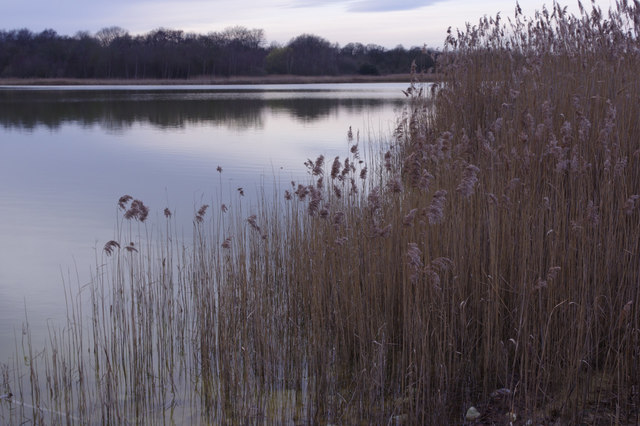
Neumann's Flash, the subsidence lake formed by the mine's own roof collapse.
Related mines
- Adelaide Mine — The last of the Northwich rock-salt mines, flooded in 1928 by the same failure that had made Neumann's Flash.
Nearby mines
- Baron's Quay Mine — 0.2 miles (0.3 km) SW
- Crystal Mine, Marston — 1.3 miles (2.1 km) NE
- New Zealand Mine, Marston — 1.3 miles (2.1 km) NE
- Lion Salt Works — 1.3 miles (2.2 km) NE
- Marston Old Mine — 1.4 miles (2.2 km) NE
Straight-line distance, within 9 miles (15 km). Show on the map.
What's uncertain
Points where sources disagree or the record could not be settled; both accounts are kept. All open questions in the archive.
- Neumann's Mine's roof collapsed -- most commonly dated to 1873, though other sources give 1877 -- creating Neumann's Flash; this is distinct from the 1880 'Great Subsidence' that created the separate, nearby Ashton's Flash. (disputed) 1
Recorded claims
Individual factual claims, each attached to the source(s) that support it below. Where sources disagree, both are kept.
- Neumann's Mine's roof collapsed -- most commonly dated to 1873, though other sources give 1877 -- creating Neumann's Flash; this is distinct from the 1880 'Great Subsidence' that created the separate, nearby Ashton's Flash. (disputed) 1
- Neumann's Mine was one of four abandoned Northwich salt mines (with Baron's Quay, Witton Bank/Hall and Penny's Lane) infilled in a 2004-07, £28 million stabilisation programme, replacing brine at around 90 metres depth with pulverised fuel ash, cement and salt. 2
- Arup's 2006 account of the stabilisation names the four mines to be infilled as Baron's Quay, Witton Bank, Penny's Lane and Neumann's, about 90 metres below ground and open and flooded with brine before the works; grout was injected through multiple points while brine was drawn off, and higher safety factors were calculated for Neumann's and Penny's Lane than for the two larger mines. 3
- Neumann's Flash, with Ashton's Flash, was reclaimed by the council as part of what is now Northwich Community Woodlands. 4
Photographs & further reading
Detail on the 2004-07 programme that infilled Neumann's Mine along with three other abandoned Northwich salt mines.
View sourceArup's engineering paper on the infilling of Neumann's and the three other Northwich mines.
View sourceSources
- (secondary) Neumann's Flash (geocaching/local history summary) — Atlas Obscura
- (secondary) Northwich Stabilisation Project — Northwich Townscape Heritage Project
- (secondary) Stabilisation of abandoned salt mines in North West England (Brooks, O'Riordan, Bird, Stirling and Billington, IAEG 2006 paper 781) — Arup / International Association for Engineering Geology
- (secondary) History of Northwich (Wikipedia) — Wikipedia
Record created: 1 September 2026 · Last researched: 24 September 2026