 MineArchive
Knockshinnoch Castle Colliery Inrush
A sudden inrush of liquefied peat and moss flooded Knockshinnoch Castle Colliery on the evening of 7 September 1950, trapping 129 miners underground; 116 were led to safety over the following three days in one of the most dramatic rescues in British mining history, but 13 died.
| Date | 7 September 1950 |
|---|---|
| Mine | Knockshinnoch Castle Colliery |
| Region | East Ayrshire |
| Primary type | Flooding / Inundation |
| Associated types | Entrapment, Rescue |
| Fatalities | 13 (The 13 dead were among the miners closest to the inrush at No. 5 Heading; their bodies were not recovered until months later.) |
| Context | During active mining |
Cause
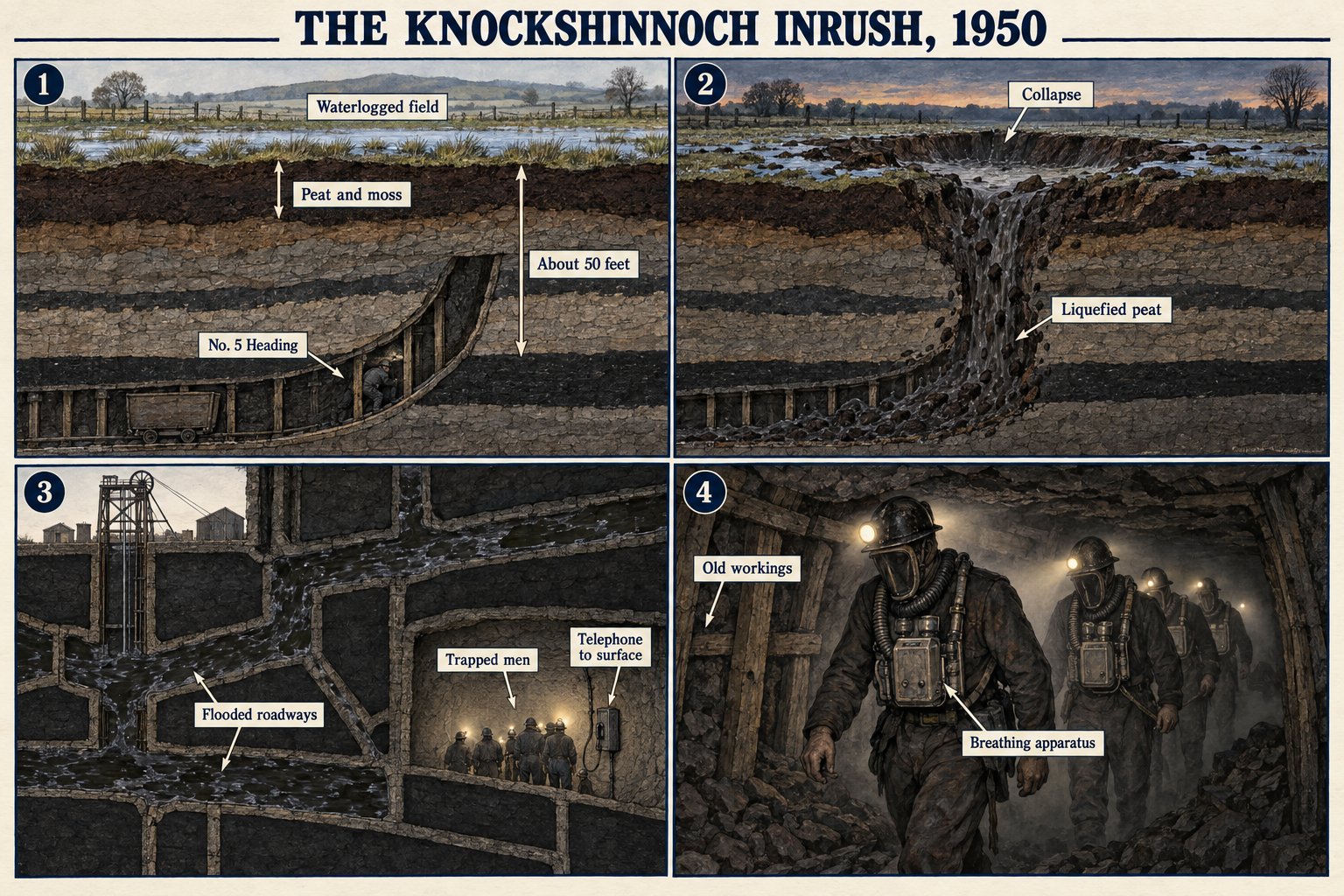
A waterlogged field on the surface, saturated with peat and moss, collapsed into underground workings that had followed a coal seam to within about 15 metres (50 feet) of the surface. A large volume of liquefied peat and moss broke through into the No. 5 Heading of the Main seam shortly after 7:30pm and rushed down the incline, flooding the workings below.
Contributing factors
The workings' unusual closeness to the surface at this point, directly beneath waterlogged ground, left minimal separation between the mine and a substantial, saturated peat deposit capable of liquefying and flowing under its own weight once it broke through.
What happened
Of the 135 miners underground when the inrush began, six escaped quickly near the pit bottom before that route was sealed off by the flood. The remaining 129 were cut off from the normal way out; 116 of them made their way to comparative safety in a section of the workings isolated from the flooded area, while 13 men closest to the inrush at No. 5 Heading were killed.
Rescue & recovery
Over the following three days, rescue teams worked to bring the 116 trapped survivors out through the disused, gas-filled Bank No. 6 workings — an old connecting route that had to be made passable again under highly hazardous conditions. Rescuers used 87 sets of Siebe Gorman Salvus oxygen breathing apparatus, mostly borrowed from fire stations, to reach the trapped men and guide them out; a telephone line rigged to the trapped section let the miners communicate their exact location to the surface throughout the operation. All 116 were eventually brought out alive.
Investigation & inquiry
The official investigation attributed the disaster to flooding caused by the collapse of the waterlogged peat bog into workings that had been driven too close to the surface.
Memorials & commemoration
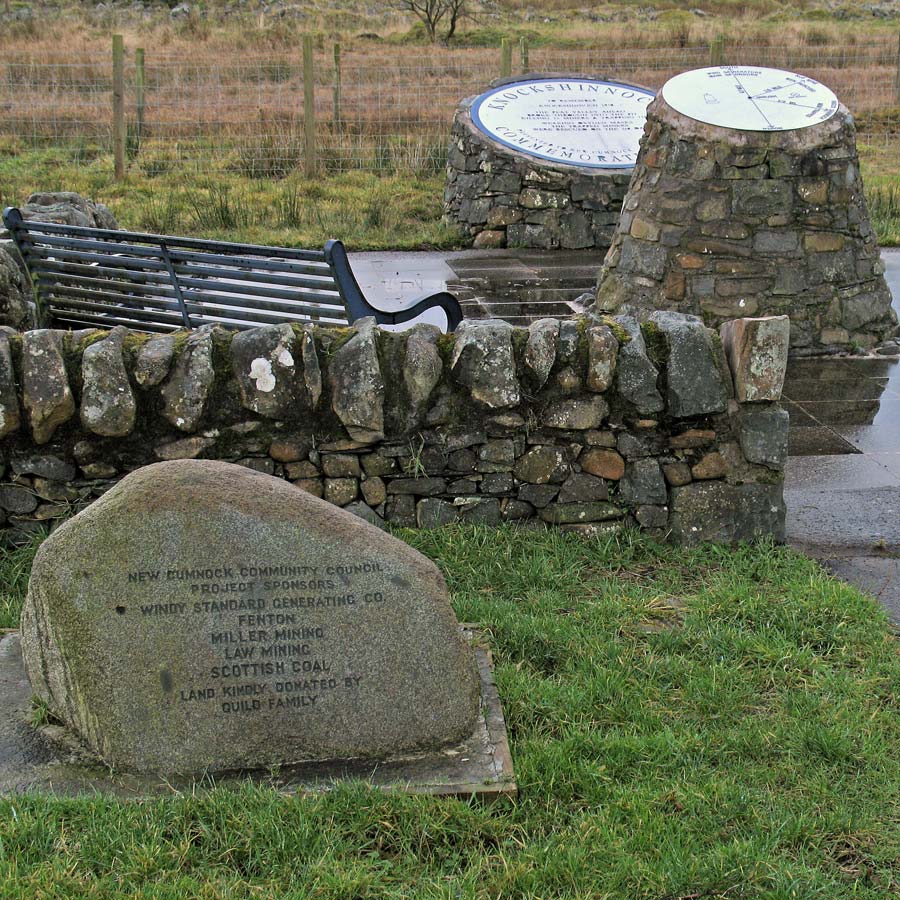
A memorial overlooking the site of the inrush was unveiled in 1999, designed by local schoolchildren and built in the shape of a miner's shovel: 13 red slabs and a cairn mark those who died, set within a bed of 116 grey slabs marking those who were rescued. The disaster and rescue were dramatised in the 1952 film The Brave Don't Cry.
Recorded claims
Individual factual claims, each attached to the source(s) that support it below. Where sources disagree, both are kept.
- 13 miners died in the initial inrush; 116 of the 129 trapped were rescued alive over the following three days. 1,2,3
- Rescuers used 87 sets of Siebe Gorman Salvus oxygen breathing apparatus, mostly borrowed from fire stations, to bring the 116 survivors out through the disused Bank No. 6 workings. 1,3
Related terminology
Mining terms this disaster is structurally linked to, with the nature of the relationship.
- Breathing Apparatus (rescue/recovery concept)
The disaster's own recorded rescue account explicitly describes 87 sets of Siebe Gorman Salvus oxygen breathing apparatus used to bring survivors out. - Coal (contextual relationship)
The workings had followed a coal seam to within about 15 metres of the surface, and it was that thin cover which let a waterlogged field collapse into the mine. - Colliery (contextual relationship)
Named in this record’s summary: “…inrush of liquefied peat and moss flooded Knockshinnoch Castle Colliery on the evening of 7 September 1950, trapping 129 miners underground;…” - Incline (contextual relationship)
Liquefied peat and moss broke into the No. 5 Heading and rushed down the incline, flooding the workings below and cutting off 129 men. - Inrush (direct cause)
The disaster's own name and recorded summary explicitly describe the sudden inrush of liquefied peat and moss that caused it.
Sources
- (secondary) Knockshinnoch disaster — Wikipedia
- (primary) Knockshinnoch Castle Colliery — Canmore (Historic Environment Scotland)
- (primary) Knockshinnock Castle Colliery Inrush - New Cumnock - 1950 — Northern Mine Research Society
Record created: 23 August 2026 · Last researched: 23 August 2026