 MineArchive
Llanbradach Colliery Explosion, 1901
An explosion in the Pretoria district of the No. 2 pit at Llanbradach Colliery on the evening of 10 September 1901 killed eight men and forty-one pit ponies. Only fourteen men were underground at the time — ostlers, firemen and repairers preparing for a shift due down at six o'clock. The inquest jury found that coal dust had been ignited by shot-firing at a place that had not been sufficiently watered.
| Date | 10 September 1901 |
|---|---|
| Mine | Llanbradach Colliery |
| Region | Caerphilly |
| Type | Explosion |
| Fatalities | 8 (Eight men, all but one of them married; thirty-five children were left fatherless.) |
| Context | During active mining |
Cause
A shot fired in a roadway that had not been adequately damped down. A small pocket of gas ignited by the shot raised and fired the coal dust, producing a far heavier blast than the shot itself.
Contributing factors
The colliery's system of watering before shot-firing relied on barrels of water carried in and splashed over the roof and sides with a hose. The manager's own estimate was that four casks were needed to wet twenty yards of roadway; only two empty casks were found on the last journey towards where the explosion was believed to have started. His Majesty's Inspector of Mines had already written to the colliery about the watering, and about limiting those underground during shot-firing to the shot-firers and stablemen; three repairers were nonetheless at work, which the agent told the inquest was contrary to his orders.
What happened
The explosion happened in the four-foot workings of the No. 2 pit, the colliery's upcast, on the evening of 10 September 1901. The full shift was not due down until six o'clock, so only fourteen men were below: ostlers and firemen going about the preparations, and three repairers who should not have been there.
William Thomas, agent for the Llanbradach Collieries, heard of the explosion about seven in the evening and went down at once. In the west level he met the manager coming out with news of a body found in Francis's heading. Going up Green's heading he found the indications of force running inwards, a ventilation door blown inwards in Rofus's heading, and gas in Miles's heading, which turned him back. At the stables he and the Inspector of Mines found all forty-one horses dead, the heaviest trace of firing nearest the stable door — the last ten horses showed no sign of burning at all. Recovery went on into the following day: on the Wednesday the No. 10 dip was found blocked and the air travelling through the fall, and the day fireman Rees was found in Davies's heading, with Isaac, Moore and Evans at the bottom of Shannon's heading. The evidence pointed to the explosion having started there.
The dead were William Henry Probert, ostler, 52; David William Evans, fireman, 31; Alfred Kemp, ostler, 33; William John Isaac, fireman, 31; Thomas Rees, fireman, 60; George Constance, fireman, 35; James Moore, assistant fireman, 26; and Charles Henry Biddle, ostler, 36. Between them they left thirty-five children. The medical evidence distinguished the deaths sharply: Biddle was burned about the face, head, chest and back but died of afterdamp and shock rather than burns, while Evans and Isaac had been subjected to such violence — compound fractures of the skull, arms, ribs and legs — that the doctor told the coroner they were killed outright.
The men had gone down knowing a story that was already running through the village. Some weeks earlier a robin had built a nest in the underground pump room, and a wild bird found underground was widely held in the South Wales coalfield to be a warning of disaster to come. The tradition is recorded here as tradition, not as a fact about the explosion.
Rescue & recovery
Recovery was carried out by the colliery's own officials. The agent, the manager and His Majesty's Inspector of Mines went below within the hour, working through falls and gas; the last bodies were brought to bank on the following day, 11 September.
Investigation & inquiry
The inquest was opened at Llanbradach for identification of the bodies and resumed at the Public Hall on 17 September before the coroners E. B. Reece and R. J. Rhys and a jury of fifteen, with O. Oakley as foreman. C. H. Kenshole appeared for the colliery company, W. P. Nicholas for the South Wales and Monmouthshire Miners' Federation, and J. C. Martin, His Majesty's Inspector of Mines, for the Home Office. Much of the hearing turned on how the roadways were watered: the coroners pressed witness after witness on how many casks it took to wet twenty yards of roof and sides, whether a hose on a barrel could reach a six-foot collar, and whether the statutory watering for twenty yards around a shot had in fact been done. The day overman said the firemen were authorised to get help with the watering and that the manager had warned them a month earlier to use plenty of water. The jury found that the men had died in an explosion of coal dust caused by shot-firing, the place where the shot was fired being insufficiently watered at the time.
Memorials & commemoration
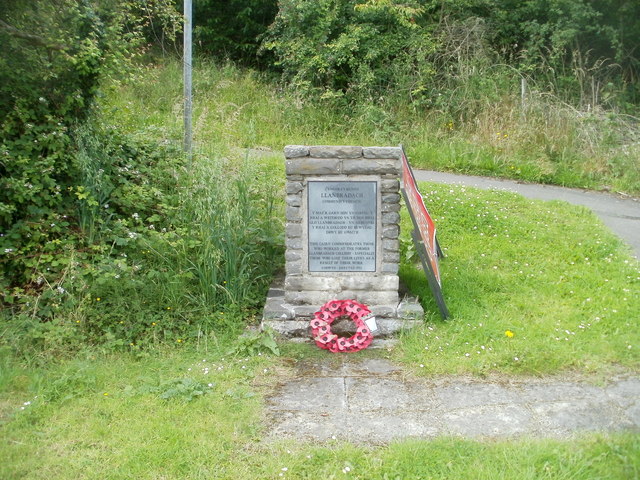
A memorial cairn to the men of Llanbradach Colliery stands near the former colliery site.
What's uncertain
Points where sources disagree or the record could not be settled; both accounts are kept. All open questions in the archive.
- The inquest evidence records all forty-one horses in the stables found dead, the heaviest trace of firing nearest the stable door. Welsh Coal Mines gives forty-three. (uncertain) 2,1
- A tradition recorded locally holds that a robin had nested in the underground pump room some weeks before the explosion, a wild bird underground being taken in the South Wales coalfield as a warning of disaster. Recorded as tradition, not as fact. (uncertain) 3
Recorded claims
Individual factual claims, each attached to the source(s) that support it below. Where sources disagree, both are kept.
- The jury found that the deceased met their deaths by an explosion of coal dust caused by shot-firing, the place where the shot was fired being insufficiently watered at the time. 1
- The inquest evidence records all forty-one horses in the stables found dead, the heaviest trace of firing nearest the stable door. Welsh Coal Mines gives forty-three. (uncertain) 2,1
- Fourteen men were in the pit at the moment of the explosion; three of them, repairers, were working contrary to the agent's orders that only shot-firers and stablemen should be below. 1
- The manager's evidence was that about four casks of water were needed to wet twenty yards of roof and sides. Two empty casks were seen on the last journey in to where the explosion is supposed to have started. 1
- All the men but one were married, and between them they left thirty-five children. 2,1
- A tradition recorded locally holds that a robin had nested in the underground pump room some weeks before the explosion, a wild bird underground being taken in the South Wales coalfield as a warning of disaster. Recorded as tradition, not as fact. (uncertain) 3
Related terminology
Mining terms this disaster is structurally linked to, with the nature of the relationship.
- Horsekeeper (contextual relationship)
Named 3 times in this record, first in the narrative: “…having started there. The dead were William Henry Probert, ostler, 52; David William Evans, fireman, 31; Alfred Kemp, ostler, 33;…” - Journey (contextual relationship)
Named in this record’s contributing factors: “…twenty yards of roadway; only two empty casks were found on the last journey towards where the explosion was believed to have started. His…” - Miners' Federation of Great Britain (contextual relationship)
Named in this record’s investigation: “…company, W. P. Nicholas for the South Wales and Monmouthshire Miners' Federation, and J. C. Martin, His Majesty's Inspector of Mines, for the Home…” - Pit Pony (contextual relationship)
Named in this record’s summary: “…on the evening of 10 September 1901 killed eight men and forty-one pit ponies. Only fourteen men were underground at the time — ostlers, firemen…” - Shot-firing (contextual relationship)
Named 4 times in this record, first in the summary: “…o'clock. The inquest jury found that coal dust had been ignited by shot-firing at a place that had not been sufficiently watered.”
Photographs & further reading
This page doesn't try to reproduce everything — these are the best original sources found for this disaster.
The contemporary report of the resumed inquest, with the medical evidence, the agent's account of going below, and the jury's verdict on the watering.
View sourceSources
- (primary) Llanbradach Disaster: Resumption of Inquest — The Verdict — Evening Express, 17 September 1901 (National Library of Wales)
- (secondary) Llanbradach Colliery — Welsh Coal Mines
- (observational) The Llanbradach Colliery and 'The Evil Omen' — Mysterious Britain & Ireland
Record created: 3 September 2026 · Last researched: 3 September 2026