 MineArchive
Silverwood Colliery
| Also known as | Dalton Main Colliery |
|---|---|
| Location | Hollings Lane, between Thrybergh and Ravenfield, Rotherham, South Yorkshire — 53.4397, -1.2867 (exact) |
| Commodity | Coal |
| Type | Coal |
| Worked | 1900 (sinking)–1994 |
| Maximum depth | About 745–765 yards to the Barnsley seam (sources differ). |
| Operators | Dalton Main Collieries Limited (1900–1947), National Coal Board (1947–1987), British Coal Corporation (1987–1994) |
Overview
A large Rotherham colliery sunk by the steelmaking firm John Brown and Company, twice visited by reigning monarchs and marked by tragedy in a 1966 underground train collision, before closing in 1994 and being reclaimed as parkland and a nature reserve.
History
Dalton Main Collieries Ltd was floated on the London Stock Exchange in December 1899 by the steelmaking firm John Brown and Company, to combine the existing Roundwood Colliery at Parkgate with a newly sunk mine at Silverwood, between Thrybergh and Ravenfield. The first shaft at Silverwood began sinking in 1900, and coal was being worked by 1904; the new colliery was connected underground to Roundwood in 1908 and linked to it by what became known as John Brown's Private Railway. By 1909, when Silverwood reached full production, John Brown and Company was sole proprietor of the enterprise. Originally called Dalton Main after the parent company, the pit was renamed Silverwood for the local woodland where it stood. Two shafts were sunk south of Hollings Lane between April 1900 and 1903, entering the Barnsley seam at about 745 yards, with the Ravenfield stream diverted through a pair of pipes around the works; a foreman was killed by a wagon during the sinking in 1901, and a pump attendant fell from a shaft platform in 1902. Some 840 houses were built for the incoming miners in Dalton, Ravenfield and Thrybergh, with 74 more at the Sunnyside garden village. Employment rose from 1,598 in 1905 to 3,345 in 1910 and a peak of about 3,800 in 1933.
The colliery received two royal visits. King George V and Queen Mary arrived in July 1912, but cut their visit short on learning of that day's disaster at nearby Cadeby Colliery. A very different visit came on 31 July 1975, when Queen Elizabeth II toured Silverwood and personally cut coal underground, with the royal party staying overnight nearby on the Royal Train in the colliery sidings.
Roof falls killed three men in February 1909, while a main haulage road was being enlarged, and three more in September 1913 in the underground stables. The pit's worst tragedy came on 3 February 1966, when a runaway materials train collided underground with a train carrying miners (see Disasters, below). Ownership passed from Dalton Main Collieries to the National Coal Board on nationalisation in 1947, when some 3,000 men worked there. The Meltonfield seam was opened up from 1952, and by 1967, after modernisation costing £1 million, 2,000 men were producing 651,000 tons a year from the Meltonfield and Barnsley seams, with a drift being driven from the Barnsley pit bottom to develop the Haigh Moor seam. During its closure the pit was used for the mine-accident scene in the film When Saturday Comes. Silverwood closed in 1994, with its remaining coal reserves worked from the neighbouring Maltby Main Colliery. Site reclamation was completed in 2006, with the former spoil tip grassed over, a formerly hazardous slurry lagoon converted into a freshwater nature reserve, and tree planting carried out by the Forestry Commission the following year.
Geology
Silverwood was sunk to the Barnsley seam, which provided most of its output until the Meltonfield seam was developed in 1952; both were being worked in 1954. In the 1960s a drift from the Barnsley pit bottom was driven to open up the deeper Haigh Moor seam. The colliery raised coking, gas, household and steam coals.
Workings
Twin shafts sunk from April 1900 and completed by 1903, entering the Barnsley seam at about 745 yards (the National Coal Board gave the depth as 765 yards in 1967), connected underground to the neighbouring Roundwood Colliery in 1908 and linked to it by John Brown's Private Railway. The Meltonfield seam was worked from 1952, and by 1967 a drift was being driven from the Barnsley pit bottom to reach the Haigh Moor seam.
Closure
The colliery closed in 1994; its remaining workable reserves were transferred to and worked from the neighbouring Maltby Main Colliery. Grace's Guide gives 1992, apparently following an older version of the Wikipedia article; a 2006 Geograph caption and a former miner's family account both give 1994.
What remains
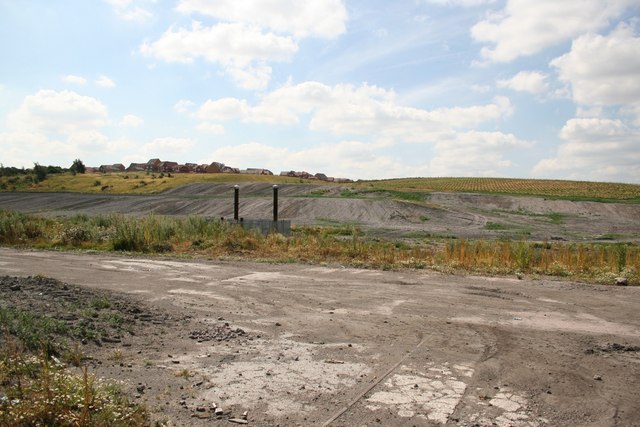
The site has been fully reclaimed: the former spoil tip is grassed over, a once-hazardous slurry lagoon is now a freshwater nature reserve, and part of the site has been developed as the Woodlaithes Village residential area. Reclamation was completed in 2006, with further tree planting by the Forestry Commission in 2007. A Silverwood Colliery Heritage Group, formed by former miners and their families, runs pop-up heritage events and is campaigning for a permanent heritage centre on the site.
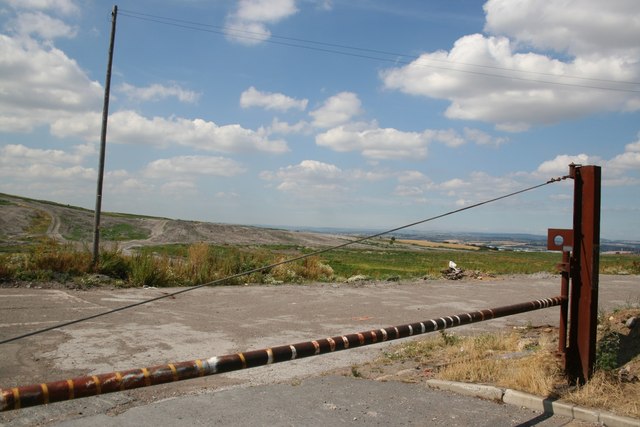
No colliery buildings are recorded as surviving. A 2006 photograph shows the cleared pit-yard hardstanding and the reprofiled spoil heap; a memorial to the colliery's miners was put up nearby in 2013.
Redevelopment
Housing has been built on part of the land around Woodlaithes Farm at the edge of the former tip, as Woodlaithes Village; the rest of the site was reclaimed as grassland and a nature reserve.
Related mines
- Maltby Colliery — When Silverwood closed in 1994 its remaining reserves were transferred to and worked from Maltby.
- Roundwood Colliery — Roundwood was bought by John Brown and Company specifically to finance the sinking of Silverwood, both were held by the Dalton Main Collieries Limited, they were joined by their owners' private railway in 1901, and their workings were connected underground in 1908, after which Silverwood wound the coal for both.
Nearby mines
- Roundwood Colliery — 1.9 miles (3.1 km) NW
- Aldwarke Main Colliery — 2.1 miles (3.3 km) W
- Kilnhurst Colliery — 2.0 miles (3.3 km) N
- Thurcroft Colliery — 3.0 miles (4.9 km) SE
- Warren Vale Colliery — 3.0 miles (4.9 km) NW
Straight-line distance, within 9 miles (15 km). Show on the map.
Disasters & major incidents
-
Silverwood Colliery roof fall, 1909
28 February 1909 · Collapse / Roof Fall · 3 fatalities
On 28 February 1909 three men were killed by a large fall of roof at Silverwood Colliery, near Rotherham, while a main haulage road was being enlarged. -
Silverwood Colliery stables roof fall, 1913
25 September 1913 · Collapse / Roof Fall · 3 fatalities
On 25 September 1913 three men were killed by a fall of roof in underground stables at Silverwood Colliery, near Rotherham, after work at the floor weakened the props supporting the roof. -
Silverwood Colliery Paddy Mail Disaster
3 February 1966 · Haulage / Transport · 10 fatalities
A runaway underground materials train collided with a man-riding train carrying miners to their shift at Silverwood Colliery, killing ten men and injuring 29 — one of the worst underground transport accidents in the South Yorkshire coalfield.
What's uncertain
Points where sources disagree or the record could not be settled; both accounts are kept. All open questions in the archive.
- The Barnsley seam depth is given as 745 yards (heritage group), 740 yards (Shane Phillips collection) and 765 yards (NCB, 1967). (disputed) 4,3,5
- Grace's Guide gives the closure as 1992, citing Wikipedia; the current Wikipedia article and other sources give 1994. (disputed) 1,6
Recorded claims
Individual factual claims, each attached to the source(s) that support it below. Where sources disagree, both are kept.
- Dalton Main Collieries Ltd was floated on the London Stock Exchange in December 1899 by John Brown and Company; the first Silverwood shaft began sinking in 1900, with coal worked by 1904. 1,2
- Silverwood was connected underground to the neighbouring Roundwood Colliery in 1908 and linked to it by John Brown's Private Railway; by 1909 John Brown and Company was sole proprietor. 2
- King George V and Queen Mary visited in July 1912 but cut the visit short on learning of that day's Cadeby Colliery disaster. 1
- Queen Elizabeth II visited on 31 July 1975 and personally cut coal underground, with the royal party staying overnight on the Royal Train in the colliery sidings. 1
- The colliery closed in 1994, with remaining reserves worked from Maltby Main Colliery; reclamation was completed in 2006, turning the former slurry lagoon into a nature reserve. 1
- Two shafts were sunk south of Hollings Lane between April 1900 and 1903, entering the Barnsley seam at 745 yards; 840 houses were built for miners in Dalton, Ravenfield and Thrybergh and 74 at Sunnyside. 3
- The Barnsley seam depth is given as 745 yards (heritage group), 740 yards (Shane Phillips collection) and 765 yards (NCB, 1967). (disputed) 4,3,5
- Employment was 1,598 in 1905, 3,345 in 1910, about 3,800 in 1933 and 3,000 in 1947; in 1967 2,000 men produced 651,000 tons from the Meltonfield and Barnsley seams after £1 million of modernisation. 4
- The Barnsley seam provided most of Silverwood's output until the Meltonfield seam was developed in 1952. 4,5
- Grace's Guide gives the closure as 1992, citing Wikipedia; the current Wikipedia article and other sources give 1994. (disputed) 1,6
- During closure the pit was used as the location for the mine-accident scene in the film When Saturday Comes. 1
- The BGS / Mining Remediation Authority mine plans catalogue holds plans filed under Silverwood Colliery. 7
- Former miners and their families formed the Silverwood Colliery Heritage Group, which runs pop-up heritage events and campaigns for a heritage centre on the site. 3
- A 2006 photograph shows the former colliery site cleared and the spoil heap being reclaimed, some of the land for housing. 8
- Falls of roof killed three datallers on 28 February 1909 while a main haulage road was being enlarged, and three men on 25 September 1913 in the underground stables. 4,9,10
Photographs & further reading
Owners, employment figures from 1900 to 1954, seams worked, and a roll of men killed at the colliery.
View sourceThe heritage group's research on the sinking and the miners' housing, and its plans for a heritage centre.
View sourceCatalogue entry for plans of the colliery held by the Mining Remediation Authority.
View sourceSources
- (secondary) Silverwood Colliery — Wikipedia
- (secondary) Dalton Main Collieries Ltd. — Wikipedia
- (secondary) Silverwood Colliery Heritage Group – Pop up Heritage Centre — Rotherham Federation of Communities (research by Neil Bingham, Silverwood Colliery Heritage Group)
- (primary) Silverwood Colliery — Durham Mining Museum
- (secondary) Silverwood (Shane Phillips Collection of Pit Photographs) — Healey Hero
- (secondary) Silverwood Colliery — Grace's Guide to British Industrial History
- (primary) BGS / Mining Remediation Authority mine plans catalogue: Silverwood Colliery — British Geological Survey
- (observational) The ghost of Silverwood Colliery (Geograph photo 210250, 2006) — Geograph Britain and Ireland
- (primary) Disasters – Names: Silverwood, 28th February 1909 — Durham Mining Museum
- (primary) Disasters – Names: Silverwood, 25th September 1913 — Durham Mining Museum
Record created: 26 August 2026 · Last researched: 16 September 2026