 MineArchive
Maltby Colliery
| Location | Maltby, near Rotherham, South Yorkshire — 53.4280, -1.1930 (approximate) |
|---|---|
| Commodity | Coal |
| Type | Coal |
| Worked | 1908 (sinking)–2013 |
| Maximum depth | No.3 shaft, 3,251 ft (991 m) |
| Operators | Maltby Main Colliery Company (1908–?), Hargreaves Services plc (2007–2013) |
Overview
A South Yorkshire 'super pit' whose long working life was shadowed by two underground explosions, in 1911 and again, far more deadly, in 1923 — and which finally closed in 2013, one of the last deep coal mines in the country, after water, oil and gas were found seeping into its workings.
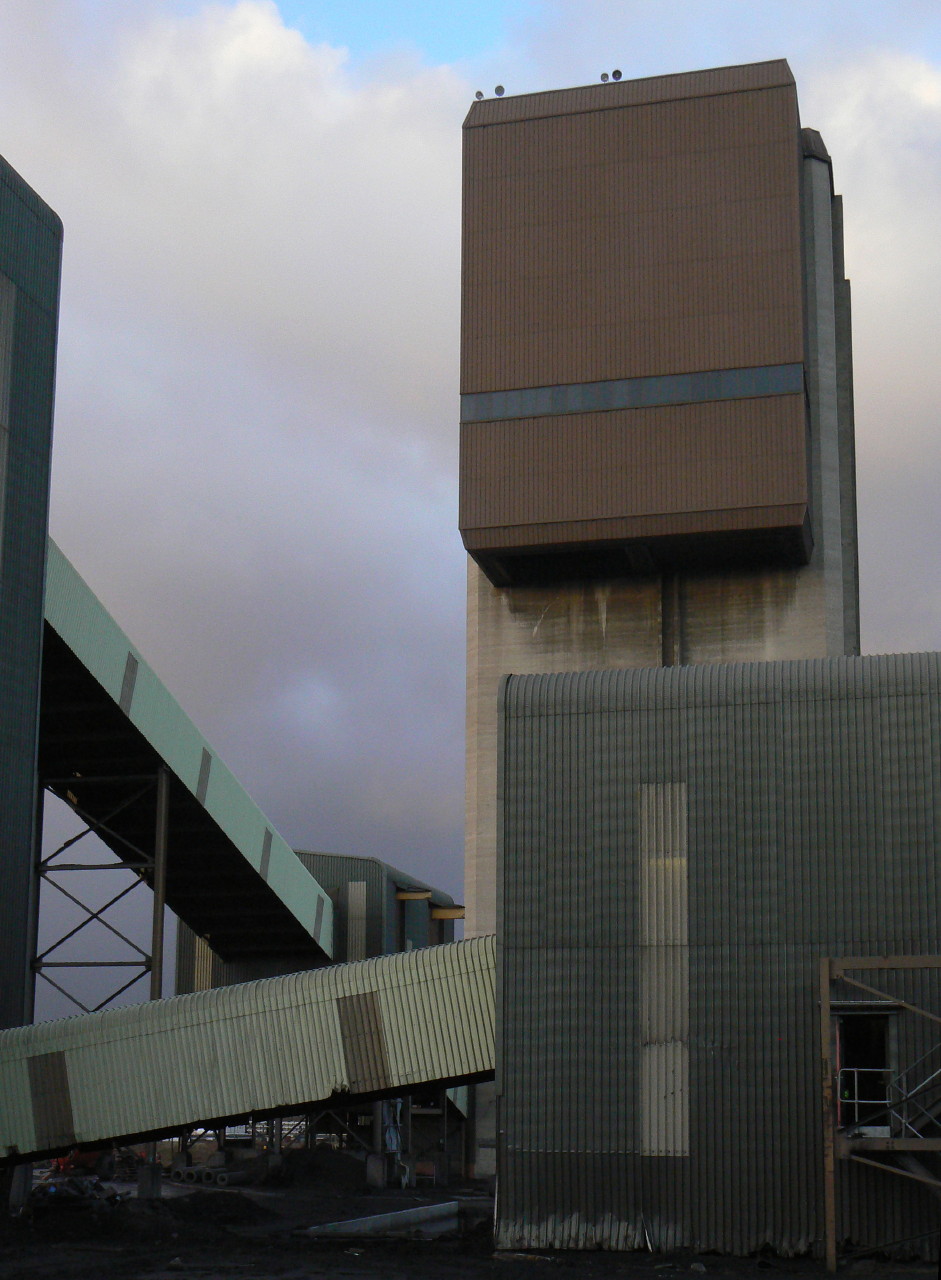
History
Maltby Main Colliery was sunk from 1908 by the Maltby Main Colliery Company, a subsidiary of the Sheepbridge Iron and Coal Company, on the eastern edge of Maltby village, 7 miles east of Rotherham. The first coal was drawn in 1912, though not every face was in production until 1914. From the start it was known as a 'gassy' pit, prone to spontaneous underground fires in the goaf, or worked-out waste, that could themselves trigger a firedamp explosion if not properly sealed. A first explosion in August 1911 killed three colliers. A far worse one followed on 28 July 1923: an underground fire in the Low East district, which had been burning since mid-May and which men were attempting to seal off, ignited firedamp trapped behind the new stoppings, killing 27 men (see Disasters, below).
The colliery was later run by Amalgamated Denaby Collieries Ltd before nationalisation in 1947 brought it under the National Coal Board. It passed to RJB Mining (later UK Coal) in 1994, and was sold again in 2007 to Hargreaves Services plc for £21.5 million, continuing to employ around 500 people. By 1989 its two working shafts, No.2 and No.3, reached 3,228 ft (984 m) and 3,251 ft (991 m) respectively, with winding capacity of up to 1,500 tonnes of mineral an hour. In late 2012 around 540 workers were given redundancy notices after a geological survey found oil, water and gas seeping into the workings, conditions judged too dangerous and costly to work around; the mine closed in 2013, and its above-ground structures were demolished the following year.
Geology
Coal of the South Yorkshire field, worked from among the deepest shafts in the coalfield at 3,228 and 3,251 feet. A 2012 geological survey found oil, water and gas seeping into the workings, which is what closed the pit.
Workings
Worked from twin shafts, ultimately No.2 (3,228 ft) and No.3 (3,251 ft), among the deepest workings in the Yorkshire coalfield by the late 20th century, with winding capacity of up to 1,500 tonnes an hour.
Closure
Closed in 2013 after a 2012 geological survey found oil, water and gas ingress into the workings that could not safely or economically be worked around, with the loss of around 250 jobs; the surface structures were demolished in 2014.
What remains
Closed and demolished; no current operational use established.
A winding tower and other surface structures survived into the 2010s before demolition in 2014; specific present-day surface remains are not recorded.
Related mines
- Rossington Colliery — Both were controlled by the same company, Amalgamated Denaby Collieries Ltd, by the 1930s.
- Silverwood Colliery — When Silverwood closed in 1994 its remaining reserves were transferred to and worked from Maltby.
Nearby mines
- Thurcroft Colliery — 3.0 miles (4.8 km) SW
- Silverwood Colliery — 3.9 miles (6.3 km) W
- Dinnington Colliery — 4.1 miles (6.5 km) S
- Yorkshire Main Colliery — 4.0 miles (6.5 km) N
- Cadeby Main Colliery — 4.5 miles (7.3 km) N
Straight-line distance, within 9 miles (15 km). Show on the map.
Disasters & major incidents
-
Maltby Colliery sinking accident, 1909
31 March 1909 · Winding / Shaft Accident · 3 fatalities
Three sinkers died at the new Maltby Main Colliery on 31 March 1909 when their hoppit caught a pump staging on the way up the shaft. -
Maltby Main Colliery explosion, 1923
28 July 1923 · Explosion · 27 fatalities
An explosion tore through Maltby Main Colliery at 9.15am on Saturday 28 July 1923, a mile from the pit bottom, while men were working to seal off a stubborn underground gob fire. Twenty-seven died; only one body was recovered at the time. The disaster became known locally as 'Black Saturday'.
Culture
- Fred Trueman and Maltby Main (Sports)
Fred Trueman grew up within a mile of Maltby Main, where his father and brother worked and where he had a winter job in the tally office from 1948. - Maltby Main F.C. (Sports)
The club was formed in 1916 as the football team of Maltby Main Colliery, with every player employed at the pit; a good footballer could be sure of a job there so that he could play for the club.
What's uncertain
Points where sources disagree or the record could not be settled; both accounts are kept. All open questions in the archive.
- An explosion in August 1911 killed three colliers. (uncertain) 2
Recorded claims
Individual factual claims, each attached to the source(s) that support it below. Where sources disagree, both are kept.
- Sinking began in 1908 by the Maltby Main Colliery Company, a subsidiary of the Sheepbridge Iron and Coal Company; the first coal was drawn in 1912, with all faces in production by 1914. 1
- The colliery passed from Amalgamated Denaby Collieries Ltd to the National Coal Board at nationalisation in 1947, then to RJB Mining (later UK Coal) in 1994 and to Hargreaves Services plc in 2007 for £21.5 million. 1
- An explosion in August 1911 killed three colliers. (uncertain) 2
- By 1989 the colliery's two working shafts, No.2 and No.3, reached 3,228 ft (984 m) and 3,251 ft (991 m) respectively, with winding capacity of up to 1,500 tonnes of mineral an hour. 1
- A 2012 geological survey found oil, water and gas seeping into the workings; the mine closed in 2013 with the loss of around 250 jobs, and its surface structures were demolished in 2014. 1
Sources
- (secondary) Maltby Main Colliery — Wikipedia
- (secondary) Maltby Main Colliery Explosion - Maltby - 1923 — Northern Mine Research Society
Record created: 27 August 2026 · Last researched: 27 August 2026