 MineArchive
Thurcroft Colliery
| Location | Thurcroft, near Rotherham, South Yorkshire — 53.4019, -1.2499 (exact) |
|---|---|
| Commodity | Coal |
| Type | Coal |
| Worked | 1913–1991 |
| Maximum depth | Unknown. The upcast shaft was sunk from 1909. |
| Operators | Rother Vale Colliery Company (1902–1947), National Coal Board (1947–1991) |
Overview
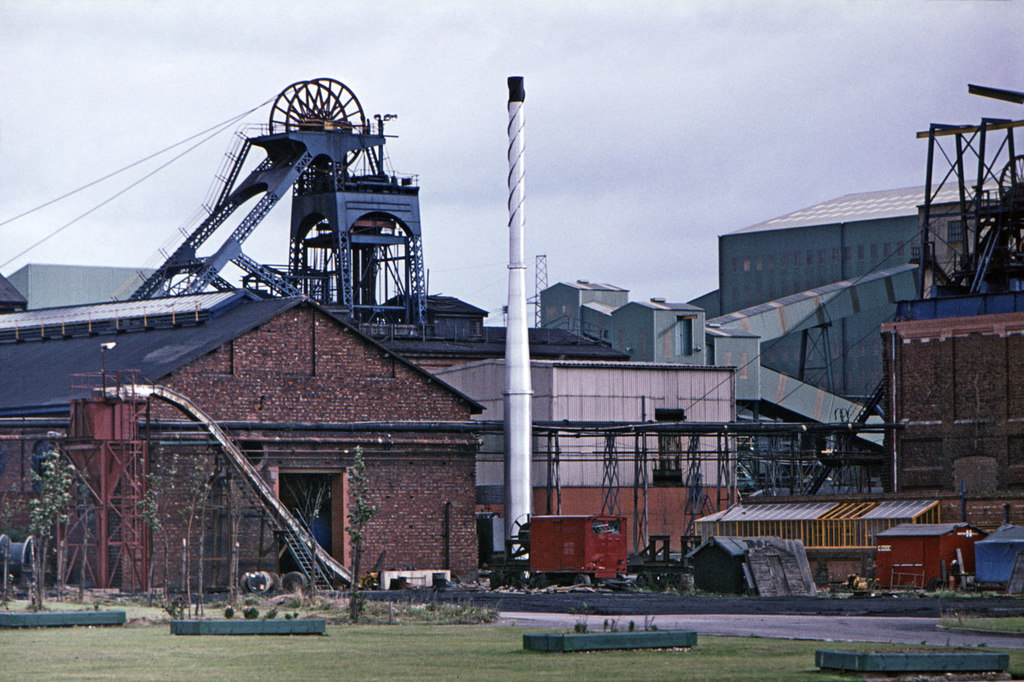
A South Yorkshire colliery worked on the Barnsley seam by the Rother Vale Colliery Company, which leased the coal under the Thurcroft estates in 1902 but did not begin sinking until 1909. Water in the shaft and a fault nobody had found beforehand delayed the first coal until 1913. The company built the village around it to a Rotherham architect's designs, and the pit worked until 6 December 1991.
History
In 1902 the Rother Vale Colliery Company leased the right to work the coal beneath the Thurcroft estates from Messrs Marrian, of Sharrow Hall in Sheffield, and Binns. Seven years passed before sinking began. Within a year of starting, the sinkers met water that had to be pumped from the workings, and the Barnsley seam — good coal, and the reason for the whole undertaking — turned out to have been thrown out of its expected position by a geological fault that was not discovered until the shaft had been sunk. Between the water and the fault, no coal was raised until 1913.
From 1913 the company began building housing for its miners, designed by the Rotherham architect James Knight; the village of Thurcroft grew up around the pit. The colliery was nationalised in 1947 and passed to the National Coal Board, and it worked until 6 December 1991.
Geology
The colliery worked the Barnsley seam of the Middle Coal Measures, the thick and high-quality bed on which most of the South Yorkshire coalfield's deep pits were sunk. Faulting is what made the sinking difficult here: the seam had been displaced from the position predicted for it, and the displacement was not established until the shaft itself had proved it — an expensive way to learn the structure of a concealed coalfield.
Geological setting: Concealed Coalfields (well documented example)
Workings
Shaft mining on the Barnsley seam, the principal coal of the South Yorkshire coalfield. The sinking had to contend with water from the start, and the seam was reached only after the fault displacing it had been proved.
Closure
Closed on 6 December 1991, in the closures that followed the 1984-85 strike.
What remains
The colliery has been cleared and the site given over to fields and rough ground. The village the company built survives, and part of the former colliery land is now used for grid-scale battery storage.
No significant colliery structures survive; the company-built village remains.
Related mines
- Orgreave Colliery — Both were pits of the Rother Vale Colliery Company, which held Orgreave, Fence and Treeton and leased the coal under the Thurcroft estates in 1902 before sinking Thurcroft itself.
- Treeton Colliery — Both were collieries of the Rother Vale Colliery Company, which held Orgreave, Fence and Treeton before leasing the coal under the Thurcroft estates in 1902 and sinking Thurcroft.
Nearby mines
- Dinnington Colliery — 2.8 miles (4.5 km) SE
- Maltby Colliery — 3.0 miles (4.8 km) NE
- Silverwood Colliery — 3.0 miles (4.9 km) NW
- North Staveley Colliery — 4.0 miles (6.5 km) SW
- Treeton Colliery — 4.1 miles (6.6 km) W
Straight-line distance, within 9 miles (15 km). Show on the map.
What's uncertain
Points where sources disagree or the record could not be settled; both accounts are kept. All open questions in the archive.
- The Rother Vale Colliery Company leased the coal under the Thurcroft estates in 1902 but did not begin sinking a shaft until seven years later. (uncertain) 1
- Water met within a year of starting, and a fault that had displaced the Barnsley seam and was not discovered until the shaft was sunk, meant no coal was produced until 1913. (uncertain) 1
- From 1913 the company built housing for the miners, designed by the Rotherham architect James Knight. (uncertain) 1,2
- The colliery closed on 6 December 1991. (uncertain) 1
Recorded claims
Individual factual claims, each attached to the source(s) that support it below. Where sources disagree, both are kept.
- The Rother Vale Colliery Company leased the coal under the Thurcroft estates in 1902 but did not begin sinking a shaft until seven years later. (uncertain) 1
- Water met within a year of starting, and a fault that had displaced the Barnsley seam and was not discovered until the shaft was sunk, meant no coal was produced until 1913. (uncertain) 1
- From 1913 the company built housing for the miners, designed by the Rotherham architect James Knight. (uncertain) 1,2
- The colliery closed on 6 December 1991. (uncertain) 1
- The BGS and Mining Remediation Authority mine plans catalogue holds abandonment plans under the name Thurcroft Main. 3
Photographs & further reading
A local history site covering the colliery and the village built for its miners, including parish magazines and photographs of the pit and the community.
View sourceSources
- (secondary) Thurcroft Colliery — Wikipedia
- (observational) Thurcroft: village history — Thurcroft Colliery and Village
- (primary) BGS mine plans catalogue: Thurcroft Main — British Geological Survey
Record created: 3 September 2026 · Last researched: 3 September 2026