 MineArchive
Yorkshire Main Colliery
| Location | Edlington, South Yorkshire — 53.4862, -1.1815 (exact) |
|---|---|
| Commodity | Coal |
| Type | Coal |
| Worked | 1909 (sinking)–11 October 1985 |
| Maximum depth | 924 yards (shafts); Barnsley seam at 829 metres |
| Operators | Staveley Coal and Iron Company (1909–1937), Yorkshire Main Colliery Ltd (1913–1937), Doncaster Amalgamated Collieries Ltd (1937–1947), National Coal Board (1947–1985) |
Overview
A Doncaster-area colliery sunk from 1909 as 'Edlington Main' for Staveley Coal & Iron, renamed Yorkshire Main within its first year and pushed to a record million-ton output before the 1984-85 strike hastened its 1985 closure.
History
The Staveley Coal & Iron Co. Ltd, which already owned a number of collieries in Derbyshire, acquired the mineral rights around Edlington in 1907, leasing the coal from the Battie-Wrightson estate of Cusworth in several transactions in 1909 and 1910. It began sinking two 6.6-metre-diameter shafts in 1909, along with a third, smaller shaft for water supply, under the working name 'Edlington Main'. The Barnsley seam was reached at 829 metres in 1911, first on a fault in July, the main seam being relocated in October 1912, and in September 1911 the colliery was renamed 'Yorkshire Main'. The site was served by the Dearne Valley line and the Gowdall and Braithwell line.
Full coal-getting operations began in 1913, when a dedicated operating company, Yorkshire Main Colliery Ltd, was formed to run the pit; it was reconstituted as Yorkshire Main Colliery (1923) Ltd, and ownership passed to Doncaster Amalgamated Collieries Ltd in 1937. The underground workforce grew rapidly, from 1,449 in 1914 to 3,178 by 1925. The colliery first produced a million tons of coal in 1923 and reached a record output of 1,138,512 tons in 1939, drawing coal from the Barnsley, Dunsil (from 1957) and Swallow Wood (from the early 1970s) seams.
Modernisation ran through the mid-20th century: conveyors replaced tub haulage from 1933, followed by skips in No. 2 Shaft fed by diesel-hauled mine cars, electric winding in place of steam, power loading from 1954 and a methane drainage system from 1962 that piped gas to Manvers coke works. Yorkshire Main was nationalised into the National Coal Board in 1947. In 1967 2,160 men produced more than a million tons from the Barnsley and Dunsil seams.
Accounts of its last years differ: a profit of £4.5 million is recorded for 1984, but by the mid-1980s the colliery was losing money, and in the months following the 1984-85 miners' strike it struggled to raise output back to viable levels. The NCB closed Yorkshire Main on Friday 11 October 1985, and the pit top, including its 200-foot headstock winding tower, was demolished in 1987; the site was later redeveloped for housing.
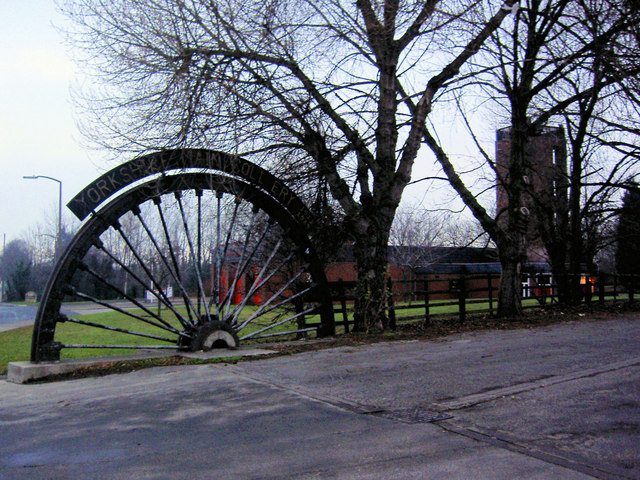
The colliery's First World War memorial stood at the main entrance until it was moved into Edlington in the 1970s. Arthur Wharton, the first black professional footballer in the Football League, worked at the colliery as a haulage hand after leaving the game. A winding wheel now stands at the entrance to the Yorkshire Main miners' welfare club, and the old spoil heap is being made into parkland as Edlington Pit Wood.
Geology
Coal of the South Yorkshire field: the Barnsley seam, reached at 829 metres in 1911, with the Dunsil about 18 yards below it (worked from 1957) and the Swallow Wood beneath the Dunsil (from the early 1970s). Plans to open the Parkgate seam were abandoned.
Workings
Two 6.6-metre shafts sunk from 1909, reaching the Barnsley seam at 829 metres in 1911, later also drawing coal from the Dunsil (from 1957) and Swallow Wood (from the early 1970s) seams. The shafts were sunk to 924 yards; a third shaft, 119 metres deep, was a well for colliery water. No. 2 Shaft was later fitted with skips and electric winding.
Closure
Closed by the NCB on 11 October 1985, following financial difficulties worsened by the 1984-85 miners' strike; the pit top was demolished in 1987.
What remains
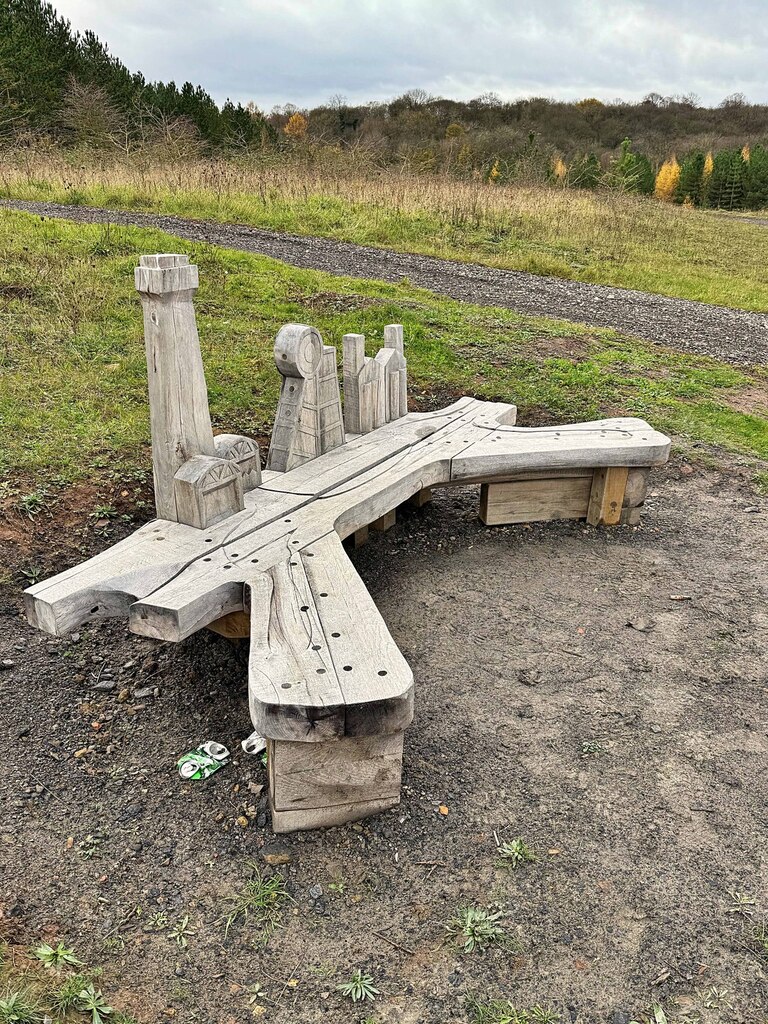
The former colliery site has been redeveloped for housing. The spoil heap is being made into parkland, Edlington Pit Wood, with a bench carved with the colliery's headgear, and a winding wheel stands at the entrance to the Yorkshire Main miners' welfare club.
A winding wheel displayed at the entrance to the miners' welfare club, and the reshaped spoil heap.
Redevelopment
Housing has been approved for 375 homes on part of the former surface site, and the spoil heap is being landscaped as Edlington Pit Wood.
Nearby mines
- Cadeby Main Colliery — 1.9 miles (3.1 km) W
- Denaby Main Colliery — 3.0 miles (4.9 km) W
- Maltby Colliery — 4.0 miles (6.5 km) S
- Rossington Colliery — 5.0 miles (8.0 km) E
- Kilnhurst Colliery — 5.2 miles (8.4 km) W
Straight-line distance, within 9 miles (15 km). Show on the map.
Culture
- Arthur Wharton at Yorkshire Main Colliery (Sports)
Arthur Wharton, the first black professional footballer, worked here as a haulage hand in his last working years and is buried in Edlington. - Yorkshire Main F.C. (Sports)
The colliery's football club, Yorkshire Main Colliery F.C. from 1960, renamed Yorkshire Main F.C. after the pit closed, and still playing at the miners' welfare ground.
What's uncertain
Points where sources disagree or the record could not be settled; both accounts are kept. All open questions in the archive.
- In 1984 the mine was recorded as making a profit of £4.5 million. (disputed) 2
- By the mid-1980s Yorkshire Main was losing money, and after the 1984-85 strike it struggled to raise output. (disputed) 1
Recorded claims
Individual factual claims, each attached to the source(s) that support it below. Where sources disagree, both are kept.
- Staveley Coal & Iron Co. Ltd began sinking two 6.6-metre-diameter shafts in 1909, reaching the Barnsley seam at 829 metres in 1911. 1,2
- Sunk under the name 'Edlington Main', the colliery was renamed 'Yorkshire Main' in September 1911, two years before full working began in 1913. 1
- The colliery achieved a record output of 1,138,512 tons of coal in 1939. 1
- The NCB closed Yorkshire Main on Friday 11 October 1985, following financial difficulties worsened by the 1984-85 miners' strike; the pit top was demolished in 1987. 1
- Located at about 53.486 N, 1.181 W. 2
- Yorkshire Main was sunk in 1909-11 to 924 yards; in 1967 2,160 men produced more than a million tons from the Barnsley and Dunsil seams. 3
- The colliery employed 1,491 in 1915, 3,100 in 1923, 3,000 in 1940 and 2,522 in 1954; output in 1947 was 735,000 tons. 3
- The Barnsley seam was reached at 905 yards in July 1911, but on a fault; the main seam was relocated in October 1912. 2
- Staveley leased the coal from the Battie-Wrightson estate of Cusworth in several transactions in 1909 and 1910. 2
- In 1984 the mine was recorded as making a profit of £4.5 million. (disputed) 2
- By the mid-1980s Yorkshire Main was losing money, and after the 1984-85 strike it struggled to raise output. (disputed) 1
- Yorkshire Main Colliery Ltd, formed in 1913 to run the mine, was reconstituted as Yorkshire Main Colliery (1923) Ltd and worked it until 1937. 1
- The colliery's First World War memorial stood at the main entrance and was moved into Edlington in the 1970s. 2
- The Barnsley and Top Hard workings were abandoned on 11 October 1985 and the Dunsil on 31 May 1985. 4,5
- A winding wheel from the colliery stands at the entrance to the Yorkshire Main miners' welfare club in Edlington. 6
- The former spoil heap is being made into parkland as Edlington Pit Wood, with a bench carved to show the colliery headgear. 7
Photographs & further reading
A photograph of the parkland being made on the former spoil heap.
View sourceThe colliery's sinking, companies, workforce, modernisation and closure.
View sourceOwners, output and employment from 1910 to 1954, the NCB's 1967 description and the names of those killed.
View sourceSources
- (secondary) Yorkshire Main Colliery — Northern Mine Research Society
- (secondary) Yorkshire Main Colliery — Wikipedia
- (primary) Durham Mining Museum - Yorkshire Main Colliery (UK) — Durham Mining Museum
- (primary) BGS mine plans: Yorkshire Main (Barnsley & Top Hard, abandoned 11 Oct 1985) — British Geological Survey / Mining Remediation Authority
- (primary) BGS mine plans: Yorkshire Main (Dunsil, abandoned 31 May 1985) — British Geological Survey / Mining Remediation Authority
- (observational) Winding wheel from Yorkshire Main Colliery 1911 to 1985 (Geograph, Steve Fareham) — Geograph
- (observational) Bench in Edlington Pit Wood (Geograph, Graham Hogg) — Geograph
Record created: 27 August 2026 · Last researched: 2 October 2026