 MineArchive
Kilnhurst Colliery
| Location | Kilnhurst, near Rotherham, South Yorkshire — 53.4669, -1.3050 (exact) |
|---|---|
| Commodity | Coal |
| Type | Coal |
| Worked | 1858 (as Thrybergh Hall Colliery)–1989 |
| Operators | J. & J. Charlesworth (1917–1923), Stewarts & Lloyds (1923–1936), Tinsley Park Colliery Company (1936–1945), Manvers Main Colliery Company (1945–1947), National Coal Board (1947–1989) |
Overview
Kilnhurst Colliery, originally Thrybergh Hall Colliery, was a South Yorkshire coal mine worked from 1858 that passed through five successive owners before its underground connection to the neighbouring Manvers Main Colliery ended its own coal winding in the 1950s. It finally closed in 1989.
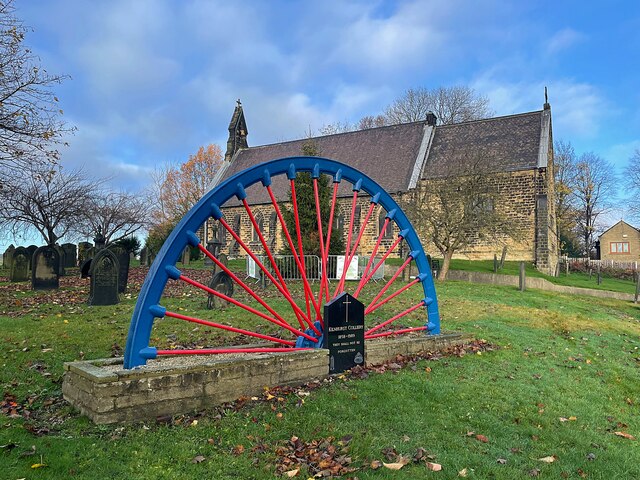
History
Kilnhurst Colliery began as Thrybergh, or Thrybergh Hall, Colliery, extracting the Barnsley seam from 1858; a serious accident occurred there in 1863, and from 1850 a South Yorkshire Railway branch served both the site's brickworks and its colliery. Ownership and development passed through several hands over the following century. J. & J. Charlesworth of Wakefield opened the Swallow Wood seam in 1917 and prepared the Parkgate seam, which entered production in 1923, the same year the Glasgow firm Stewarts & Lloyds Ltd took over the colliery and went on to open the Silkstone seam in 1929. The Tinsley Park Colliery Company purchased the site, including its brickworks and housing, for £310,000 on 28 April 1936, and sank a new No. 4 shaft between 1937 and 1939. By 1945 the colliery belonged to the Manvers Main Colliery Company, and it passed to the National Coal Board at nationalisation shortly afterward. Kilnhurst was connected underground to the neighbouring Warren Vale and Warren House collieries, and linked by a standard-gauge railway to Warren Vale. Between 1950 and 1956, in a rationalisation of the wider coalfield, Kilnhurst's coal began to be transported underground to Manvers Main for surface winding there instead, bringing coal winding at Kilnhurst itself to an end even though underground working continued. The colliery finally closed in 1989.
Geology
Coal of the South Yorkshire field: the Barnsley seam from 1858, the Swallow Wood opened in 1917 and the Parkgate in production from 1923.
Workings
Worked the Barnsley, Swallow Wood, Parkgate and Silkstone seams in succession from 1858, connected underground to the neighbouring Warren Vale and Warren House collieries. From 1950-56, coal was transported underground to the neighbouring Manvers Main Colliery for surface winding, ending coal winding at Kilnhurst's own shafts.
Closure
Coal winding at Kilnhurst's own shafts ended between 1950 and 1956 once its output was rationalised to wind via the neighbouring Manvers Main Colliery instead; underground working continued until final closure in 1989.
What remains
Unknown.
Related mines
- Manvers Main Colliery — From 1950-56, Kilnhurst's coal was transported underground to be wound at the surface at Manvers Main instead, ending coal winding at Kilnhurst's own shafts even as underground working there continued for decades more.
- Robin Hood Colliery — Both were worked by J. & J. Charlesworth, the Rothwell firm whose collieries were named after the family's daughters.
- Warren House Colliery — The third of the Charlesworth pits connected underground with Warren House.
- Warren Vale Colliery — Both worked by J. and J. Charlesworth and linked by rail; Warren Vale's men moved to Kilnhurst when it closed in 1943.
- Wath Main Colliery — Kilnhurst and Wath Main were linked below ground in the South Manvers complex from 1950 to 1956.
Nearby mines
- Roundwood Colliery — 1.1 miles (1.8 km) SW
- Warren Vale Colliery — 1.2 miles (2.0 km) NW
- Aldwarke Main Colliery — 1.6 miles (2.6 km) SW
- Silverwood Colliery — 2.0 miles (3.3 km) S
- New Stubbin Colliery — 2.2 miles (3.5 km) W
Straight-line distance, within 9 miles (15 km). Show on the map.
Recorded claims
Individual factual claims, each attached to the source(s) that support it below. Where sources disagree, both are kept.
- Kilnhurst passed through five successive owners between 1917 and nationalisation: J. & J. Charlesworth, Stewarts & Lloyds Ltd, the Tinsley Park Colliery Company, and the Manvers Main Colliery Company, before the National Coal Board took over in 1947. 1
- Between 1950 and 1956, coal was transported underground to the neighbouring Manvers Main Colliery for surface winding there, ending coal winding at Kilnhurst's own shafts even though underground working continued for over three further decades. 1
- The Coal Authority's mine plans catalogue holds over 75 records for Kilnhurst, including underground plans and spoil heap plans, all in South Yorkshire. 2
Photographs & further reading
The neighbouring colliery Kilnhurst's coal was wound at from the 1950s onward.
View sourceSources
- (secondary) Kilnhurst Colliery — Wikipedia
- (primary) BGS/Mining Remediation Authority mine plans catalogue: Kilnhurst — The Coal Authority
Record created: 2 September 2026 · Last researched: 2 September 2026