 MineArchive
Llanerch Colliery
| Also known as | Cwmnantddu Colliery |
|---|---|
| Location | Abersychan, near Pontypool, Torfaen — 51.7150, -3.0834 (exact) |
| Commodity | Coal |
| Type | Coal |
| Worked | c. 1830–1947 |
| Maximum depth | Two shafts of 253 yards each, sunk about 1853. |
| Operators | Pentwyn and Golynos Company (1845–1853), Varteg Iron and Coal Company (1853–1880), Partridge, Jones & Co. (1890–1947), National Coal Board (1947–1947) |
Overview
A Monmouthshire colliery above Abersychan, begun about 1830 as the Cwmnantddu level working the Tillery seam and deepened to shafts of 253 yards in the 1850s. On 6 February 1890 an explosion in Cook's slope killed 176 men and boys — one of the worst disasters in Welsh mining. The colliery worked on for nearly sixty years afterwards, closing shortly after nationalisation in 1947.
History
The colliery began life around 1830 as Cwmnantddu, a level working the Tillery seam; the earliest mention traced of it is a county-court case of December 1833. When it was advertised for sale in October 1840 it was described as capable of turning out twenty tons of coal a day, with two miles of tramroad running down to the wharf at Pontnewynydd, where coal could be loaded into boats on the Monmouthshire Canal.
By 1849 it was the property of the Pentwyn and Golynos Company, and on 10 August that year an explosion of firedamp in the New Pit killed five men (see Disasters, below). The Varteg Iron and Coal Company, of Crawshay Bailey, then bought the colliery and around 1853 sank new shafts to the deeper seams. Each of the two shafts was 253 yards deep; the original headgear stood 45 feet high and was built of pitch pine, and the mine was ventilated by furnace. Under a succession of ironmasters' companies — the Pontnewynydd Iron Company is named in the accident reports of the late 1850s — the pit killed men steadily and unremarkably: falls of roof, runaway trams, a boy of twelve jammed between trams three months after his father died the same way.
A further explosion of gas on 25 May 1869 killed seven men in the Meadow Vein seam at the Middle sinking pit, and a steam-driven ventilation fan was installed in 1888. On the morning of 6 February 1890 an explosion in Cook's slope, in the Meadow Vein seam, killed 176 men and boys (see Disasters, below). The colliery, by then in the hands of Partridge, Jones & Co., went on working. It supplied the downcast ventilation for the neighbouring Blaenserchan colliery until that pit sank its own downcast shaft in 1913. In 1908 Llanerch, Havod Van and Blaenserchan together employed 1,963 men, and by 1918 2,060. Llanerch itself employed 913 men in 1923, working the Elled, Big Vein, Three Quarters, Old Coal and Black Vein seams, but only 325 by 1938. It closed shortly after nationalisation in 1947.
Geology
The colliery worked the eastern rim of the South Wales Coalfield above Abersychan, where the Coal Measures carry the named Monmouthshire seams — Tillery, Elled, Big Vein, Three Quarters, Old Coal, Black Vein and the Meadow Vein in which the 1890 explosion happened. The measures dip westward into the coalfield, which is why the colliery began as a level driven into the hillside and only later needed shafts to reach the deeper coals.
Workings
Begun as a level working the Tillery seam and deepened about 1853 to two shafts of 253 yards, with 45-foot pitch-pine headgear and furnace ventilation. By 1923 the colliery was working the Elled, Big Vein, Three Quarters, Old Coal and Black Vein seams. Coal went down two miles of tramroad to the wharf at Pontnewynydd and onto the Monmouthshire Canal. The colliery also served as the downcast for Blaenserchan until 1913.
Closure
Closed shortly after nationalisation in 1947, having employed only 325 men in 1938. The Royal Commission's record dates the colliery's sinking to about 1860, for ironstone at first, against the 1830 level and the shafts of about 1853 given above.
What remains
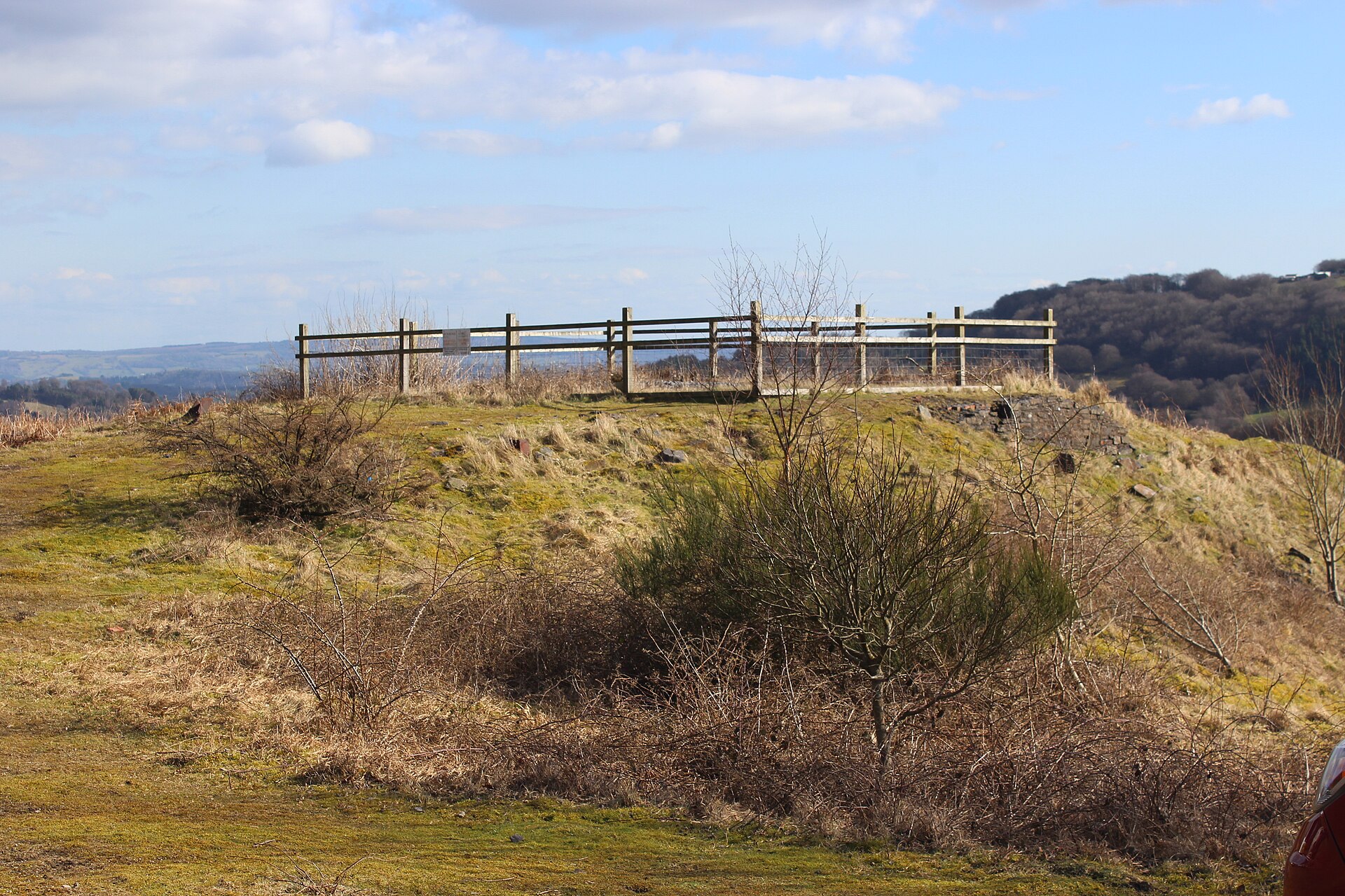
The colliery site has been cleared and is now enclosed rough ground and partly cleared scrub, managed by the county council. Old colliery waste tips remain on the hillside near Llanerch-Isaf.
Colliery waste tips; the pit site itself is cleared and enclosed.
Related mines
- Blaenserchan Colliery — Llanerch supplied the downcast ventilation for Blaenserchan until Blaenserchan sank its own downcast shaft in 1913; the two were returned together in the employment figures for 1908 and 1918.
- Gwenallt Colliery — Gwenallt was kept as a pumping pit for Llanerch after 1929.
Nearby mines
- Glyn-nant-ddu Colliery — 0.3 miles (0.5 km) W
- Blaenserchan Colliery — 0.5 miles (0.9 km) W
- Cwmbyrgwm Colliery — 0.6 miles (1.0 km) N
- Gwenallt Colliery — 0.8 miles (1.2 km) SE
- Eastern Valleys Black Vein Colliery — 0.8 miles (1.4 km) SE
Straight-line distance, within 9 miles (15 km). Show on the map.
Disasters & major incidents
-
Cwmnantddu Colliery Explosion, 1849
10 August 1849 · Explosion · 5 fatalities
An explosion of firedamp in the New Pit at Cwmnantddu — the colliery later known as Llanerch — killed five men on the morning of 10 August 1849. Two of them were a father and his son of about fourteen. -
Llanerch Colliery Explosion, 1869
25 May 1869 · Explosion · 7 fatalities
At about half past eight on the night of Tuesday 25 May 1869, firedamp exploded in the Sinking Pit at Cwmnantddu — the colliery later known as Llanerch — killing all seven men who were making roads in the deep, some 700 to 800 yards from the shaft bottom. The workings were generally supposed to be free of gas and, once tested with a safety lamp, were worked with open lights. Twenty-one years later the same colliery, still using naked lights, killed 176. -
Llanerch Colliery Explosion, 1890
6 February 1890 · Explosion · 176 fatalities
On the morning of 6 February 1890 a gas explosion in Cook's slope at Llanerch Colliery, Abersychan, killed 176 men and boys — one of the worst disasters in the history of Welsh mining. Two months earlier the colliery's managing director had written that the pit was thoroughly well ventilated and safe to work with naked lights, declining the Inspector of Mines' advice to bring in closed safety lamps after an explosion the previous October. -
Llanerch Colliery roof fall, 1908
21 January 1908 · Collapse / Roof Fall · 2 fatalities
About fifteen tons of rock fell in Llanerch Colliery's main slope on 21 January 1908 as the men were walking in to work, killing two young colliers.
What's uncertain
Points where sources disagree or the record could not be settled; both accounts are kept. All open questions in the archive.
- The colliery began about 1830 as Cwmnantddu, a level working the Tillery seam; the earliest traced mention is a county-court case of December 1833. (uncertain) 1
- The Varteg Iron and Coal Company sank new shafts about 1853, each 253 yards deep, with 45-foot pitch-pine headgear and furnace ventilation. (uncertain) 1
- Llanerch provided the downcast ventilation for the neighbouring Blaenserchan colliery until that pit developed its own downcast shaft in 1913. (uncertain) 1
- Llanerch employed 913 men in 1923, producing from the Elled, Big Vein, Three Quarters, Old Coal and Black Vein seams, and 325 men by 1938. (uncertain) 1
Recorded claims
Individual factual claims, each attached to the source(s) that support it below. Where sources disagree, both are kept.
- The colliery began about 1830 as Cwmnantddu, a level working the Tillery seam; the earliest traced mention is a county-court case of December 1833. (uncertain) 1
- The Varteg Iron and Coal Company sank new shafts about 1853, each 253 yards deep, with 45-foot pitch-pine headgear and furnace ventilation. (uncertain) 1
- Llanerch provided the downcast ventilation for the neighbouring Blaenserchan colliery until that pit developed its own downcast shaft in 1913. (uncertain) 1
- Llanerch employed 913 men in 1923, producing from the Elled, Big Vein, Three Quarters, Old Coal and Black Vein seams, and 325 men by 1938. (uncertain) 1
- An explosion on 6 February 1890 killed 176 men and boys; Welsh Coal Mines holds the full death roll, naming each of them with their age and the village they came from. 1,2
- The Royal Commission's record places the colliery at SO 2524 0236, dates its sinking to about 1860, initially for ironstone and then coal, notes that Cwm-nant-ddu later became known as Llanerch, and records that no surface buildings remain. 3
- The Mining Remediation Authority's abandonment plans name Llanerch on sheets shared with Blaenserchan (SWA1138, SWA1154, SWA1176 and the combined Blaenserchan, Llanerch, Greenland and Cwmbyrgwm plans SWA2284 and SWA2285), on a Llanerch watercourse and dam plan (SW2337), and on the Graig-ddu clay level and Llanerch waterwheel plans. 4
Photographs & further reading
The colliery's history from its beginnings as the Cwmnantddu level, with shaft dimensions, seams and employment figures, and a long run of contemporary newspaper reports of accidents there from the 1840s to 1910.
View sourcePhotographs and documents of the disaster (Creative Archive Licence).
View sourceA contemporary Welsh ballad on the explosion, digitised by the National Library of Wales.
View sourceSources
- (secondary) Llanerch Colliery, Abersychan — Welsh Coal Mines
- (secondary) Llanerch Colliery disaster: death roll, 6 February 1890 — Welsh Coal Mines
- (primary) Llanerch Colliery, NPRN 421104 (Coflein) — Royal Commission on the Ancient and Historical Monuments of Wales
- (primary) Abandonment plans naming Llanerch, Abersychan (BGS mine plans catalogue) — British Geological Survey / Mining Remediation Authority
Record created: 3 September 2026 · Last researched: 24 September 2026