 MineArchive
Headgear
| Also known as | Headframe (North American), Headstock |
|---|---|
| Category | Structures & Machinery |
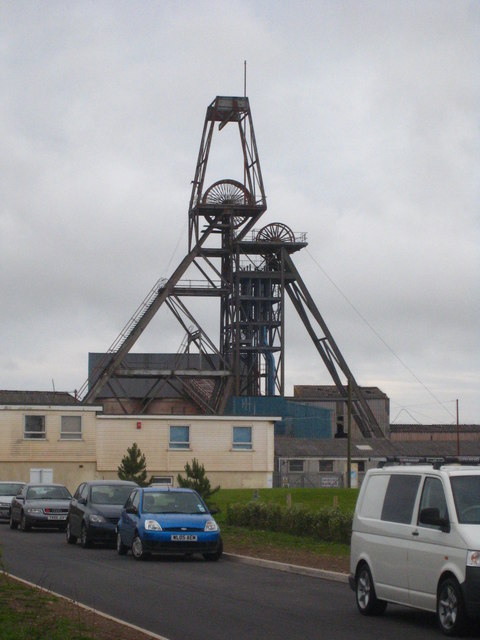
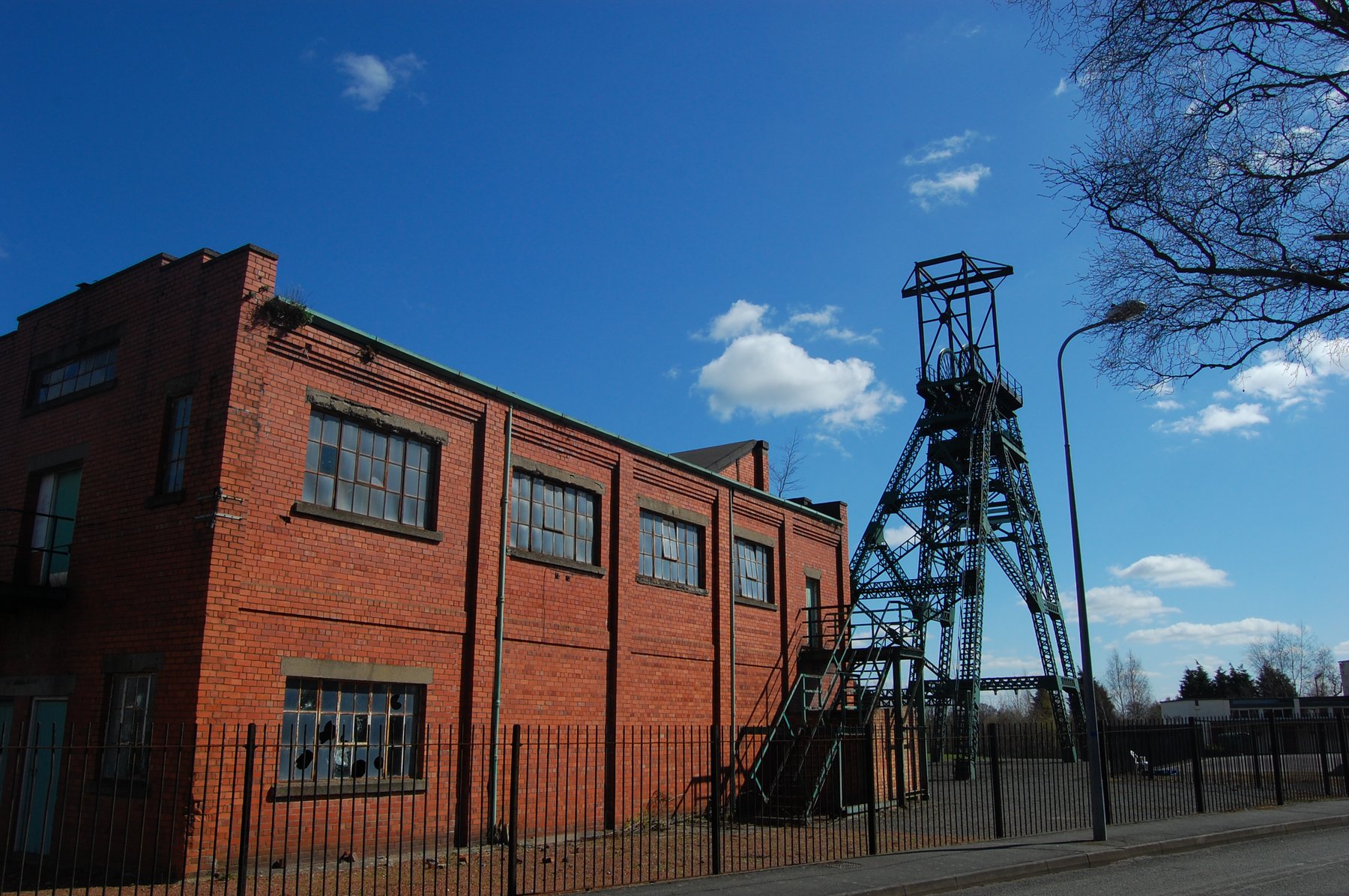
The structural frame built directly over a mine shaft to carry the wheels that guide the winding cable — the single most recognisable structure at almost any mine site, also called a headframe, winding tower, gallows frame or poppethead.
Historical usage
Headgear has stood over mine shafts for as long as cable winding has been used to raise ore, water and men. Early headgear was built of timber; steel and concrete largely replaced wood through the 1920s as headgear grew taller and had to carry heavier loads at greater speed. South Wales became particularly associated with headgear in the popular imagination, thanks to the sheer number built across the coal-mining valleys during the Industrial Revolution.
How it worked
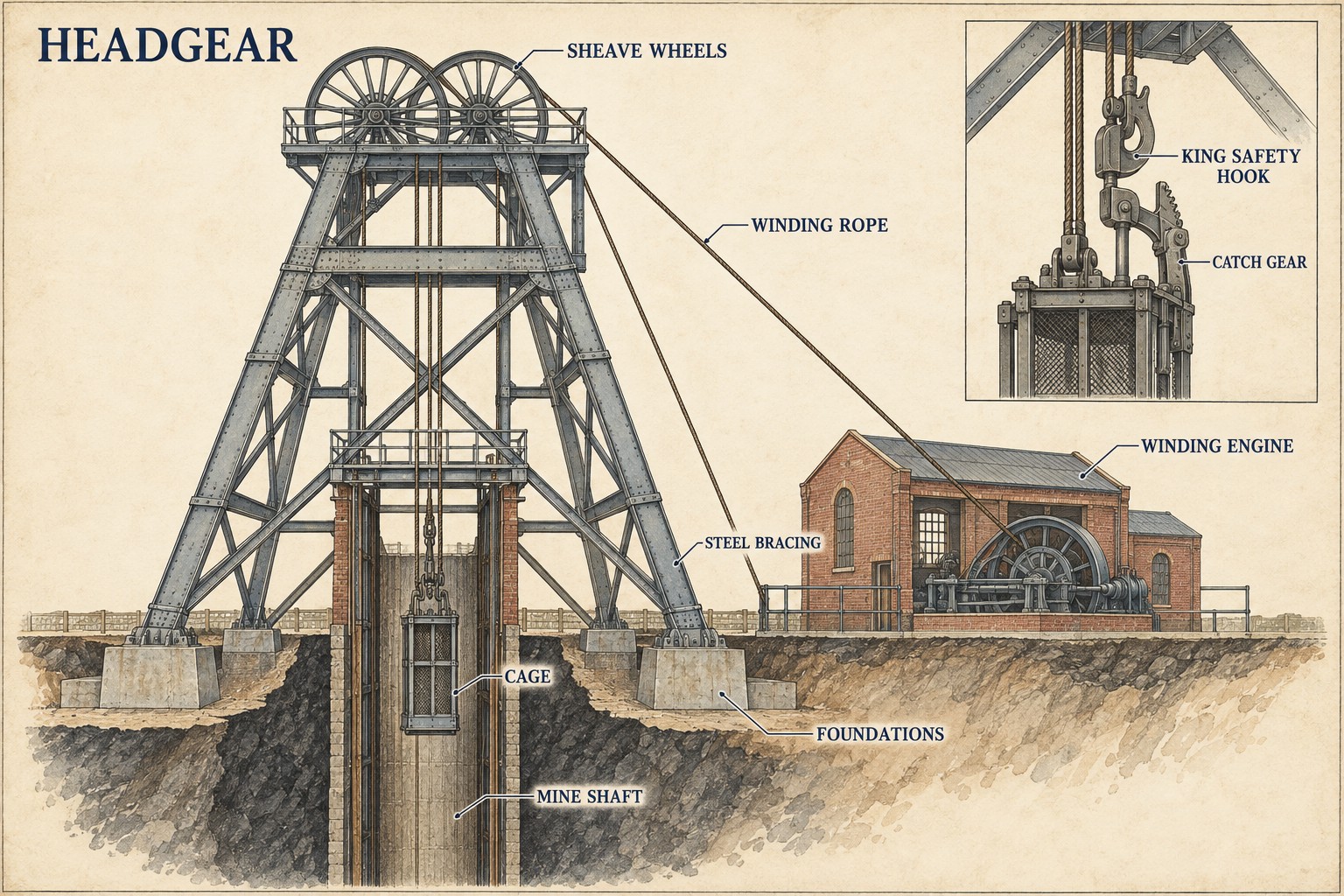
A sheave wheel — a large grooved pulley — sat at the top of the headgear, with the winding cable running up from the shaft, over the wheel, and across to the winding engine in its own engine house nearby. As the engine wound the cable in or out, the cage or kibble attached to the other end was raised or lowered through the shaft.
Why it was used
Headgear was structurally necessary wherever a shaft was wound with a vertical cable rather than hauled some other way — the frame had to be tall and strong enough to carry the sheave wheel directly over the shaft centre and take the full load and speed of a loaded cage or kibble passing beneath it.
Risks & limitations
The headgear's own hazard is what happens when the winding goes wrong. An overwind — the cage drawn past the landing and into the frame — was among the most feared accidents at a shaft, and the gear above the shaft carried the devices meant to stop it: the King safety hook and, later, the Bennett catch gear, a framework set in the headgear so that if a cage was overwound and the capel released, the cage would be caught and held rather than fall back down the shaft. The angle at which the rope runs from the winding drum to the sheave wheels, the fleet angle, had to be kept small or the rope chafed itself and the sheave grooves to destruction. Timber headgear rotted and burned; steel headgear rusted, and a structure built to take the dynamic load of a loaded cage at speed needed constant inspection to keep taking it. After closure the same qualities make headgear expensive to keep: it is tall, it is exposed, it serves no purpose once the shaft is capped, and most of Britain's headframes were cut up for scrap within a few years of the last wind.
Regional variation
Timber headgear predominates in the surviving record of older, smaller mines; the tall steel headgear most people picture today became standard only from the 1920s onward, and is particularly associated with the deep collieries of the South Wales valleys.
Related terminology
Blondin, Heapstead, King Hook, Winding Engine
Mines associated with this term
5 examples chosen from 124 linked records — the term page is not an index.
- Abercynon Colliery — Rhondda Cynon Taf (well documented example)
Named twice in this record, first in the summary: “…killed eighteen men. It worked for almost a century, its bright blue headgear a landmark on the A470, and closed in 1988 with an estimated…” - Bedford Colliery — Greater Manchester (well documented example)
Named in this record’s history: “…Tyldesley system between Nook and Gin Pit collieries and put in new headgear and screens. It passed to the National Coal Board in 1947 and closed…” - Chatterley Whitfield Colliery — Staffordshire (well documented example)
Surviving or recorded headgear is a named feature of the mine's own history. - Frances Colliery — Fife (well documented example)
Named 4 times in this record, first in the workings: “…ultimately extending workings out under the Forth. The surviving headframe, built in 1943 to a design by Dickson Mann Ltd, was constructed…” - Grassmoor Colliery — Derbyshire (well documented example)
Named in this record’s closure notes: “…workings themselves were abandoned is not the same as the year the headgear stopped turning. The site became an area training centre in 1957.”
Disasters associated with this term
5 examples chosen from 27 linked records, most direct relationship first.
- Tirpentwys Colliery shaft accident, 1902 (direct cause)
The rope left the pulley. - Cwmneol Colliery overwind, 1855 (hazard involved)
The cage crashed into the headgear. - Greenrigg Colliery pithead fire (hazard involved)
The headframes burned, which is what cut off the shafts. - Agecroft Colliery shaft accident, 1859 (contextual relationship)
Named in this record’s narrative: “…wound on: the cage was drawn up against the pulley at the top of the headgear and its occupants were precipitated down the shaft. All seven died.…” - Barony Colliery shaft collapse, 1962 (contextual relationship)
Named 6 times in this record, first in the summary: “…it caved in, burying four men 1,300 feet down and bringing the headframe into the shaft mouth. The bodies were never recovered, the colliery…”
Sources
- (primary) Glossary of Mining and Geordie Words — Durham Mining Museum
- (secondary) Headframe — Wikipedia
- (secondary) Headstocks — Mining Heritage
- (secondary) Pit Terminology — Healey Hero
Record created: 22 August 2026 · Last researched: 11 September 2026