 MineArchive
Barony Colliery shaft collapse, 1962
On 8 November 1962 No. 2 shaft at Barony Colliery, west of Auchinleck in Ayrshire, collapsed as the ground around it caved in, burying four men 1,300 feet down and bringing the headframe into the shaft mouth. The bodies were never recovered, the colliery stopped producing, and it took a campaign and a new shaft to reopen it four years later.
| Date | 8 November 1962 |
|---|---|
| Mine | Barony Colliery |
| Region | East Ayrshire |
| Primary type | Collapse / Roof Fall |
| Associated types | Entrapment |
| Fatalities | 4 (Thomas Fyvie and George Wade, contractors, Henry Green, oversman, and John McNeil, deputy. None of the four bodies was recovered.) |
| Context | During active mining (The colliery had been reconstructed only a dozen years earlier and employed about 1,600 men. The district had buried its dead twice in the decade before: thirteen at Knockshinnoch Castle in 1950 and seventeen at Kames in 1957.) |
Cause
The ground around No. 2 shaft caved in and the shaft collapsed, in a way nobody at the colliery had thought possible.
What happened
Barony Nos. 1 and 2 shafts were sunk west of Auchinleck by Bairds and Dalmellington between 1906 and 1910, and the colliery was rebuilt by the National Coal Board between 1937 and 1949, the reconstruction giving it the steel A-frame headgear over a third shaft. On 8 November 1962, a dozen years after that work was finished, the ground around No. 2 shaft caved in. The shaft collapsed and the headframe came down into its mouth, blocking it. Four men working to save the pit were buried about 1,300 feet below: the contractors Thomas Fyvie and George Wade, the oversman Henry Green and the deputy John McNeil. Their bodies were never recovered. No. 2 was sealed off, No. 1 had to be filled in, and of the colliery's 1,600 men some 1,200 were put out of work with no other pit within travelling distance. The Coal Board's estimate was that two years must pass before Barony could work again. Pressure from the miners' unions, local councillors, the constituency MP and the town kept the colliery off the closure list: the Coal Board conceded a fourth shaft in 1963, it was sunk in 1965, and the Barony was back in full production in 1966. It worked on until 17 February 1989, when the remaining 400 men were laid off and Archie Glover wound the last cage.
Rescue & recovery
The headframe falling into the shaft mouth blocked the way down, and no rescue could be made. A fortnight after the collapse the bodies had still not been recovered, and they never were.
Investigation & inquiry
No. 2 shaft was sealed off after the collapse and the investigation, and the damage was examined by the Coal Board, which the Ministry of Power told the Commons on 20 November was giving it very careful examination.
Legal & regulatory aftermath
The collapse reached the Commons on 20 November 1962, a fortnight later, during the second reading of the Coal Industry Bill. The Parliamentary Secretary to the Ministry of Power, John Peyton, called it a grave and terrible occurrence and acknowledged the employment problem it had created; Thomas Fraser put the figures at 1,200 of 1,600 men out of work with reopening at least two years away, and the constituency member, Emrys Hughes, said the four had lost their lives trying to save the pit and the work of their comrades, and pressed for factories and public works to hold the labour force together until the pit could reopen. The pit was saved by a campaign rather than by a decision. Cumnock Trades Council, town councillors, the churches and the NUM built it from a first meeting of about a dozen people in a community centre in Auchinleck — a minister, the two provosts and the NUM official among them — and took it to a packed public meeting addressed by Emrys Hughes and by Alex Moffat, president of the NUM's Scottish Area. The National Coal Board conceded a fourth shaft in 1963, and the appointment in 1964 of Willie Ross, member for neighbouring Kilmarnock, as Secretary of State for Scotland carried it through. Barony's survival is an unusual case: most such campaigns lost.
Memorials & commemoration
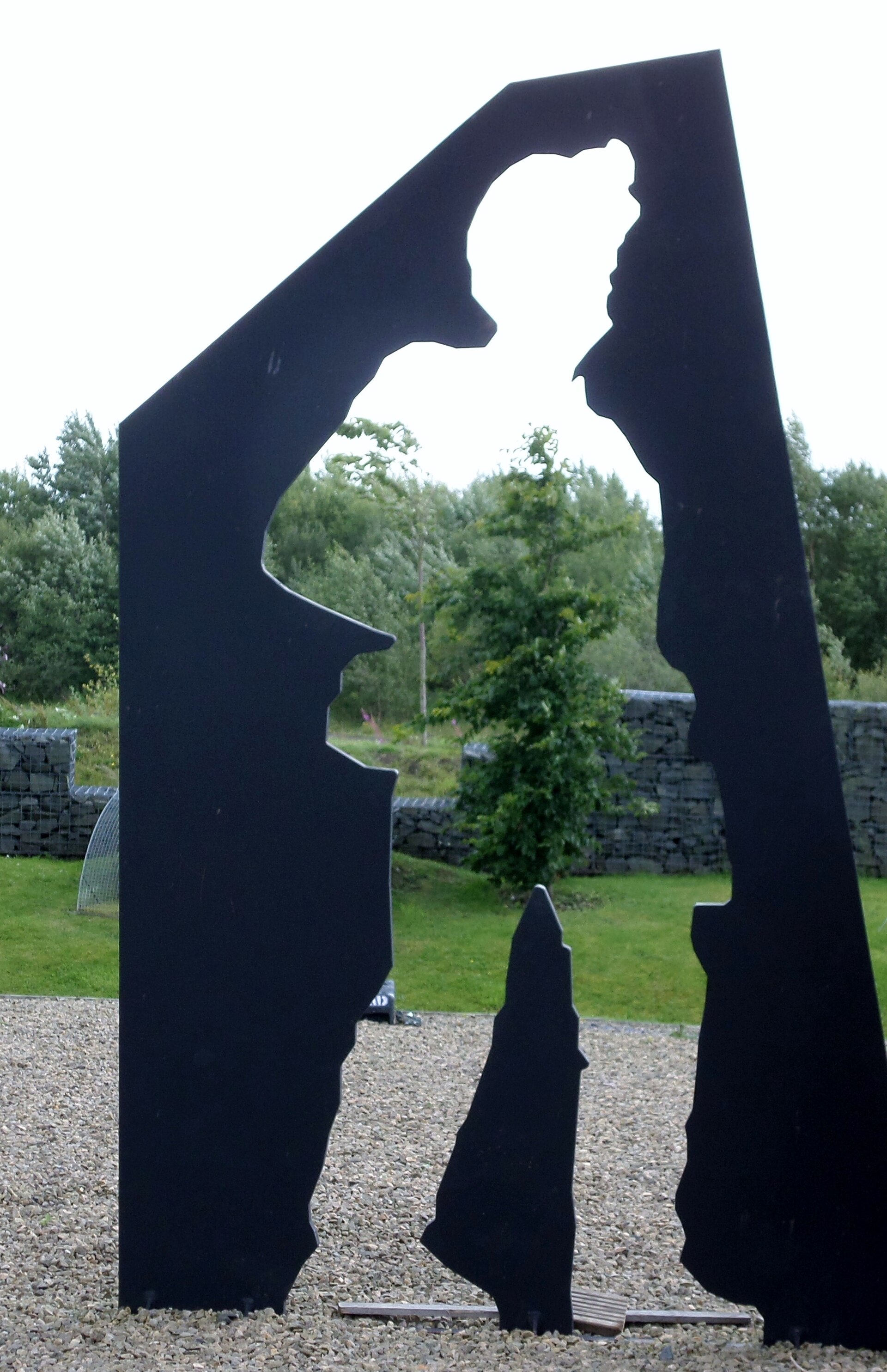
The A-frame headgear over No. 3 shaft, 180 feet high and built in 1954, was left standing when the colliery was demolished after its closure in 1989. It was listed category B in 1990, restored by the Barony A Frame Trust for more than a million pounds and reopened in January 2008, and the site carries a sculpture of a miner. It is the last headgear of its kind in Britain. A headstone on the site remembers the lives and the industry lost. The Scots poet Rab Wilson, himself a former Barony miner, set the A-frame in verse in Accent o' the Mind (2006), casting it as a wicker-man to which miners were sacrificed on the altar of Mammon and progress.
Recorded claims
Individual factual claims, each attached to the source(s) that support it below. Where sources disagree, both are kept.
- No. 2 shaft collapsed on 8 November 1962, burying four men: the contractors Thomas Fyvie and George Wade, the oversman Henry Green and the deputy John McNeil. 1,2,3
- The ground around No. 2 shaft caved in and the shaft collapsed, the headframe falling into the shaft mouth. 2,3
- None of the four bodies was recovered. 2
- Production ceased, No. 1 shaft had to be filled in and No. 4 was sunk in 1965, the colliery reopening in 1966. 1,2
- About 1,200 of the colliery's 1,600 men were put out of work, with the Coal Board estimating at least two years before the pit could work again. 3
- The A-frame headgear over No. 3 shaft survives as a listed monument, restored and reopened in January 2008, the last of its kind in Britain. 4
- The campaign that kept Barony open was built by Cumnock Trades Council, town councillors, the churches and the NUM, and taken to a packed public meeting addressed by the local member Emrys Hughes and the NUM Scottish Area president Alex Moffat. 5
- The National Coal Board conceded a fourth shaft in 1963 and the colliery returned to full production in 1966. 5
- Barony worked until 17 February 1989, when its remaining workforce of 400 was laid off. 5
Related terminology
Mining terms this disaster is structurally linked to, with the nature of the relationship.
- Cage (contextual relationship)
Named in this record’s narrative: “…the remaining 400 men were laid off and Archie Glover wound the last cage.” - Deputy (contextual relationship)
Named in this record’s narrative: “…Thomas Fyvie and George Wade, the oversman Henry Green and the deputy John McNeil. Their bodies were never recovered. No. 2 was sealed…” - Headgear (contextual relationship)
Named 6 times in this record, first in the summary: “…it caved in, burying four men 1,300 feet down and bringing the headframe into the shaft mouth. The bodies were never recovered, the colliery…” - National Coal Board (contextual relationship)
Named twice in this record, first in the narrative: “…between 1906 and 1910, and the colliery was rebuilt by the National Coal Board between 1937 and 1949, the reconstruction giving it the steel…” - Overman (contextual relationship)
Named in this record’s narrative: “…1,300 feet below: the contractors Thomas Fyvie and George Wade, the oversman Henry Green and the deputy John McNeil. Their bodies were never…”
Photographs & further reading
This page doesn't try to reproduce everything — these are the best original sources found for this disaster.
The Commons debate a fortnight after the collapse, with the Ministry of Power's statement and the Ayrshire members on the four deaths and the 1,200 men out of work.
View sourceShaft-by-shaft detail with grid references and depths, quoting Canmore on the collapse of No. 2 and the sinking of No. 4 that followed it.
View sourceThe community campaign that reopened the colliery, drawn from council and NUM records, Coal Board files and interviews with those who took part.
View sourceSources
- (secondary) Barony (1906-1989): Coal and Community case study (University of Wolverhampton) — University of Wolverhampton, Centre for Historical Research
- (secondary) Barony Colliery (Scottish Cave and Mine Database, site 8102, quoting Canmore and Coal & Community) — Grampian Speleological Group
- (primary) Coal Industry Bill (House of Commons, 20 November 1962) — Hansard, UK Parliament
- (secondary) Barony A Frame — Wikipedia
- (secondary) Barony: A Fight for Life (Andrew Perchard) — Coal and Community, University of Wolverhampton
Record created: 24 September 2026 · Last researched: 24 September 2026