 MineArchive
Cwmbyrgwm Colliery
| Also known as | Cwm-Byrgwm Colliery, Cwmburgwm Colliery, Cwmbargwm Colliery |
|---|---|
| Location | Cwmbyrgwm, above Abersychan, Torfaen — 51.7236, -3.0853 (approximate) |
| Commodities | Coal, Ironstone |
| Type | Coal |
| Worked | Before 1820; water-balance headgear erected in the 1840s–28 March 1931 (last level) |
| Maximum depth | 104 yards (the Balance Pit, in an 1869 return) |
| Operators | Ebbw Vale Steel, Iron and Coal Company (1840–1877), D. Buck (1907–1910) |
Overview
A colliery on the hillside above Abersychan whose water-balance headgear, put up by the Ebbw Vale Company in the 1840s to raise ironstone, still stands and is a scheduled monument. Mining here began before 1820 and grew with the British Ironworks from 1827. A boiler explosion on the surface killed a man and two boys in 1858, a mountain slip closed the pit in 1860, and the workings were abandoned and reopened repeatedly until the last Cwmbyrgwm level closed in 1931.
History
Mining at Cwmbyrgwm began before 1820 and expanded with the development of the British Ironworks at Talywain from 1827. The Ebbw Vale Company put up the water-balance winding gear in the 1840s, originally to raise ironstone: a tank of water was filled at the surface to counterbalance the loaded cage below, a cheap system for shallow pits that needed no engine. On 6 January 1858 a boiler exploded on the surface, killing John Charles, his son Cecil Charles and another boy, Joseph Whitcombe. The colliery was never a single pit but a group of workings, including the Balance Pit. In 1860 an extensive slip on the mountain closed the Cwmbargwm or Bargwm Mine Pit of the Ebbw Vale Company; the fall was cleared and the pit reported ready to reopen on 31 May 1862. A return of 1869 gives the Balance Pit as 104 yards deep, raising thirty tons a day of Black Pins Mine ironstone, with the Cwm Burgwm pits partly sunk but stopped and a level on the Red Ash seam not worked. The colliery was abandoned in 1877 but reappeared in 1891 and was no longer working by 1897. In 1906 it was reported that the old levels at the foot of British Mountain, stopped for about fifteen years, were to be reopened, and from 1907 they were under D. Buck; the Catalogue of Plans gives abandonment on 10 August 1910. Later levels followed, the first opening in 1922 and the last abandoned on 28 March 1931. Coflein records the colliery as in use on the Ordnance Survey 25-inch first edition of 1880 and disused on the second edition of 1901.
Geology
Ironstone and coal of the South Wales Coal Measures on the eastern rim of the coalfield: the Black Pins Mine ironstone raised by the Balance Pit in 1869, and coal from the Red Ash seam and the later levels.
Geological setting: Sedimentary Beds and Seams (historical documentary reference)
Workings
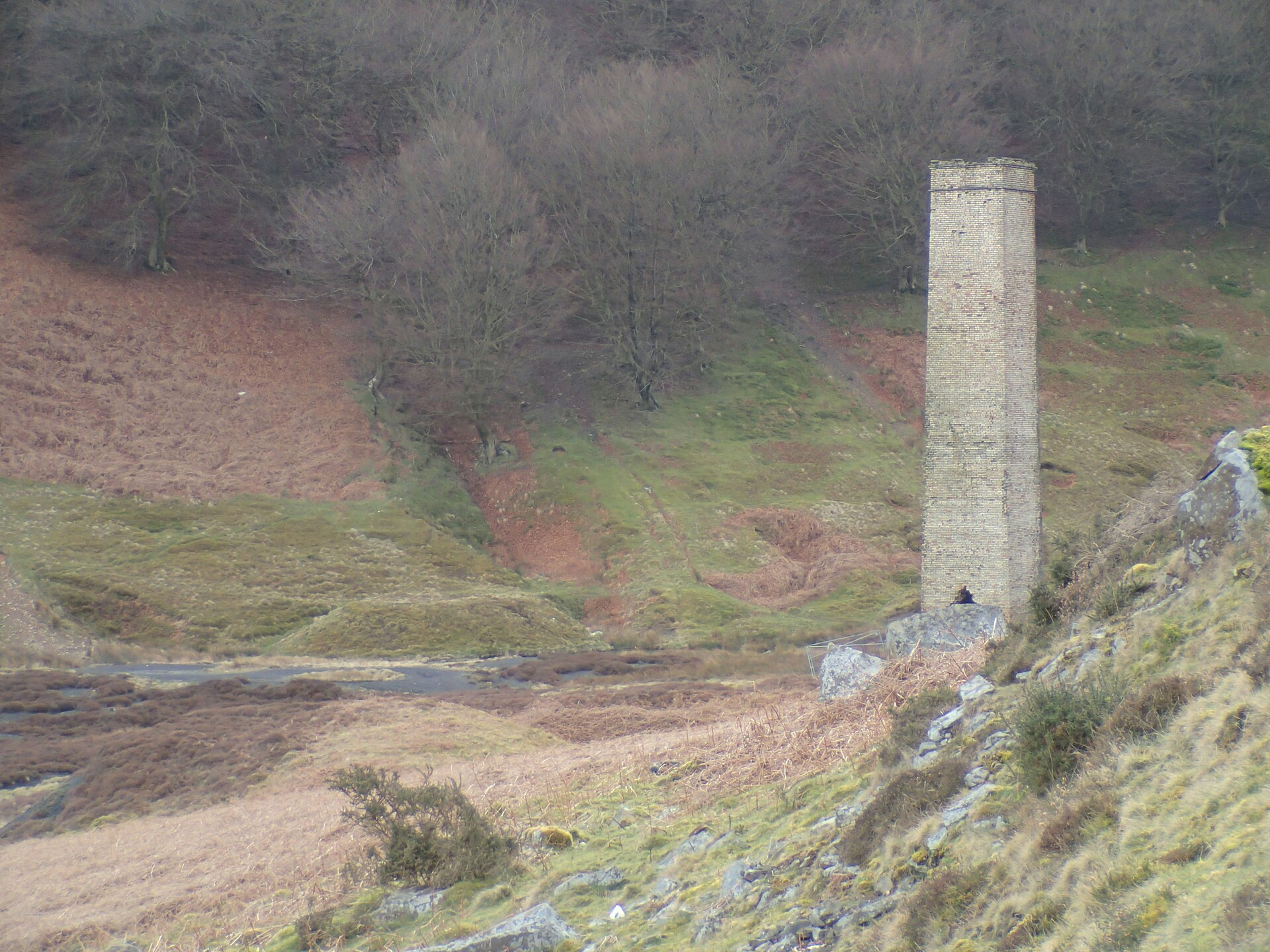
A group of workings rather than one pit, including the Balance Pit, 104 yards deep in 1869 and wound by water balance: the headgear survives and is scheduled, together with a brick chimney of about 1880, several oval shafts, two water-power dams, tramroad routes and waste tips.
Closure
The colliery was abandoned in 1877, working again by 1891 and stopped by 1897; the reopened levels under D. Buck were abandoned on 10 August 1910 according to the Catalogue of Plans, and the last of the later Cwmbyrgwm levels, opened from 1922, was abandoned on 28 March 1931.
What remains
The site is a scheduled monument (Cadw reference MM163) and its water-balance headgear survives, the only one of its kind left standing in the South Wales coalfield.
The scheduled water-balance headgear, a brick chimney of about 1880, several oval shafts, two water-power dams, tramroad routes and waste tips, in what Coflein calls a rich mining landscape.
Redevelopment
None; the site is open hillside above Abersychan.
Nearby mines
- Blaenserchan Colliery — 1.3 km E
- Llanerch Colliery — 2.0 km E
- Six Bells Colliery — 2.8 km W, Blaenau Gwent
- Varteg Hill Colliery — 3.0 km N
- Coed Cae Tillery Colliery — 3.2 km W, Blaenau Gwent
Straight-line distance, within 15 km. Show on the map.
People
- Cecil Charles (d. 1858) · victim, from 1858 — A boy, son of John Charles, killed in the surface boiler explosion at Cwmbyrgwm on 6 January 1858.
- John Charles (d. 1858) · victim, from 1858 — Killed with his son and another boy when a boiler exploded on the surface at Cwmbyrgwm on 6 January 1858.
- Joseph Whitcombe (d. 1858) · victim, from 1858 — A boy killed in the surface boiler explosion at Cwmbyrgwm on 6 January 1858.
Recorded claims
Individual factual claims, each attached to the source(s) that support it below. Where sources disagree, both are kept.
- Mining at Cwmbyrgwm began before 1820 and expanded with the development of the British Ironworks in 1827. 1
- The Ebbw Vale Company erected the water-balance winding gear in the 1840s, originally to raise ironstone; the Balance Pit was 104 yards deep and raising thirty tons of Black Pins Mine a day in an 1869 return. 2
- A boiler explosion on the surface on 6 January 1858 killed John Charles, his son Cecil Charles and another boy, Joseph Whitcombe. 2
- An extensive slip on the mountain in 1860 closed the Ebbw Vale Company's pit here; the fall was cleared and the pit reported ready to reopen on 31 May 1862. 2
- The surviving water-balance headgear is scheduled, with a brick chimney of about 1880, oval shafts, two water-power dams, tramroad routes and waste tips around it; the colliery is shown in use on the 1880 Ordnance Survey and disused in 1901. 1
- The colliery was abandoned in 1877, working again by 1891, stopped by 1897, reopened under D. Buck from 1907 and abandoned on 10 August 1910; later levels opened from 1922 and the last was abandoned on 28 March 1931. 2
Photographs & further reading
The national monuments record entry: the mining landscape, the scheduled water-balance headgear, the chimney, shafts and dams, and the map evidence for when the colliery stopped.
View sourceSources
- (primary) Cwmbyrgwm Colliery, Abersychan — Coflein, Royal Commission on the Ancient and Historical Monuments of Wales
- (secondary) Water Balance Collieries: Cwmbyrgwm — Welsh Coal Mines
Record created: 20 September 2026 · Last researched: 20 September 2026