 MineArchive
Coal Seam
| Also known as | Coal Bed |
|---|---|
| Category | Prospecting & Exploration |
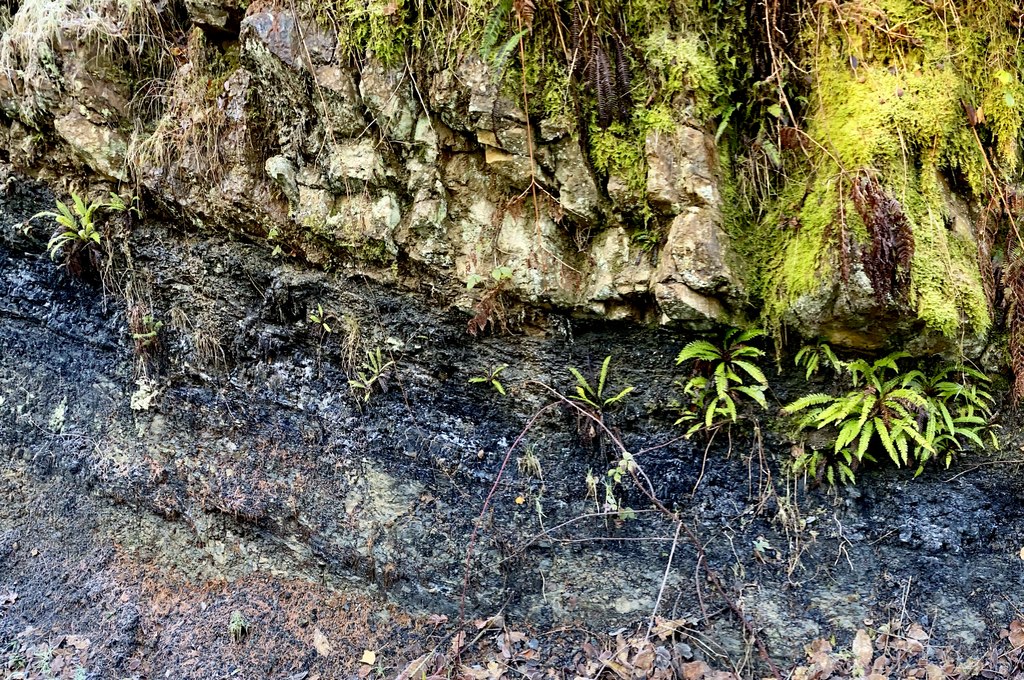
A bed of coal lying between other strata, thick enough and continuous enough to be named and worked. Each seam carries its own name in each coalfield, and the names, with the roof and floor that go with them, were the working vocabulary of a colliery.
Historical usage
Seam names were given by the men who worked them long before the Geological Survey correlated them. In the Durham coalfield the Middle Coal Measures hold, from the top down, the High Main, Metal, Five-Quarter, Main, Maudlin, Durham Low Main, Brass Thill and Hutton seams, and the Lower Coal Measures the Harvey, Tilley, Busty, Three-Quarter, Brockwell, Victoria and Marshall Green. Some names are plainly descriptive, High Main and Low Main, and others, Hutton and Harvey, are proper names. At Collingwood Main at Chirton the shaft met the High Main at 50 fathoms, about six feet thick and already worked out by 1813, with the Metal Coal 28 yards below it found unworkable. Wingate Grange in 1906 worked the Five Quarter, Main Coal, Low Main, Hutton and Harvey from one pair of shafts, with staples between the seams.
How it worked
The Coal Measures are built of repeated cycles: grey mudstone at the base, siltstone and sandstone above, then a seatearth, the soil in which the forest grew, and on it the coal. Marine bands, thin beds with sea shells, lie between some cycles and are the Survey's markers for matching seams from one coalfield to another. A seam is won by a shaft or a level driven to it and then got by working along it. In the Thick Coal of South Staffordshire a single bed of 25 to 40 feet was made of eight to thirteen seams separated by partings that together came to only two or three feet, and was worked in large chambers known as sides of work. The Millstone Grit beneath the lowest seam was the miners' Farewell Rock, because below it no coal would be found.
Why it was used
The seam is the unit of everything in a colliery. The depth of the shafts, the levels at which insets are cut, the system of working, the output and the royalty are all reckoned by seam, and a pit's history is a history of which seams it opened and when each was exhausted. Sources often disagree about depths and thicknesses because the same name was not always given to the same bed in neighbouring districts.
Risks & limitations
A seam is only as good as its roof and floor and as continuous as the faults allow. Thin seams waste a greater share of their coal as slack when they are undercut by hand, and seams that split, thin out or are cut off by faults can make a lease worthless. Some seams give off firedamp as they are worked and some are liable to heat in the goaf. The Metal Coal at Collingwood Main was found and left alone as unworkable.
Regional variation
Every coalfield has its own names. The Durham sequence from High Main down to Brockwell is one list; the Barnsley, Silkstone and Parkgate of Yorkshire, the Top Hard and Deep Hard of Nottinghamshire and the Thick Coal of South Staffordshire are names of the same kind, and the Rhondda No. 2 of South Wales is named for its outcrops in that valley. The same name may be used for different beds in different districts, and the Survey's correlation by marine bands is what links them.
Related terminology
Borehole, Coal Measures, Fault, Holing, Inset, Longwall, Staple Shaft
Mines associated with this term
5 examples chosen from 122 linked records — the term page is not an index.
- Blaenserchan Colliery — Torfaen (well documented example)
Named in this record’s history: “…The shaft was deepened to 362 yards in 1899 to reach the Steam Coal seams, and a second shaft, around 354-363 yards deep, was sunk in the…” - Cardowan Colliery — North Lanarkshire (well documented example)
Named twice in this record, first in the history: “…No.1 and No.2 shafts began in 1924, reaching the Kilsyth Coking Coal seam at 614 metres by 1928; production of coking coal for Nimmo & Dunlop…” - Longannet Colliery — Fife (well documented example)
Named twice in this record, first in the history: “…the mine's final years, new roadways were driven to reach a further coal seam beneath the Firth of Forth, downstream of the Kincardine Bridge. It…” - Old Pit Radstock — Somerset (well documented example)
Named twice in this record, first in the history: “…Wellsway among them — as steam winding and pumping technology made coal seams beyond the reach of earlier bell-pit working newly viable. By 1896…” - Pretoria Pit (Hulton Colliery Bank Pit) — Greater Manchester (well documented example)
Named in this record’s geology: “…Lancashire coalfield, a thick sequence of sandstones, mudstones and coal seams laid down in Carboniferous coastal swamp and delta conditions. Five…”
Disasters associated with this term
5 examples chosen from 19 linked records, most direct relationship first.
- Bersham Colliery explosion, 1909 (contextual relationship)
Named in this record’s contributing factors: “The colliery had recently been sunk to the main coal seam, and although the newly opened working was not very extensive, the…” - Bilsthorpe Colliery Roof Collapse (1993) (contextual relationship)
Named twice in this record, first in the summary: “…nearly 2,000 feet underground as they drove a tunnel toward a new coal seam; an under-manager was posthumously awarded the George Medal for…” - Black Prince Colliery roof fall, 1911 (contextual relationship)
Named twice in this record, first in the narrative: “…probably caused by the approach of the goaf of workings in the Main Coal seam sixteen fathoms below.” - Blantyre Colliery Explosion, 1879 (contextual relationship)
Named twice in this record, first in the cause: “A firedamp explosion in the shallower Ell Coal seam, ignited while miners were using gunpowder to blast stone -- despite…” - Bothwell Castle Colliery shaft accident, 1922 (contextual relationship)
Named in this record’s narrative: “…brushers, both of Leechlee Street, Hamilton, were working in the ell coal seam, some 250 feet above the shaft bottom. Finishing their shift, they…”
Sources
- (primary) BGS Lexicon of Named Rock Units: Pennine Coal Measures Group — British Geological Survey
- (secondary) Coal, 1911 Encyclopaedia Britannica — Wikisource
- (secondary) Collingwood Main Colliery explosion, Chirton, 1813 — Northern Mine Research Society
- (secondary) Durham Coalfield — Wikipedia
- (secondary) Wingate Grange Colliery Explosion – Wingate – 1906 — Northern Mine Research Society
Record created: 18 October 2026 · Last researched: 18 October 2026