 MineArchive
Fireclay
| Also known as | Seatearth (The geological term for the fireclay bed immediately beneath a coal seam), Fire Clay (Alternative spelling) |
|---|---|
| Category | Commodities |
| Commodity page | Fireclay → |
A fine-grained clay found beneath coal seams, valued not for any decorative or structural quality but for one thing alone: it can be fired into brick that survives furnace heat without melting, cracking or losing its shape.
Historical usage
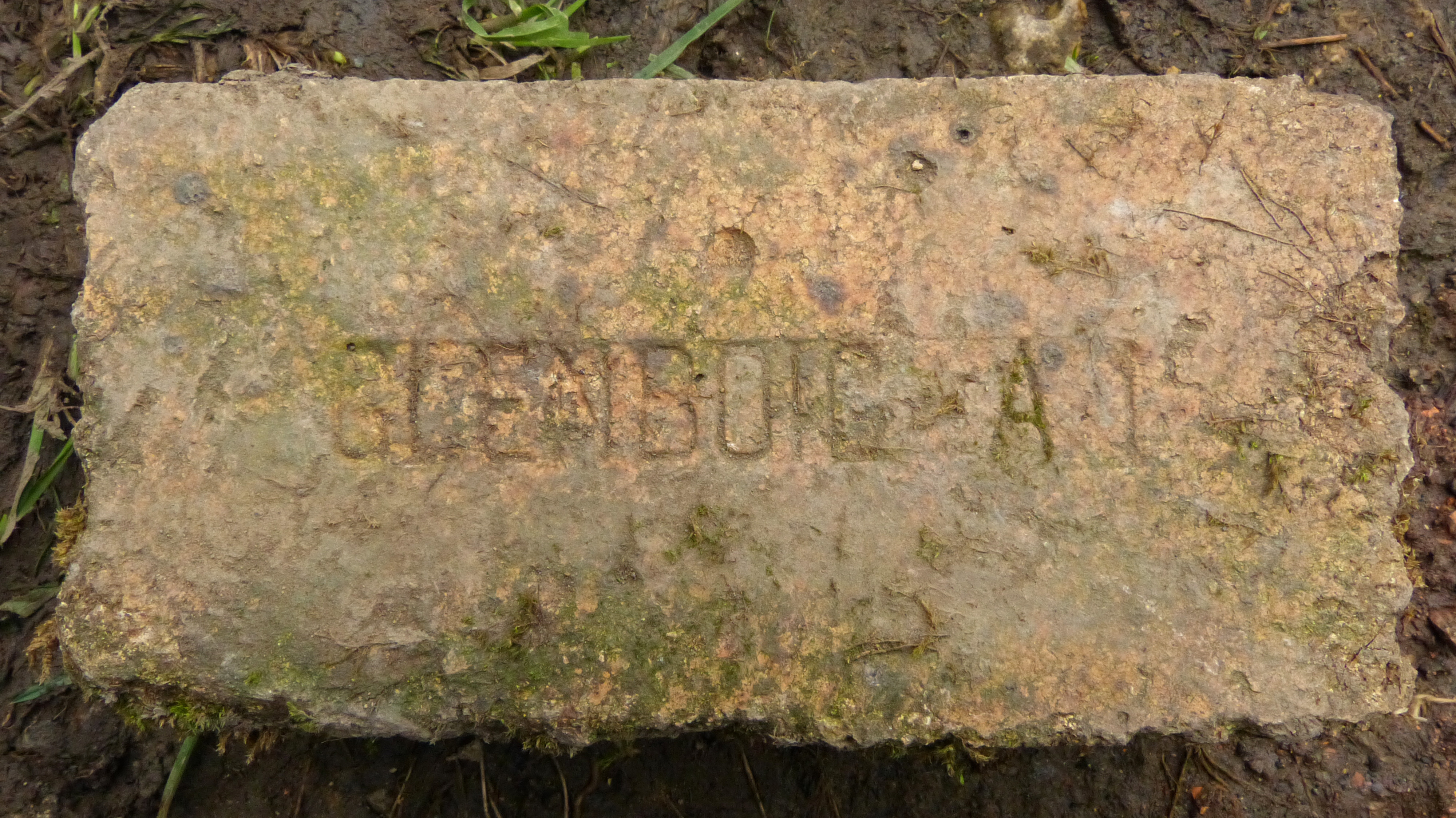
Fireclay was long known simply as the useless grey clay a collier had to dig through to reach the coal above it, until its refractory properties were recognised and exploited on an industrial scale from the early 19th century. The Garnkirk Colliery and Brickfield Company began working the Glenboig and Garnkirk fireclays and making firebricks from around 1831, and geologists soon identified a belt of exceptionally pure fireclay running from Glenboig in the west to Linlithgow in the east. The Glenboig Union Fire Clay Co, formed in 1878 by James Dunnachie's amalgamation of the district's Old and Star Works, turned the small Lanarkshire village of Glenboig into the world's leading firebrick manufacturer by the turn of the century, producing around a quarter of a million bricks a day and exporting them, by its own account, to almost every country in the world.
How it worked
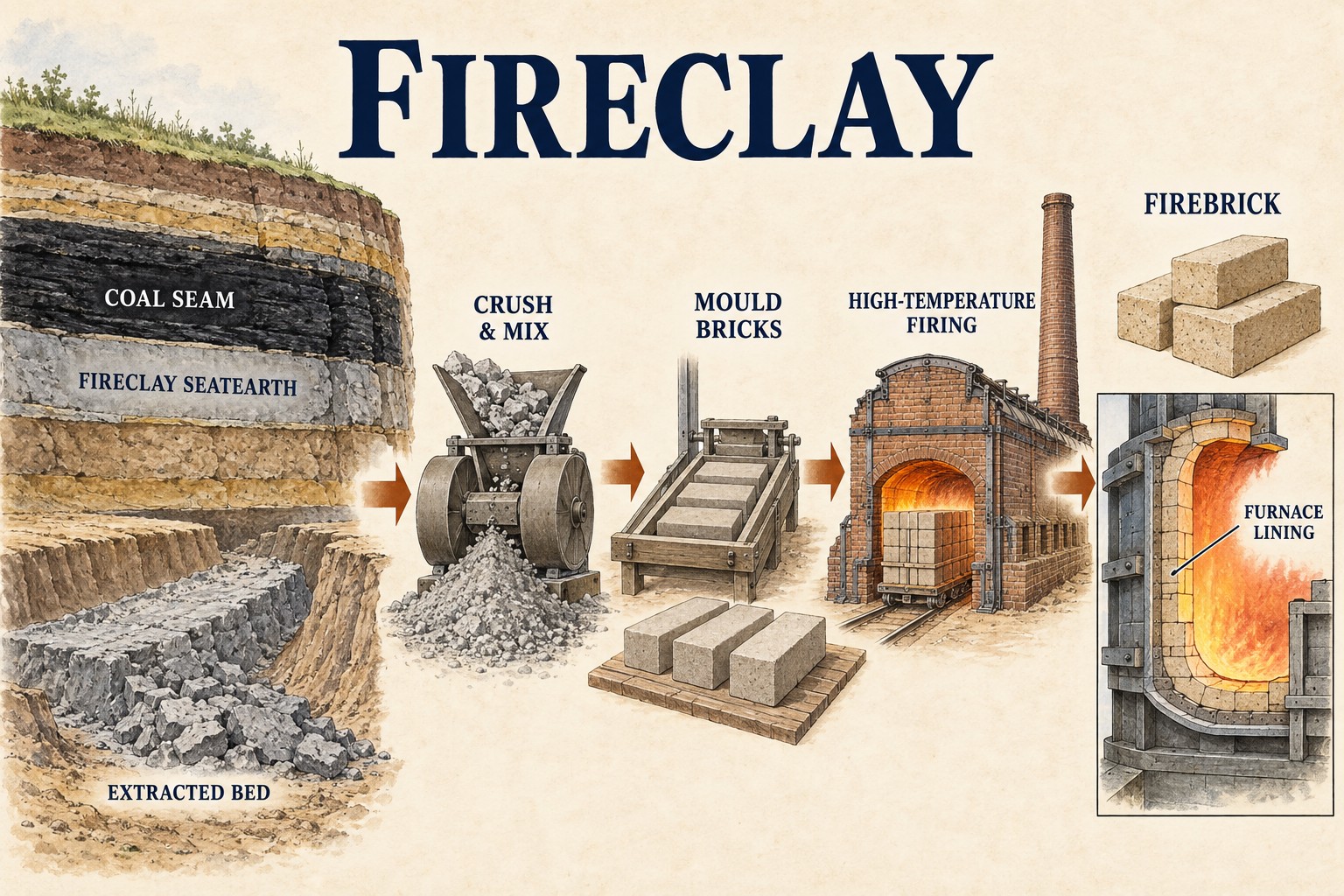
Fireclay was mined much like coal itself, often from the same shafts and drifts, since it typically forms the seatearth — the old soil the coal-forming plants once grew in — immediately beneath a coal seam. Once dug, it was ground, mixed and fired at high temperature into brick, block or pipe, a process that drives off water and chemically transforms the clay into a ceramic body able to withstand repeated heating without softening.
Why it was used
Ordinary building brick softens and slumps at the temperatures found inside an industrial furnace; fireclay brick, fired correctly, can take around 1,500°C without changing shape or cracking as it cools. That made it indispensable wherever intense, sustained heat had to be contained — furnace linings for the iron, steel, copper, brass, lead and glass industries, kiln linings, and glazed sanitary and drainage pipes that needed the same chemical toughness rather than heat resistance specifically.
Value over time
Fireclay had essentially no value on its own until the growth of iron and steel manufacture from the early 19th century created a large, captive market for furnace linings that could survive continuous industrial heat. That demand grew with the industry it served, peaking alongside Britain's heavy industry in the late 19th and early 20th centuries, when Glenboig alone could describe itself as supplying almost the whole world. The market declined through the 20th century as the coal-fired heavy industries fireclay had been built to serve — traditional iron and steel furnaces above all — contracted, and as newer refractory materials offered comparable performance without depending on a specific clay deposit.
Hazards & challenges
Fireclay mining shared the ordinary hazards of coal mining, since it was so often worked from the same shafts and roadways immediately beneath a coal seam, rather than carrying any additional hazard specific to the clay itself.
Risks & limitations
Not every fireclay bed was equally good: refractory quality depended closely on chemical purity, and the particular belt running through Glenboig and Garnkirk was prized precisely because it was unusually free of the impurities that make ordinary clay slump or vitrify at high temperature. Districts without that purity produced only ordinary brick clay, not a refractory product.
Regional variation
The Central Belt of Scotland, and Glenboig in particular, became internationally synonymous with high-grade fireclay refractories, but fireclay itself was worked wherever a suitable seatearth lay beneath a workable coal seam, including in the East Lothian and Tyrone coalfields.
Related terminology
Brick Clay, Colliery Brickworks, Ganister
Mines associated with this term
5 examples chosen from 109 linked records — the term page is not an index.
- Alloa Colliery — Clackmannanshire (well documented example)
Fireclay is in every one of this colliery's official returns alongside the coal, from 1894 to 1920. - Amington Colliery — Staffordshire (well documented example)
Named twice in this record, first in the history: “…World War and raising household, manufacturing and steam coal, with fireclay as well by 1915. By the early twentieth century Amington was starved…” - Annandale Colliery — East Ayrshire (well documented example)
Returned alongside the coal from 1920, and the reason the pit was reopened in 1934: the clay was particularly good for all classes of fireclay work. - Ashington Colliery — Northumberland (well documented example)
Named in this record’s workings: “…grade, the rest cleaned on spiral separators and a pneumatic plant. Fireclay was raised alongside the coal from 1894 into the 1970s.” - Auchlochan Colliery — South Lanarkshire (well documented example)
Named twice in this record, first in the history: “…rights on the wider Auchlochan Estate -- including clay band and fire clay -- had already been advertised to let as early as 1863, when the…”
See every mine that worked fireclay →
Disasters associated with this term
Included only where MineArchive's own research gives a reasonable evidential basis, with the nature of the relationship stated — not every disaster where this term might plausibly apply.
- Glenboig Fireclay Mine roof fall, 1909 (contextual relationship)
Named in this record’s narrative: “Stooping had been going on for some time to the rise in the fireclay seam at Glenboig. On 5 August 1909 the men were taking the first…”
Sources
- (primary) Glenboig Union Fireclay Company — history — Scotland's Brick and Tile Manufacturing Industry
- (secondary) Heathfield Fireclay Works, Garnkirk, North Lanarkshire — History — Scotland's Brick and Tile Manufacturing Industry
Record created: 24 August 2026 · Last researched: 24 August 2026