 MineArchive
Colliery Brickworks
| Also known as | Fireclay works (Scottish), Firebrick works (By its principal product) |
|---|---|
| Category | Structures & Machinery |
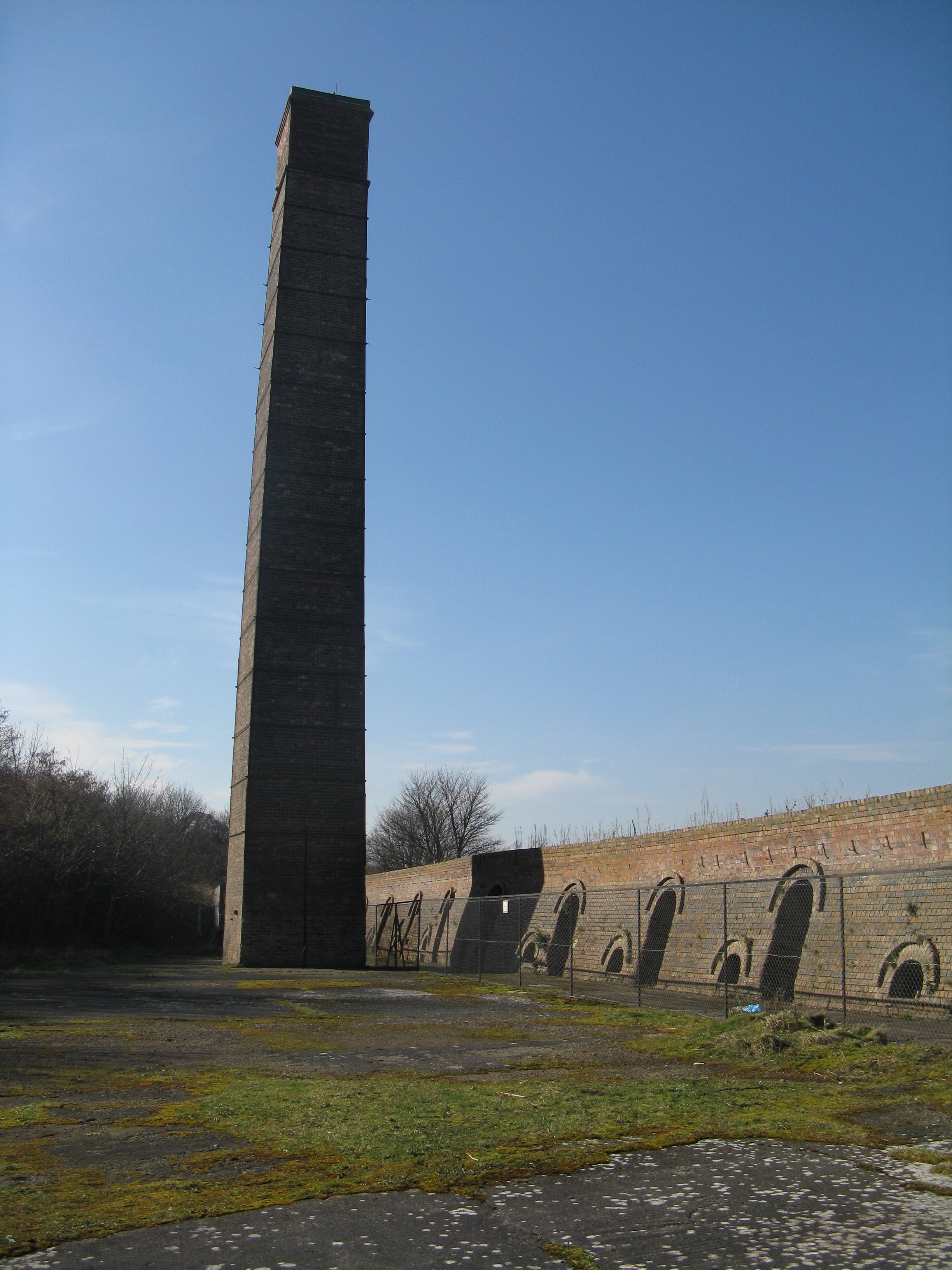
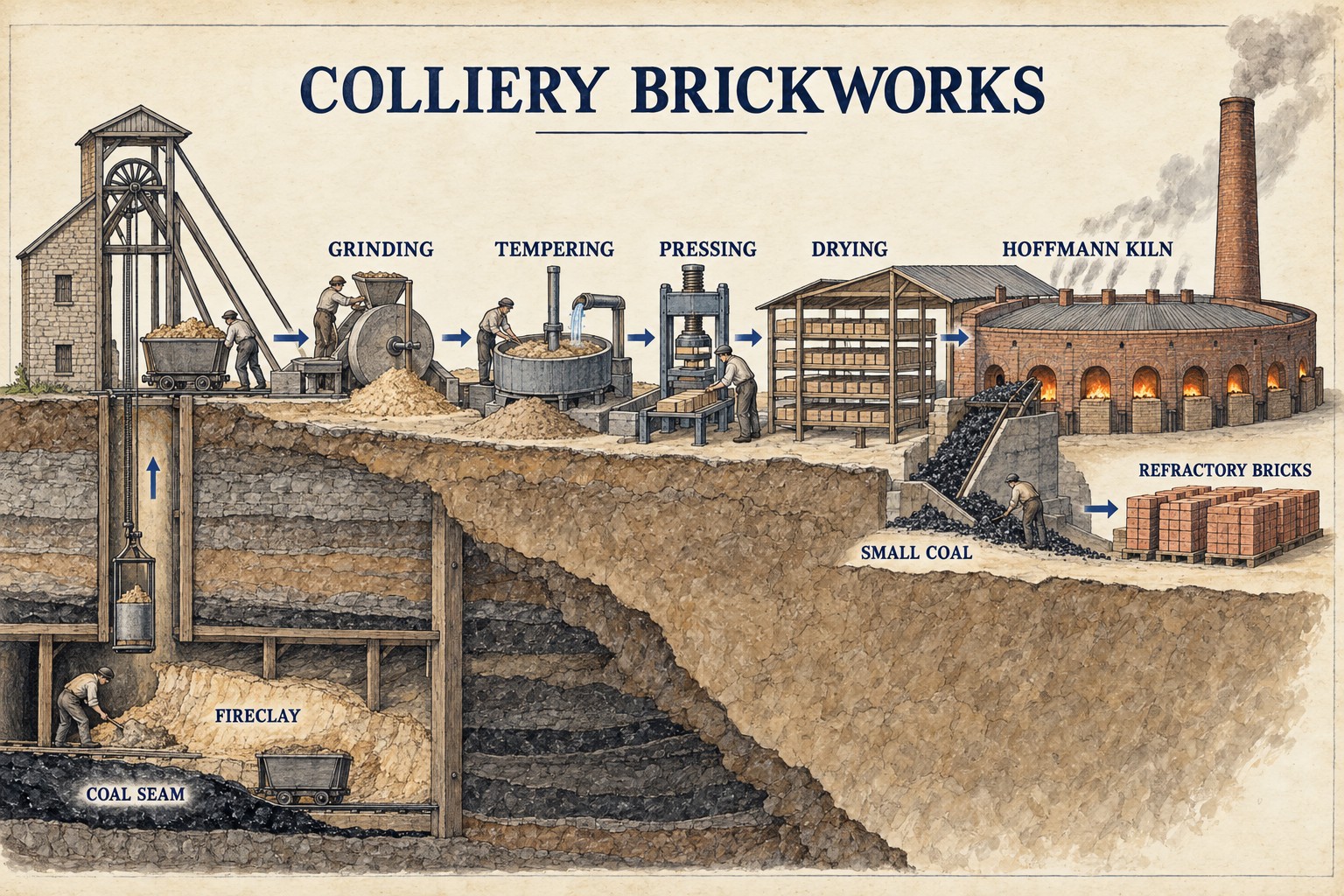
A brick and fireclay works attached to a colliery, working the clay that comes up with the coal. Fireclay is the seatearth beneath a coal seam — the fossil soil the coal-forming plants rooted in — so a pit working coal is already cutting through the raw material of refractory bricks, and many British collieries turned that by-product into a second business.
Historical usage
Fire-clay brick manufacture began in the Scottish central belt around Glenboig in the 1830s; the Garnkirk Colliery and Brickfield Company was formed in 1831 specifically to work the deep fireclay seams of the Garnkirk and Glenboig area of Lanarkshire, in beds reported at four to nineteen feet thick. By 1895 the area held five separate works and was the world's largest producer of fireclay bricks. At Prestongrange in East Lothian one of the coals, the Clay Seam, was worked chiefly for the two-foot underclay beneath it, and after 1872 the works expanded and mechanised on shale and fireclay from the neighbouring colliery. Brora's brickworks in Sutherland was the pit's principal customer, and the arrangement recurs across the British coalfields wherever a workable clay lay with the coal.
How it worked
The clay was won underground, in the same way and often by the same men as the coal, or dug from the surface where the seatearth outcropped; at Glenboig it was mined at forty yards, blasted with gunpowder like coal. It was then ground, tempered, moulded or pressed and burnt in kilns on the colliery site — often Hoffmann continuous kilns, whose fuel efficiency suited a works with cheap coal on the doorstep. James Dunnachie's gas-fired kiln at Glenboig, using a Wilson producer from 1881, cut fuel consumption by half and later by three-quarters.
Why it was used
It turned two liabilities into assets. The clay had to be cut through anyway, and colliery waste and small coal that would not sell had to go somewhere; a brickworks consumed both and produced something saleable. Refractory brick was in permanent demand from the iron, steel, gas and glass industries that the same collieries were already supplying with coal, and common brick from the local building trade. It also smoothed the colliery's income: brick demand and coal demand did not fall at the same time.
Risks & limitations
A colliery brickworks is only as good as its clay. Glenboig's fireclay was prized because it was remarkably free of iron oxide and lime, which soften a clay under heat; an ordinary seatearth makes ordinary bricks worth much less. The works also ties the pit to a second set of markets, so a downturn in construction or in the furnace trades hits it as well. And when the colliery closed, the clay supply generally went with it.
Regional variation
Strongest in the Scottish central belt, where the fireclay industry was effectively a branch of coal mining and 'fireclay works' is the usual term; in England and Wales 'colliery brickworks' or simply 'the brickworks' is more common. Scottish bricks are usually stamped with the works name, which is why so many can still be identified today.
Related terminology
Brick Clay, Charcoal Blast Furnace, Coal, Coke Oven, Fireclay, Ganister, Lime Kiln, National Coal Board, Spoil Heap
Mines associated with this term
5 examples chosen from 30 linked records — the term page is not an index.
- Ansley Hall Colliery — Warwickshire (well documented example)
Named in this record’s history: “…and his son J. H. Philips took over, into a declining industry: the colliery brickworks began cutting back on labour, and by the time Garside Philips died…” - Auckland Park Colliery — County Durham (well documented example)
Named twice in this record, first in the history: “…with the waste gas from the ovens used to heat the boilers; a firebrick works; coking coal washed by patent machinery; ventilation by a fan 45…” - Baggeridge Colliery — West Midlands (well documented example)
The colliery had a brickworks alongside it, and the toposcope in the country park that replaced them now looks out over the sites of both. - Bathville Colliery — West Lothian (well documented example)
Named 4 times in this record, first in the summary: “…Bathville, on the edge of Armadale near Bathgate, with a brick and fireclay works beside it from the beginning. John Watson of Glasgow bought the site…” - Blaydon Burn Colliery — Tyne and Wear (well documented example)
Named in this record’s summary: “…valley west of Gateshead, opened in the 1850s beside their famous firebrick works; its Mary and Bessie pits employed over 1,400 at their peak and…”
Sources
- (primary) Edinburgh Area — brick clay and fire clay — Scotland's Brick and Tile Manufacturing Industry
- (primary) Glenboig Union Fireclay Company — history — Scotland's Brick and Tile Manufacturing Industry
Record created: 25 August 2026 · Last researched: 25 August 2026